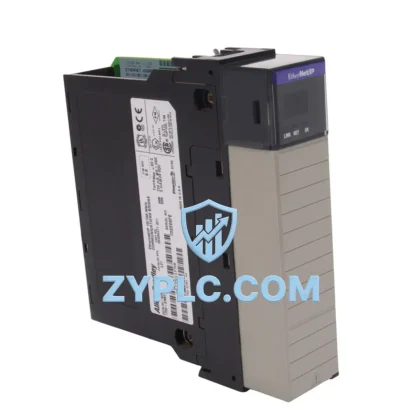
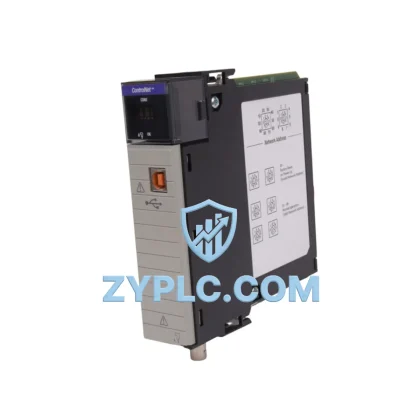
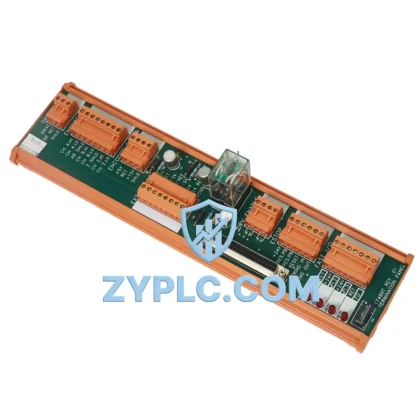
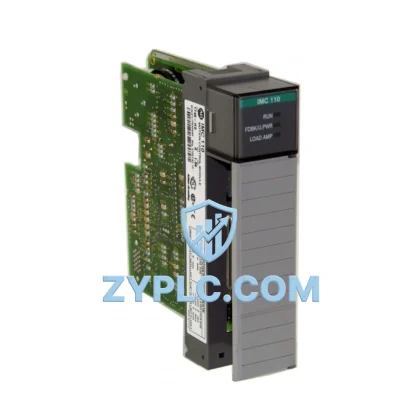
Yokogawa ADV551-P13 S2 System-Ready Digital Output for CENTUM VP Architecture
The Yokogawa ADV551-P13 S2 is a high-reliability digital output module engineered for seamless integration within the CENTUM VP Distributed Control System (DCS) architecture. Designed to operate as a critical node in the I/O layer of large-scale industrial automation systems, this module delivers deterministic signal output, robust field connectivity, and long-term operational stability across demanding process environments. Whether deployed in a greenfield installation or as a replacement component in an existing CENTUM VP or CS 3000 platform, the ADV551-P13 S2 maintains full compatibility with Yokogawa’s modular control philosophy, ensuring system-wide consistency from the controller layer down to the field device level.
In a fully integrated DCS architecture, the ADV551-P13 S2 occupies a defined role within the I/O subsystem, interfacing directly with the field bus and receiving command signals from the CENTUM VP Field Control Station (FCS). Its digital output channels translate controller logic into discrete switching actions — activating solenoid valves, motor starters, relay coils, and other binary actuators across the process plant. The module’s output integrity is maintained through internal diagnostics and status feedback loops that continuously verify channel health, enabling the control system to detect faults before they propagate to the process layer.
System architects integrating the ADV551-P13 S2 into a CENTUM VP platform will find it fully compatible with the standard I/O nest and field terminal assemblies used across the VP series. It mounts directly into the I/O nest alongside analog input modules such as the AAI141-S03 and AAI543-H, pulse input modules, and communication interface cards, allowing engineers to configure mixed I/O nests that match the exact signal requirements of each control loop. The module communicates with the FCS over Yokogawa’s internal V-net or ESB bus, depending on the cabinet configuration, ensuring low-latency command execution and synchronized scan cycle performance.
From a system redundancy perspective, the ADV551-P13 S2 supports deployment in both simplex and redundant I/O configurations. In redundant architectures — commonly required in power generation, petrochemical, and LNG processing facilities — the module pairs with a redundant counterpart and a switchover unit to provide bumpless transfer in the event of a module fault. This capability aligns with the broader redundancy strategy of the CENTUM VP platform, which extends from dual FCS controllers and dual V-net communication rings down to redundant I/O modules and field power supplies. Engineers can configure redundancy parameters through Yokogawa’s System View engineering environment without requiring hardware modifications.
The ADV551-P13 S2 is also well-suited for integration with Yokogawa’s CENTUM VP HMI layer, including the Human Interface Station (HIS) running on Windows-based workstations. Operators monitoring the system through the HIS can view real-time output channel status, acknowledge alarms triggered by output faults, and initiate manual overrides through the faceplates defined in the control database. This tight integration between the I/O module and the HMI layer reduces the diagnostic burden on maintenance teams and accelerates fault resolution during unplanned shutdowns.
For facilities managing large I/O counts — typical in refinery, chemical plant, or water treatment applications — the ADV551-P13 S2 contributes to a scalable I/O architecture that can expand without disrupting existing control logic. Additional I/O nests can be added to the field control station cabinet, and the new modules are recognized automatically by the CENTUM VP system upon registration in the engineering database. This plug-and-expand capability reduces commissioning time and minimizes the risk of configuration errors during plant expansions or revamps.
Power distribution within the control cabinet is a critical consideration when deploying digital output modules at scale. The ADV551-P13 S2 draws its operating power from the I/O nest power supply, typically a Yokogawa PW481 or equivalent 24 VDC field power unit, which distributes regulated power across all modules in the nest. Proper power budgeting — accounting for the inrush current of multiple output channels switching simultaneously — is essential during cabinet design. Yokogawa’s system engineering guidelines provide load calculation tools that help engineers size power supplies correctly for mixed I/O configurations.
In terms of field wiring, the ADV551-P13 S2 connects to field devices through terminal assemblies that support both screw-type and spring-clamp terminations, depending on the terminal unit model selected. Cable segregation between digital output circuits and analog signal wiring is recommended to prevent electromagnetic interference, particularly in environments with variable frequency drives, large motor starters, or high-current switching equipment nearby. Proper grounding of the terminal assembly and cable shields further enhances signal integrity across the output channels.
Long-term maintenance planning for the ADV551-P13 S2 benefits from Yokogawa’s established spare parts ecosystem. The module is a recognized component in CENTUM VP and CS 3000 installed bases worldwide, meaning replacement units are available through authorized distributors and specialist suppliers. Facilities operating under planned maintenance schedules can stock the ADV551-P13 S2 as a critical spare alongside other high-priority modules such as the ADV151-P13, ADV161-P13, AAI141-S03, and communication modules like the ACF11 or ALR111, ensuring rapid swap-out capability without extended lead times.
All ADV551-P13 S2 units supplied by ZYPLC are covered by a 12-Month Warranty and undergo pre-shipment functional verification to confirm output channel operation, module identification, and communication handshake with the host system. This quality assurance process supports Contextual Integration — ensuring that each module is validated not just as a standalone component, but as a system-ready part that can be installed directly into an operational CENTUM VP architecture with minimal commissioning effort.
Architecture Specification Table
| Parameter |
Specification |
| System Role |
Digital Output Module — I/O Layer, CENTUM VP / CS 3000 DCS |
| Model Number |
ADV551-P13 S2 |
| Brand |
Yokogawa |
| Compatible Platform |
CENTUM VP, CENTUM CS 3000 |
| Output Type |
Discrete Digital Output (DO) |
| Output Channels |
16 channels (typical for ADV551 series) |
| Output Voltage |
24 VDC field supply (sourcing/sinking configuration) |
| Communication Interface |
V-net / ESB Bus (internal DCS backplane) |
| Mounting |
I/O Nest (standard CENTUM VP nest rail) |
| Operating Temperature |
0°C to 60°C |
| Relative Humidity |
5% to 95% RH (non-condensing) |
| Power Supply |
Supplied via I/O nest (24 VDC, from PW481 or equivalent) |
| Redundancy Support |
Yes — simplex and redundant I/O configurations |
| Country of Origin |
Japan |
| Warranty |
12-Month Warranty (ZYPLC) |
| Compliance |
CE, UL (platform-level certification) |
Coordinated Control System Design
The ADV551-P13 S2 functions as part of a coordinated multi-layer control architecture in which each component plays a defined role in maintaining system integrity. At the controller layer, the CENTUM VP Field Control Station (FCS) — such as the AFV10D or AFV30D — executes the control logic and issues output commands to the I/O modules on a deterministic scan cycle. The ADV551-P13 S2 receives these commands via the ESB bus and switches its output channels accordingly, driving field devices such as solenoid valves, motor contactors, and alarm annunciators.
Within the same I/O nest, the ADV551-P13 S2 coexists with analog input modules like the AAI141-S03 (4–20 mA analog input, 16 channels) and the AAI543-H (analog input with HART communication support), which feed process variable data back to the FCS for closed-loop control. Digital input modules such as the ADV151-P13 provide status feedback from field devices — confirming valve positions, motor run signals, and interlock states — completing the command-and-feedback loop that the ADV551-P13 S2 initiates on the output side.
Network-layer components including the ACF11 communication module and ALR111 Ethernet interface extend the CENTUM VP system’s connectivity to plant-wide networks, enabling data exchange with MES systems, historian servers, and remote engineering workstations. At the power layer, the PW481 24 VDC power supply provides regulated field power to the I/O nest, with redundant power configurations using dual PW481 units and an automatic switchover relay to eliminate single points of failure. The Human Interface Station (HIS) running Yokogawa’s CENTUM VP HMI software provides operators with real-time visibility into the output channel states managed by the ADV551-P13 S2, including alarm management and manual override capability. Terminal assemblies such as the TB151 or TB481 field terminal units complete the wiring interface between the module and field cables, supporting both screw and spring-clamp termination styles for flexible installation in various cabinet configurations.
Application in Layered Automation Systems
The ADV551-P13 S2 is deployed across a wide range of process industries where reliable discrete output control is essential to safe and efficient operation. In oil refinery and petrochemical plants, the module drives emergency shutdown (ESD) solenoids, blowdown valves, and pump motor starters within CENTUM VP-based safety and control systems, where output channel reliability directly impacts process safety integrity. In power generation facilities — including thermal, combined-cycle, and nuclear plants — the ADV551-P13 S2 controls turbine auxiliary systems, cooling water pumps, and switchgear, operating within redundant DCS architectures that require bumpless failover and continuous self-diagnostics.
In water and wastewater treatment plants, the module manages pump station controls, valve sequencing, and chemical dosing systems across geographically distributed I/O networks, where the CENTUM VP’s remote I/O capability allows a single FCS to supervise multiple field stations. Mining and mineral processing applications leverage the ADV551-P13 S2 for conveyor control, crusher interlock systems, and flotation cell management, where the module’s robust construction and wide operating temperature range support reliable performance in harsh industrial environments. In pharmaceutical and food processing facilities, the module participates in batch control architectures governed by ISA-88 standards, where precise sequencing of output signals — agitator starts, valve opens, and CIP system activations — is critical to product quality and regulatory compliance. Across all these applications, the ADV551-P13 S2 contributes to a layered automation strategy in which the I/O layer, control layer, network layer, and HMI layer operate as an integrated system rather than a collection of independent components.
Architecture Engineering FAQ
Q1: Is the ADV551-P13 S2 compatible with both CENTUM VP and CENTUM CS 3000 systems?
Yes. The ADV551-P13 S2 is designed for use within Yokogawa’s CENTUM platform and is compatible with both CENTUM VP and CENTUM CS 3000 architectures. It mounts into the standard I/O nest used across both platforms and is recognized by the respective engineering environments — System View for CENTUM VP and CS 3000 Builder for CS 3000. Engineers should verify the specific nest and FCS model compatibility during system design to confirm that the module’s channel count and output type align with the control database configuration.
Q2: Can the ADV551-P13 S2 be installed in a redundant I/O configuration, and what additional components are required?
Yes. The ADV551-P13 S2 supports redundant I/O deployment when paired with a redundant module counterpart and the appropriate switchover unit within the CENTUM VP redundant I/O nest. The redundant configuration requires a dual-module nest slot arrangement and a redundancy coupler that manages automatic switchover in the event of a primary module fault. Power supply redundancy using dual PW481 units is also recommended to eliminate power-layer single points of failure. All redundancy parameters are configured through the CENTUM VP System View engineering tool without requiring hardware modifications to the module itself.
Q3: What does the 12-Month Warranty cover, and how does ZYPLC support long-term maintenance for the ADV551-P13 S2?
The 12-Month Warranty provided by ZYPLC covers manufacturing defects and functional failures under normal operating conditions for a period of twelve months from the date of shipment. Each unit undergoes pre-shipment functional verification — including output channel switching tests and communication handshake confirmation — to ensure it is system-ready upon arrival. For long-term maintenance support, ZYPLC maintains stock of the ADV551-P13 S2 and related CENTUM VP I/O modules, enabling rapid fulfillment for planned maintenance replacements and emergency spares. Customers can contact ZYPLC at +86 19859288691 or plc.sales@zyplc.com for availability inquiries, technical compatibility questions, and warranty claims.
© 2026 ZYPLC. All rights reserved.
Original Source: https://zyplc.com
Contact: +86 19859288691 | plc.sales@zyplc.com