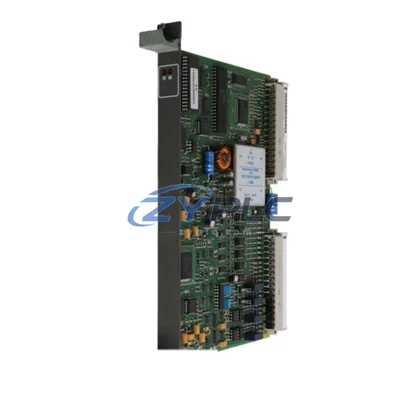
Yokogawa AFV10D-S41211/S2 Field Control Unit for CENTUM CS 3000 Automation
The Yokogawa AFV10D-S41211/S2 is a high-performance Field Control Unit (FCU) engineered for the CENTUM CS 3000 Distributed Control System (DCS). Designed to serve as the core execution node in process automation architectures, this unit delivers precise, low-latency control output while minimizing unnecessary power draw across the control loop. In industrial environments where energy costs are a persistent operational burden, the AFV10D-S41211/S2 provides a measurable advantage by maintaining tight regulatory control with reduced computational overhead and optimized I/O scan cycles.
At ZYPLC, every AFV10D-S41211/S2 unit is sourced from verified supply channels, subjected to full functional testing prior to shipment, and backed by a . Whether you are replacing a failed FCU in a running plant or building out a redundant control architecture, this unit ships ready for integration.
Product Specification Table
| Parameter |
Specification / Value |
| SKU |
AFV10D-S41211/S2 |
| Brand |
Yokogawa |
| Series |
CENTUM CS 3000 |
| Product Type |
Field Control Unit (FCU) |
| Origin |
Japan |
| Electrical / System Notes |
Low-power embedded control architecture |
| Control Execution Efficiency |
High-speed scan cycle with deterministic output |
| Compatible Systems |
CENTUM CS 3000 DCS, Vnet/IP communication bus |
| Application Environment |
Process manufacturing, oil & gas, chemical, power generation |
| Maintenance Value |
Reduces idle processing load; supports demand-responsive control strategies |
| Warranty |
12 Months (ZYPLC) |
| Condition |
Tested, fully functional, shipment arranged after confirmation |
System Compatibility and Application
The AFV10D-S41211/S2 does not operate in isolation — its energy efficiency contribution is amplified when integrated within a well-designed CENTUM CS 3000 control architecture. In a typical plant deployment, this FCU interfaces directly with Yokogawa KFCS (Field Control Station) nodes and communicates over the Vnet/IP real-time control network, enabling synchronized, low-overhead data exchange between field devices and the supervisory layer.
On the drive side, pairing the AFV10D-S41211/S2 with Yokogawa VariFlex variable frequency drives allows the control unit to issue precise speed reference signals to motor-driven equipment such as pumps, fans, and compressors. This closed-loop motor control strategy eliminates the unplanned downtime associated with fixed-speed operation and throttling valve control — two of the most common sources of avoidable energy loss in process plants.
For power quality and consumption monitoring, the AFV10D-S41211/S2 integrates seamlessly with Yokogawa WT series power analyzers and CW series power meters, enabling real-time energy data acquisition at the field level. This data feeds back into the DCS historian via the Exaquantum plant information management system, where energy KPIs can be trended, alarmed, and reported against production targets.
On the I/O side, the FCU connects to Yokogawa NFAI135 analog input modules and NFAO135 analog output modules, which handle 4–20 mA signals from field transmitters including flow meters, pressure sensors, and temperature elements. Accurate signal conditioning at this layer is essential for maintenance-focused control — poor signal quality leads to control loop oscillation, which in turn causes unnecessary actuator movement and energy consumption.
For facilities running hybrid architectures, the AFV10D-S41211/S2 can coexist with Yokogawa ProSafe-RS safety instrumented system controllers, sharing the Vnet/IP backbone while maintaining independent safety integrity. This architecture avoids the need for separate wiring infrastructure, reducing both capital cost and the energy overhead of redundant communication hardware.
HMI integration is handled through Yokogawa CENTUM VP HIS (Human Interface Stations), which provide operators with real-time visibility into energy consumption trends, loop performance indices, and equipment utilization rates — all derived from data processed through the AFV10D-S41211/S2 and its associated field network.
Maintenance and Replacement Notes
In continuous process industries, the Field Control Unit is the execution engine of energy strategy. The AFV10D-S41211/S2 enables plant engineers to implement advanced control schemes — including cascade control, feedforward compensation, and model predictive control (MPC) — that actively reduce energy consumption by anticipating process disturbances rather than reacting to them.
Consider a typical boiler feedwater control loop: without a properly functioning FCU, the control valve hunts continuously, wasting both thermal energy and mechanical wear on the actuator. With the AFV10D-S41211/S2 executing a well-tuned PID algorithm at its rated scan speed, valve movement is minimized, steam consumption is stabilized, and the boiler operates closer to its design efficiency point. Similar gains are realized in cooling water systems, compressed air networks, and electrical load management applications.
From a maintenance perspective, the AFV10D-S41211/S2 supports predictive maintenance strategies by providing consistent, high-integrity control output that allows condition monitoring systems to establish reliable equipment baselines. Abnormal energy consumption patterns — often the earliest indicator of mechanical degradation — are more easily detected when the control layer is stable and deterministic. This reduces unplanned downtime, which is itself one of the largest sources of energy inefficiency in manufacturing: a stopped line consumes auxiliary energy (lighting, HVAC, compressed air) without producing output.
For production lines with variable throughput requirements, the FCU’s ability to execute demand-responsive control strategies means that energy input scales with actual production rate rather than running at fixed setpoints. This is particularly valuable in batch manufacturing, where production schedules change frequently and unplanned downtime during low-demand periods is a common problem.
ZYPLC maintains ready inventory of the AFV10D-S41211/S2 to support rapid replacement scenarios. Unplanned FCU failures in a DCS environment can halt an entire production unit within minutes. Our RFQ-based availability, combined with pre-shipment functional testing and a, ensures that your replacement unit arrives verified and ready to install — minimizing the energy and productivity losses associated with extended downtime.
Product Sourcing FAQ
Q1: How does the AFV10D-S41211/S2 contribute to measurable operational stability in a CENTUM CS 3000 system?
The AFV10D-S41211/S2 executes control algorithms with high scan-cycle determinism, enabling tighter loop tuning and reduced process variability. Tighter control directly translates to lower energy consumption by keeping process variables closer to their optimal setpoints, reducing the need for corrective actuator movement and the associated energy overhead.
Q2: Is the AFV10D-S41211/S2 compatible with both older CENTUM CS 3000 installations and newer hybrid DCS architectures?
Yes. The AFV10D-S41211/S2 is designed for the CENTUM CS 3000 platform and communicates over the Vnet/IP control bus. It is compatible with existing CS 3000 field stations and can coexist with CENTUM VP components in phased migration projects, making it suitable for both legacy maintenance and hybrid upgrade scenarios.
Q3: What is the recommended replacement procedure, and how quickly can the unit be put into service?
The AFV10D-S41211/S2 follows standard CENTUM CS 3000 FCU replacement procedures. After physical installation and Vnet/IP network registration, the unit downloads its control database from the engineering station and resumes execution. ZYPLC’s pre-tested units reduce commissioning risk — each unit is verified functional before shipment, and our technical team can provide configuration guidance to support rapid return to service.
Q4: What does the cover, and what is the testing process before shipment?
All AFV10D-S41211/S2 units sold by ZYPLC are covered by a against functional defects. Prior to shipment, each unit undergoes a full functional test including power-on verification, communication interface check, and I/O channel validation. Units that do not pass testing are not shipped. The warranty covers repair or replacement for defects arising under normal operating conditions within the warranty period.