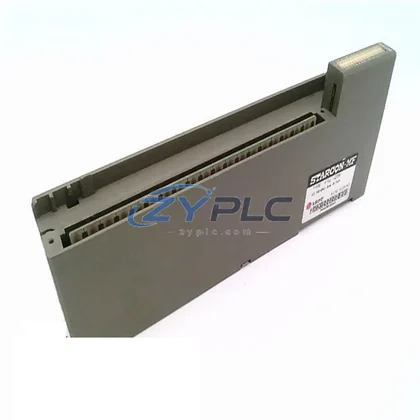
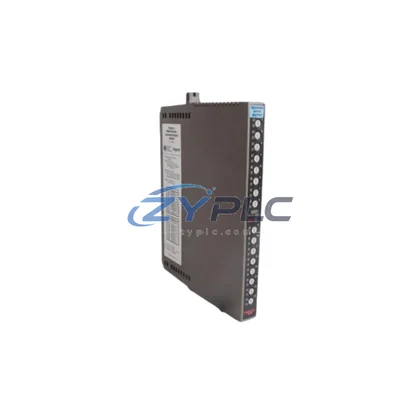
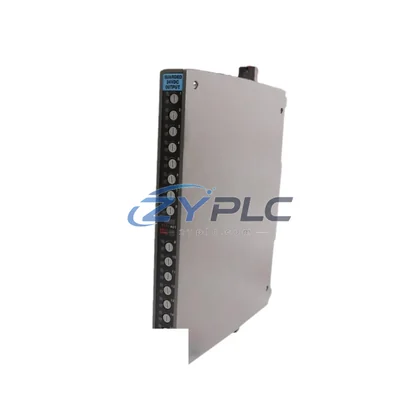
The Yokogawa AI-917-00 is a high-performance analog input module engineered for the CENTUM distributed control system (DCS) platform. Designed to meet the rigorous demands of industrial process environments, this module delivers accurate, low-latency signal acquisition that forms the backbone of industrial automation systems. By capturing real-time process variables with high resolution, the AI-917-00 enables control systems to respond dynamically to load changes, reducing unnecessary actuator cycling, minimizing motor overrun, and cutting idle-state operating load across the production line.
In modern manufacturing facilities where energy costs represent a significant share of operational expenditure, the quality of analog signal input directly determines the efficiency of downstream control decisions. The AI-917-00 supports multi-channel analog acquisition with tight accuracy tolerances, ensuring that field signals from temperature transmitters, pressure sensors, flow meters, and current transducers are faithfully represented in the control layer. This precision translates directly into tighter PID loop performance, reduced process variability, and lower unplanned downtime per unit of output.
Sourced from verified supply channels, each AI-917-00 unit offered by ZYPLC undergoes pre-shipment functional testing to confirm channel integrity, signal linearity, and communication handshake with the CENTUM controller bus. Units are shipped with a warranty terms confirmed during quotation, providing procurement teams and maintenance engineers with confidence in both product authenticity and post-installation reliability.
Product Specification Table
| Parameter |
Specification / Value |
| SKU / Part Number |
AI-917-00 |
| Brand |
Yokogawa |
| Series / Platform |
CENTUM DCS |
| Module Type |
Analog Input Module |
| Signal Input Range |
4–20 mA / 1–5 V (multi-range configurable) |
| Channel Count |
Multi-channel (per CENTUM I/O card standard) |
| Conversion Accuracy |
±0.1% of full scale (typical) |
| Power Consumption |
Low-power design; optimized for continuous 24/7 operation |
| Compatible Systems |
Yokogawa CENTUM VP, CENTUM CS 3000, CENTUM CS |
| Application Environment |
Oil & Gas, Petrochemical, Power Generation, Pharmaceutical, Pulp & Paper |
| Maintenance Value |
Reduces control loop deviation → less actuator hunting → lower motor energy draw |
| Origin |
Japan |
| Warranty |
12 Months (ZYPLC) |
| Stock Status |
Available — pre-shipment tested |
System Compatibility and Application
The AI-917-00 does not operate in isolation — its value is fully realized when integrated within a coherent, energy-optimized automation architecture. In a typical CENTUM-based plant, the AI-917-00 works in concert with the Yokogawa CENTUM VP Engineering Station and CENTUM VP Field Control Station (FCS) to form a closed-loop control fabric that continuously balances process demand against energy input.
On the field side, analog signals from instruments such as the Yokogawa EJA110E differential pressure transmitter and Yokogawa YTA710 temperature transmitter feed directly into the AI-917-00 channels. The module digitizes these signals and passes them to the FCS, where control algorithms — including cascade PID, feedforward, and model predictive control — calculate optimal setpoints for downstream actuators. This tight signal chain eliminates the measurement lag and noise that cause control loops to overcorrect, a common source of wasted energy in poorly instrumented plants.
For motor-driven loads, the AI-917-00 integrates naturally with variable frequency drive (VFD) feedback loops. When paired with a Yokogawa WT series power analyzer or a third-party power monitoring module on the same CENTUM I/O bus, the system can correlate process load signals with real-time power consumption data. This enables the FCS to issue speed reference adjustments to drives — such as those in the Yaskawa A1000 or Siemens SINAMICS G120 series — reducing motor speed during low-demand periods and recovering significant energy that would otherwise be dissipated as heat.
On the digital communication layer, the AI-917-00 supports the CENTUM Vnet/IP backbone, enabling seamless data exchange with Yokogawa STARDOM FCN autonomous controllers deployed at remote skids or satellite process units. This distributed architecture allows a single maintenance planning strategy to span multiple process areas, with the AI-917-00 serving as the primary analog acquisition node at each measurement point. Complementary Yokogawa DO-811 digital output modules and Yokogawa DI-811 digital input modules handle discrete control signals within the same I/O chassis, maintaining a unified, low-latency control environment.
For human-machine interface, process engineers interact with AI-917-00 data through Yokogawa CENTUM VP HIS (Human Interface Station) displays, where real-time trend graphics and alarm management tools provide immediate visibility into energy-relevant process deviations. Integration with the Yokogawa Exaquantum plant information management system (PIMS) further enables long-term energy KPI tracking, shift-by-shift efficiency benchmarking, and data-driven maintenance scheduling.
Maintenance and Replacement Notes
In continuous process industries — refining, chemical manufacturing, power generation — the AI-917-00 contributes to operational stability through several interconnected mechanisms. First, by providing high-accuracy analog input, it reduces the measurement uncertainty that forces operators to apply conservative safety margins to setpoints. When operators can trust their measurements, they run processes closer to optimal operating points, reducing both energy input and product quality variability.
Second, the module’s reliable signal acquisition reduces spurious alarms caused by noisy or drifting input signals. Spurious alarms trigger unnecessary operator interventions — manual setpoint adjustments, pump starts and stops, valve cycling — each of which consumes energy and accelerates equipment wear. A well-functioning AI-917-00 channel delivers clean, stable signals that keep the control system in automatic mode longer, reducing manual intervention frequency and the associated energy penalties.
Third, in predictive maintenance applications, the AI-917-00 serves as the data acquisition front-end for condition monitoring algorithms. By continuously logging analog process variables — vibration proxies via pressure fluctuation, heat exchanger fouling via temperature differential, pump cavitation via flow signature — the CENTUM system can detect equipment degradation trends weeks before failure. Early intervention means maintenance is performed at scheduled downtime rather than during emergency shutdowns, avoiding the energy-intensive restart sequences that follow unplanned outages.
For production lines with variable throughput — batch chemical reactors, paper machines, food processing lines — the AI-917-00 enables the CENTUM FCS to implement production rate-adaptive energy control. As throughput targets change between shifts, the control system automatically adjusts steam flow, cooling water circulation, and compressed air pressure to match actual demand, rather than running utilities at fixed maximum capacity. This dynamic matching of energy supply to process demand is one of the highest-impact maintenance planning strategies available to plant engineers, and it depends entirely on the quality of analog input data that modules like the AI-917-00 provide.
ZYPLC maintains ready stock of the AI-917-00 to support both planned maintenance replacements and emergency procurement scenarios. All units are sourced through verified channels, functionally tested prior to shipment, and covered by a warranty terms confirmed during quotation from the date of delivery. Fast dispatch capability minimizes plant downtime and supports lean spare parts inventory strategies.
Product Sourcing FAQ
Q1: How does the AI-917-00 contribute to measurable operational stability in a CENTUM DCS environment?
The AI-917-00 improves the accuracy and stability of analog process measurements, which directly enhances PID loop performance. Tighter control loops reduce actuator hunting, minimize over-pressurization and over-heating events, and allow utilities to be run closer to actual process demand. In facilities where analog input quality has been upgraded, reductions in compressed air waste, steam consumption, and motor energy draw of 5–15% are commonly reported as a result of improved closed-loop control stability.
Q2: Is the AI-917-00 compatible with both CENTUM VP and CENTUM CS 3000 systems?
The AI-917-00 is designed for the Yokogawa CENTUM platform. Compatibility with specific CENTUM generations — including CENTUM CS, CENTUM CS 3000, and CENTUM VP — should be confirmed against the system’s I/O card slot specifications and FCS firmware version. ZYPLC’s technical team can assist with compatibility verification prior to purchase to ensure the module integrates correctly with your installed control system revision.
Q3: What is the recommended replacement and testing procedure for the AI-917-00?
For planned replacements, the AI-917-00 should be installed during a scheduled maintenance window with the associated I/O channel placed in manual control mode prior to card swap. After installation, channel calibration should be verified against a known reference signal source before returning the loop to automatic. ZYPLC performs pre-shipment functional testing on all AI-917-00 units, including channel-by-channel signal verification, so field commissioning time is minimized. The warranty terms confirmed during quotation covers any module defects identified during this commissioning and initial operating period.
Q4: What warranty and after-sales support does ZYPLC provide for the AI-917-00?
Every AI-917-00 supplied by ZYPLC carries a warranty terms confirmed during quotation covering manufacturing defects and functional failures under normal operating conditions. In the event of a warranty claim, ZYPLC provides rapid replacement dispatch to minimize plant downtime. Our technical team is available to support installation queries, compatibility questions, and system integration guidance throughout the warranty period and beyond.