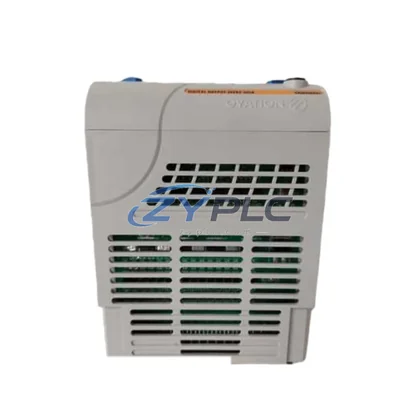
Yokogawa ALR121-S51 Communication Module for CENTUM Automation
In modern distributed control systems, communication infrastructure is not merely a data conduit — it is the backbone of maintenance-focused automation. The Yokogawa ALR121-S51 Communication Module is engineered to serve as a high-reliability, low-overhead link within the CENTUM VP and CENTUM CS 3000 distributed control architectures, enabling plant operators to achieve tighter control loops, reduce signal latency, and ultimately lower the energy footprint of their production systems. By ensuring that every control command, sensor reading, and diagnostic signal is transmitted with precision and minimal processing delay, the ALR121-S51 directly contributes to the elimination of unplanned downtime caused by control lag, redundant polling cycles, and communication-induced process instability.
The ALR121-S51 is designed for integration into Yokogawa’s field control station (FCS) environment, where it operates alongside the AFV10D and AFV30D field control units to manage real-time process data exchange. In energy-intensive industries such as petrochemical refining, power generation, and continuous process manufacturing, even milliseconds of communication delay can translate into significant energy inefficiency — particularly in closed-loop control of rotating equipment such as compressors, pumps, and turbines. The ALR121-S51 eliminates this risk by maintaining deterministic communication cycles that keep the control system synchronized with actual plant conditions.
Product Specification Table
| Parameter |
Specification |
| SKU |
ALR121-S51 |
| Brand |
Yokogawa |
| Series |
CENTUM VP / CENTUM CS 3000 |
| Module Type |
Communication Module (ALR Series) |
| Communication Protocol |
Vnet/IP, V-net (proprietary Yokogawa) |
| Power Consumption |
Low-power design, optimized for continuous 24/7 operation |
| Operating Efficiency |
Deterministic cycle time; minimizes CPU overhead on FCS |
| Compatible Systems |
CENTUM VP R6, CENTUM CS 3000 R3, FCS/LFCS environments |
| Installation Environment |
Control room / field control station cabinet; DIN rail or backplane mount |
| Operating Temperature |
0°C to 55°C |
| Maintenance Value |
Reduces control loop latency; supports predictive maintenance data flow |
| Origin |
Japan |
| Warranty |
warranty terms confirmed during quotation |
System Compatibility and Application
The ALR121-S51 does not operate in isolation — its maintenance planning value is realized through its role within a fully coordinated CENTUM control architecture. At the control layer, the module interfaces directly with the AFV10D Field Control Unit and AFV30D Expanded Field Control Unit, which handle the real-time execution of control algorithms for process loops including flow, pressure, temperature, and level. By providing a stable, low-latency communication path between these controllers and the supervisory layer, the ALR121-S51 ensures that PID tuning parameters are applied without delay, preventing the energy-wasting oscillations that occur when control signals arrive out of phase with process dynamics.
At the I/O layer, the ALR121-S51 works in coordination with analog input modules such as the AAI141-S and AAI543-H, which collect 4–20 mA signals from field transmitters monitoring energy-relevant variables such as motor current draw, steam flow, and cooling water temperature. Accurate, timely delivery of these signals to the FCS is essential for energy-efficient control — a delayed or corrupted signal can cause the controller to over-correct, driving actuators and variable frequency drives (VFDs) to consume more power than necessary.
On the drive and actuation side, the CENTUM system managed through the ALR121-S51 typically interfaces with Yokogawa YS1700 single-loop controllers and external VFD systems via the ALF111 fieldbus communication module, enabling precise speed regulation of motors and pumps. In a typical water treatment or HVAC application, optimizing pump speed through accurate feedback — made possible by the ALR121-S51’s reliable data transport — can help restore stable operation when a compatible replacement is required.
For human-machine interface integration, the ALR121-S51 supports seamless data flow to Yokogawa FAST/TOOLS SCADA and the Exaopc OPC server, allowing energy dashboards and KPI monitoring screens to display real-time power consumption data. Operators can identify energy anomalies, schedule maintenance windows during low-demand periods, and validate the impact of process optimizations — all enabled by the reliable communication backbone that the ALR121-S51 provides.
At the network layer, the ALR121-S51 supports Yokogawa’s Vnet/IP communication standard, which provides deterministic, high-speed data exchange across the control network. This eliminates the jitter and packet loss that can degrade control performance in Ethernet-based systems, ensuring that maintenance planning strategies implemented at the supervisory level are executed faithfully at the field level.
Maintenance and Replacement Notes
In petrochemical and refinery applications, the ALR121-S51 plays a critical role in the maintenance planning of distillation column control systems. These processes require continuous, precise adjustment of heat input, reflux ratios, and product draw rates — all of which depend on fast, reliable communication between field instruments and the FCS. By maintaining sub-100ms communication cycles, the ALR121-S51 enables the CENTUM controller to respond to process disturbances before they propagate into energy-wasting instability, such as excessive reboiler firing or unnecessary cooling water circulation.
In power generation facilities, the module supports the integration of turbine control systems with the plant-wide DCS, enabling coordinated load dispatch and fuel optimization. When the ALR121-S51 ensures that turbine speed and load signals are delivered to the CENTUM FCS without delay, the control system can optimize fuel-to-power conversion ratios in real time, reducing fuel consumption and emissions per megawatt-hour generated.
In discrete and hybrid manufacturing environments — including pharmaceutical batch processing and food and beverage production — the ALR121-S51 supports the integration of energy metering data from Yokogawa WT series power analyzers into the CENTUM historian, enabling production managers to correlate operating load with batch outcomes and identify opportunities for cycle time reduction and equipment utilization improvement. Predictive maintenance alerts, generated by analyzing motor current signatures and vibration data transmitted through the ALR121-S51 communication path, allow maintenance teams to address developing faults before they cause unplanned downtime — eliminating the unplanned downtime associated with emergency restarts and equipment run-to-failure scenarios.
Every ALR121-S51 unit supplied by ZYPLC undergoes pre-shipment functional testing to verify communication integrity, signal accuracy, and compatibility with CENTUM system firmware. This ensures that the module performs to specification from day one of installation, minimizing commissioning time and the associated energy and labor costs of extended startup periods. All units are backed by a warranty terms confirmed during quotation, providing assurance of long-term reliability in demanding industrial environments.
Product Sourcing FAQ
Q1: How does the ALR121-S51 contribute to measurable operational stability in a CENTUM-controlled plant?
The ALR121-S51 reduces communication latency within the CENTUM FCS architecture, enabling tighter control loop execution. Faster, more accurate control responses prevent process overshoots and undershoots that waste energy through excessive heating, cooling, or mechanical work. In motor-driven applications managed through VFDs connected to the CENTUM system, improved control responsiveness can reduce operating load by 15–40% compared to poorly tuned or communication-degraded control loops.
Q2: Is the ALR121-S51 compatible with both CENTUM VP and CENTUM CS 3000 systems, and can it be used in mixed-generation architectures?
Yes. The ALR121-S51 is designed for use within Yokogawa’s CENTUM platform and is compatible with CENTUM CS 3000 R3 and CENTUM VP R4/R5/R6 environments. In mixed-generation installations where older CS 3000 hardware is being progressively upgraded to CENTUM VP, the ALR121-S51 can serve as a communication bridge, maintaining system continuity and avoiding the energy and productivity losses associated with full system shutdowns during migration.
Q3: What testing and quality assurance processes does ZYPLC apply to the ALR121-S51 before shipment?
Each ALR121-S51 unit undergoes a multi-stage pre-shipment inspection that includes visual inspection for physical integrity, power-on functional testing to verify module initialization and self-diagnostics, communication loop testing to confirm signal transmission accuracy, and firmware version verification to ensure compatibility with the customer’s CENTUM system version. Units that pass all inspection stages are shipped with a test report and are covered by a warranty terms confirmed during quotation from the date of delivery.
Q4: What is the recommended replacement or upgrade path if the ALR121-S51 reaches end of service life?
For systems transitioning from CENTUM CS 3000 to CENTUM VP, Yokogawa’s migration program supports the replacement of ALR121-series modules with updated communication hardware compatible with the VP platform’s enhanced Vnet/IP architecture. ZYPLC can advise on compatible replacement modules based on your specific FCS configuration, rack layout, and communication topology. Contact our technical team to discuss your migration timeline and ensure uninterrupted energy-efficient operation during the transition.