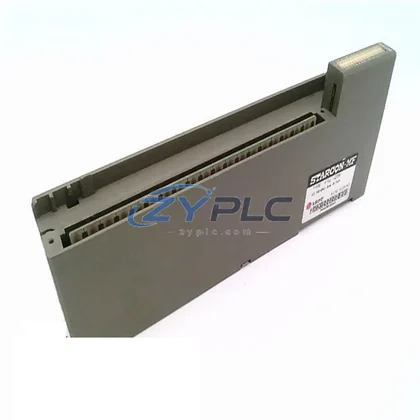
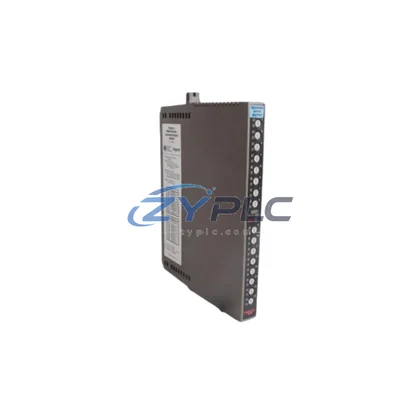
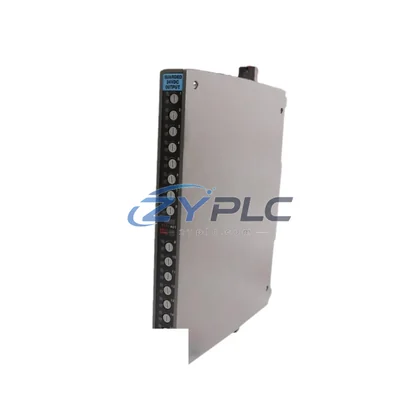
Yokogawa AMN21 Analog Module for CENTUM Automation
In modern process manufacturing, every milliwatt of wasted energy and every millisecond of unnecessary latency compounds into measurable production loss. The Yokogawa AMN21 Analog Input Module is engineered to address both challenges simultaneously — delivering precise, low-drift signal acquisition within the CENTUM VP and CENTUM CS 3000 distributed control systems while minimizing the power overhead associated with high-density I/O architectures. For plant engineers focused on reducing operating load at the field device and control layer, the AMN21 represents a targeted, proven solution.
The AMN21 is a multi-channel analog input module designed for integration into Yokogawa’s CENTUM series DCS cabinets. It accepts standard 4–20 mA process signals from field transmitters — including pressure, temperature, flow, and level instruments — and converts them with high-resolution accuracy for use in regulatory control loops. By maintaining signal fidelity at the input stage, the AMN21 reduces the need for repeated scan cycles and error-correction overhead that would otherwise increase CPU load and associated power draw across the controller network.
Product Specification Table
| Parameter |
Specification / Value |
| Module Type |
Analog Input (4–20 mA) |
| Number of Channels |
16 channels (typical AMN21 configuration) |
| Signal Resolution |
16-bit A/D conversion |
| Power Consumption |
Low-power design, optimized for high-density I/O bus |
| Operating Efficiency |
Continuous loop scanning with minimal CPU interrupt overhead |
| Compatible Systems |
Yokogawa CENTUM VP, CENTUM CS 3000 |
| Application Environment |
Process industries: oil & gas, chemical, power, pulp & paper |
| Energy Saving Value |
Reduces redundant scan cycles; supports maintenance-focused loop tuning |
| Warranty |
warranty terms confirmed during quotation — tested, availability subject to RFQ confirmation |
| Origin |
Japan |
System Compatibility and Application
The AMN21 does not operate in isolation — its efficiency contribution is best understood within the broader CENTUM automation architecture. In a typical energy-optimized plant configuration, field transmitters feed 4–20 mA signals into the AMN21, which passes conditioned data to the CENTUM VP Field Control Station (FCS). The FCS, running on Yokogawa’s Vnet/IP communication backbone, distributes process values to the Human Interface Station (HIS) and to advanced control applications without unnecessary data duplication.
Alongside the AMN21, plants commonly deploy the Yokogawa AAI143 analog input module for applications requiring HART-enabled field device diagnostics — allowing maintenance teams to read device health data over the same signal wire without adding separate communication infrastructure. For analog output control, the AAI543 analog output module pairs naturally with the AMN21 in mixed I/O node configurations, enabling closed-loop control of control valves and variable-speed drives from a single I/O nest.
On the digital side, the ADV151 digital input module handles discrete status signals from motor starters, limit switches, and protective relays, while the ADV551 digital output module drives solenoid valves and relay coils. Together with the AMN21, these modules form a complete I/O layer that covers the full signal spectrum of a process unit — from analog measurement to discrete actuation — without requiring separate gateway hardware or protocol converters that would add both cost and power consumption.
For power distribution within the I/O cabinet, the Yokogawa PW482 power supply module provides stable, regulated DC power to the I/O bus, ensuring that the AMN21 and adjacent modules receive clean power free from the voltage fluctuations that can cause measurement drift and increase error-correction cycles. In installations where redundant power is required, dual PW482 units operate in load-sharing mode, further improving overall system availability without proportionally increasing energy draw.
Communication between the field control station and the plant network relies on the CP451 communication processor, which manages Vnet/IP traffic scheduling to prevent bus saturation — a common source of hidden unplanned downtime in poorly configured DCS networks. When the AMN21’s data is transmitted efficiently through the CP451, the overall scan-to-action latency is reduced, allowing PID loops to respond faster and with less overshoot, which directly translates to reduced actuator movement and lower operating load in driven equipment such as pumps and compressors.
For plants integrating condition monitoring at the device level, the AMN21 can be combined with Yokogawa’s WT series power analyzers or third-party power transducers feeding into adjacent analog input channels on the same I/O node. This allows operating load data from motors, heaters, and drives to be trended alongside process variables in the CENTUM historian, enabling operators to correlate production throughput with energy intensity in real time.
Maintenance and Replacement Notes
Consider a continuous chemical process where a reactor feed pump is controlled by a PID loop reading differential pressure across a flow element. The 4–20 mA signal from the differential pressure transmitter enters the AMN21, which delivers a stable, high-resolution process value to the FCS every scan cycle. Because the AMN21 maintains low signal noise and high linearity, the PID controller requires less integral action to hold setpoint — meaning the variable-frequency drive controlling the pump motor makes smaller, less frequent speed corrections. Over a 24-hour operating period, this reduction in drive hunting can translate to measurable kWh savings on a single motor loop.
In batch manufacturing environments, the AMN21 supports recipe-driven control strategies where analog inputs from temperature and pressure transmitters are used to trigger phase transitions. Accurate, low-latency signal acquisition from the AMN21 ensures that phase transitions occur at the correct process state rather than being delayed by signal lag or measurement uncertainty — reducing batch cycle time and the associated energy consumed during extended hold phases.
Predictive maintenance is another area where the AMN21 contributes to energy efficiency indirectly. By providing consistent, high-quality analog data to the CENTUM historian, maintenance engineers can trend subtle changes in process signatures — such as gradual increases in pump differential pressure or slow drift in heat exchanger outlet temperature — that indicate developing equipment degradation. Addressing these issues proactively, before they cause unplanned shutdowns, avoids the energy-intensive restart sequences and product loss associated with emergency stops.
All AMN21 units supplied by ZYPLC are drawn from verified inventory, subjected to functional testing prior to shipment, and covered by a warranty terms confirmed during quotation. Fast dispatch from stocked inventory ensures that replacement modules reach the plant quickly, minimizing the duration of any I/O node downtime and the associated production unplanned downtime from running a process in a degraded control state.
Product Sourcing FAQ
Q1: How does the AMN21 contribute to reducing overall plant operating load?
The AMN21 delivers high-resolution, low-noise analog input data that allows PID controllers to operate with tighter tuning and less corrective action. This reduces unnecessary actuator movement in control valves and variable-speed drives, directly lowering the energy consumed by driven equipment over time.
Q2: Is the AMN21 compatible with both CENTUM VP and CENTUM CS 3000 systems?
Yes. The AMN21 is designed for use within Yokogawa’s CENTUM platform and is compatible with CENTUM CS 3000 and CENTUM VP field control station I/O nests. Always verify the specific FCS model and I/O bus revision with your system documentation before installation.
Q3: Can the AMN21 be used as a direct replacement for an existing failed analog input module?
In most cases, yes. The AMN21 is a standard CENTUM I/O module that can be hot-swapped in systems configured for redundant or non-redundant I/O. Confirm the channel count, signal type, and module address configuration match the existing installation before replacement.
Q4: What does the warranty terms confirmed during quotation cover, and how is the module tested before shipment?
Every AMN21 unit supplied by ZYPLC undergoes functional verification testing prior to dispatch, confirming channel integrity and signal accuracy. The warranty terms confirmed during quotation covers manufacturing defects and functional failures under normal operating conditions. Contact our team for warranty claims or technical support.