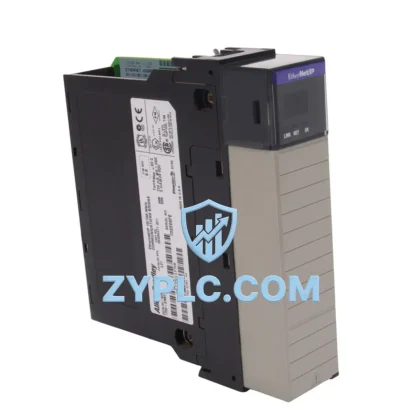
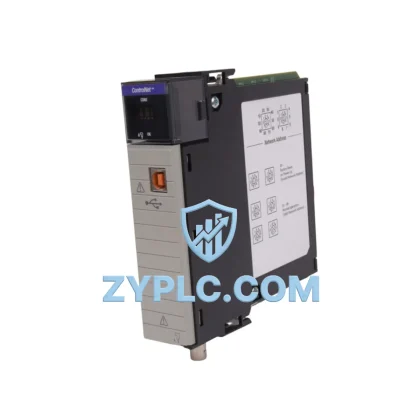
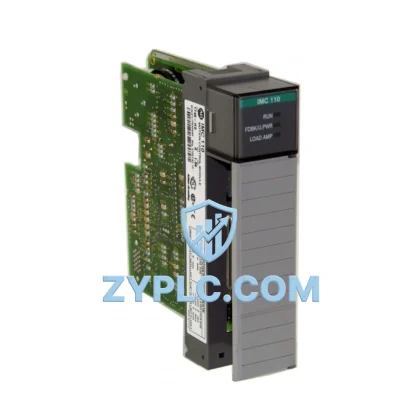
Yokogawa BT100 System-Ready Operator Control Panel for CENTUM Architecture
In a fully integrated distributed control system, every component must perform not only as a standalone unit but as a coherent node within a layered automation hierarchy. The Yokogawa BT100 Operator Control Panel is purpose-engineered for exactly this role — serving as the primary human-machine interface layer within CENTUM VP and CENTUM CS 3000 distributed control architectures. Rather than functioning as an isolated terminal, the BT100 is designed to coordinate seamlessly across the control layer, I/O layer, network layer, power layer, HMI layer, and field execution layer, delivering system-wide consistency, operational transparency, and long-term maintainability.
At the control layer, the BT100 interfaces directly with Yokogawa’s Field Control Stations (FCS), including the PFCS and SFCS variants, enabling operators to monitor and command process variables with precision. The panel’s communication backbone is built on Vnet/IP — Yokogawa’s proprietary high-speed, fault-tolerant control network — ensuring deterministic data exchange between the operator station and the field control units. This architecture eliminates latency-induced command errors and supports redundant network topologies that are critical in continuous process environments such as petrochemical refining, power generation, and water treatment facilities.
From an I/O integration perspective, the BT100 works in concert with Yokogawa’s remote I/O units, including the KFCS and RIO bus-connected modules, to present real-time field data at the operator level. Signal integrity is maintained through the system’s structured marshalling approach, where analog input modules, digital output modules, and HART-compatible field instruments feed data upward through the I/O layer to the FCS and ultimately to the BT100 display environment. This layered signal flow ensures that operators receive accurate, timestamped process data without manual intervention.
The power layer supporting the BT100 deployment typically includes Yokogawa’s redundant power supply units, such as the PW482 and PW301 series, which provide stable 24VDC or 48VDC rails to both the control stations and the operator panel infrastructure. Redundant power architecture is a non-negotiable requirement in mission-critical installations, and the BT100’s compatibility with these power modules ensures uninterrupted operation even during single-point power failures.
Within the HMI layer, the BT100 complements Yokogawa’s CENTUM VP Integrated Human Interface (IHI) software environment, allowing engineering teams to configure alarm management, trend displays, and process graphics that align with ISA-101 HMI design standards. The panel supports multi-window operation, enabling simultaneous monitoring of multiple process units — a capability that is particularly valuable in large-scale manufacturing plants and offshore platform control rooms where operators must manage complex, interdependent process streams.
At the network layer, the BT100 participates in the plant-wide information network (PWIN) architecture, enabling data exchange with Yokogawa’s Exaquantum plant information management system (PIMS) and third-party MES or ERP platforms via OPC-DA and OPC-UA protocols. This connectivity ensures that production data captured at the operator level flows upward to enterprise systems without data silos, supporting real-time KPI monitoring, production reporting, and regulatory compliance documentation.
For system expansion and redundancy design, the BT100 is compatible with Yokogawa’s dual-redundant FCS configurations, where paired field control stations operate in hot-standby mode. In the event of a primary FCS failure, the redundant unit assumes control within milliseconds, and the BT100 operator panel reflects the switchover status transparently — maintaining operator situational awareness without process disruption. This redundancy architecture is particularly critical in industries where unplanned downtime carries significant financial or safety consequences, including LNG terminals, nuclear auxiliary systems, and pharmaceutical batch processing.
Engineering commissioning of the BT100 within a CENTUM architecture is supported by Yokogawa’s CENTUM VP Engineering Environment, which provides graphical function block programming, loop tuning utilities, and system diagnostic tools. Commissioning teams can validate I/O assignments, verify network communication paths, and perform hardware-in-the-loop testing prior to plant startup — reducing commissioning time and minimizing the risk of configuration errors in live process environments.
From a long-term maintenance perspective, the BT100’s modular design philosophy aligns with Yokogawa’s VigilantPlant lifecycle support framework. Spare parts availability, firmware update pathways, and compatibility with newer CENTUM VP R6 software releases ensure that existing BT100 installations can be maintained and upgraded without full system replacement. This lifecycle approach protects capital investment and supports plant operators in meeting 20-year or longer operational horizons common in process industries.
All BT100 units supplied by ZYPLC are covered by a 12-Month Warranty, with full Contextual Integration support to ensure the panel is correctly configured within your specific CENTUM system architecture before deployment.
Architecture Specification Table
| Parameter |
Specification |
| System Role |
Operator Control Panel — HMI Layer |
| Compatible Architecture |
Yokogawa CENTUM VP, CENTUM CS 3000 |
| Control Network |
Vnet/IP (redundant Ethernet-based control bus) |
| Communication Protocols |
Vnet/IP, OPC-DA, OPC-UA, HART (via FCS) |
| Power Supply |
Compatible with PW482 / PW301 redundant PSU modules |
| Operating Voltage |
24VDC / 48VDC (system-dependent) |
| Installation Environment |
Control room, DCS cabinet, panel-mount enclosure |
| Redundancy Support |
Hot-standby FCS redundancy, dual Vnet/IP network |
| Country of Origin |
Japan |
| Warranty |
12-Month Warranty (ZYPLC) |
Coordinated Control System Design
The BT100 achieves its full operational value when deployed as part of a coordinated CENTUM system architecture. In a typical large-scale process plant, the operator panel works in conjunction with the following components and subsystems:
The PFCS (Process Field Control Station) serves as the primary control engine, executing function block logic and managing I/O communication. Paired with a SFCS (Safety Field Control Station) in SIL-rated applications, the control layer provides both regulatory and safety-instrumented control from a unified engineering environment. The BT100 presents the operational status of both stations to the operator in a consolidated display format.
Remote I/O expansion is handled through KFCS-connected RIO bus modules, which extend the I/O capacity of the FCS to field junction boxes located up to several hundred meters from the control room. Analog input cards, thermocouple input modules, and digital output relay cards within these RIO units feed process data to the BT100 via the FCS communication path.
The Vnet/IP dual-ring network provides the communication backbone, with managed industrial Ethernet switches forming redundant ring topologies that ensure network survivability in the event of a single cable or switch failure. The BT100 connects to this network through dedicated Ethernet ports, maintaining sub-millisecond communication latency with the FCS units.
At the power layer, PW482 redundant power supply modules provide fault-tolerant 24VDC distribution to the FCS racks and operator station infrastructure. Automatic switchover between primary and backup power modules ensures continuous operation without operator intervention.
The Exaquantum PIMS server collects historian data from the CENTUM system via OPC interfaces, enabling long-term trend analysis, production reporting, and regulatory data archiving. The BT100 operator environment provides the real-time data that feeds this historian infrastructure.
For alarm management, the BT100 integrates with Yokogawa’s CENTUM VP Alarm Management subsystem, which supports ISA-18.2-compliant alarm rationalization, shelving, and priority management. This ensures that operators receive actionable alarm notifications rather than alarm floods during process upsets.
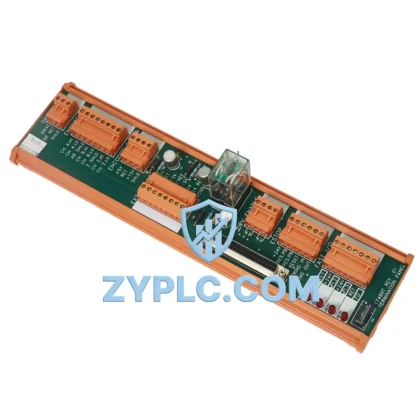
Terminal modules and marshalling cabinets equipped with Yokogawa-compatible DIN rail terminal blocks provide the physical signal termination layer between field instruments and the I/O cards, completing the signal chain from field sensor to BT100 display.
Application in Layered Automation Systems
The Yokogawa BT100 Operator Control Panel finds application across a broad spectrum of process industries where CENTUM-based DCS architectures are deployed:
In petroleum refining and petrochemical plants, the BT100 supports continuous process monitoring across distillation columns, heat exchangers, and reactor systems, where stable operator visibility and rapid alarm response are critical to product quality and safety compliance.
In power generation facilities — including coal-fired, gas turbine, and combined-cycle plants — the BT100 provides operators with real-time visibility into boiler controls, turbine governor systems, and auxiliary plant equipment, supporting both normal operations and startup/shutdown sequencing.
In water and wastewater treatment plants, the BT100 enables centralized monitoring of pump stations, chemical dosing systems, and filtration processes, reducing the need for field operator rounds and improving response times to process deviations.
In mining and mineral processing operations, the panel supports control of crushing circuits, flotation cells, and tailings management systems, where robust hardware and reliable communication are essential in harsh industrial environments.
In pharmaceutical and fine chemical manufacturing, the BT100 supports batch process control within CENTUM VP’s batch management framework, providing operators with recipe execution visibility and electronic batch record integration for regulatory compliance.
In LNG and gas processing terminals, the BT100 operates within safety-integrated CENTUM architectures where SIL 2 and SIL 3 safety functions are managed alongside regulatory control, requiring seamless coordination between the operator panel and the safety instrumented system layer.
Architecture Engineering FAQ
Q1: Is the BT100 compatible with both CENTUM VP and CENTUM CS 3000 architectures?
The BT100 is designed for use within Yokogawa’s CENTUM platform family. Compatibility with specific CENTUM VP or CS 3000 software versions depends on the firmware revision of the panel and the engineering environment version in use. ZYPLC provides pre-delivery verification to confirm compatibility with your installed CENTUM system version, and our 12-Month Warranty covers hardware defects identified during integration and commissioning.
Q2: Can the BT100 be integrated into a redundant Vnet/IP network topology without additional hardware?
Yes. The BT100 supports connection to redundant Vnet/IP network segments through its dual Ethernet interface configuration. Integration into an existing dual-ring or dual-star Vnet/IP topology requires correct network address assignment and switch port configuration within the CENTUM VP engineering environment. ZYPLC’s Contextual Integration support service includes network configuration review to ensure the panel is correctly provisioned within your specific network architecture.
Q3: What long-term maintenance considerations apply to BT100 installations, and how does the 12-Month Warranty support ongoing operations?
The BT100’s modular construction allows for component-level replacement of display assemblies, interface boards, and power input modules without full panel replacement. Yokogawa’s VigilantPlant lifecycle program provides firmware update support and spare parts availability for extended operational periods. ZYPLC’s 12-Month Warranty covers all hardware defects arising from manufacturing or component failure during the warranty period, with advance replacement options available to minimize process downtime. For installations beyond the warranty period, ZYPLC offers extended support agreements and priority spare parts sourcing.
© 2026 ZYPLC. All rights reserved.
Original Source: https://zyplc.com
Contact: +86 19859288691 | [email protected]