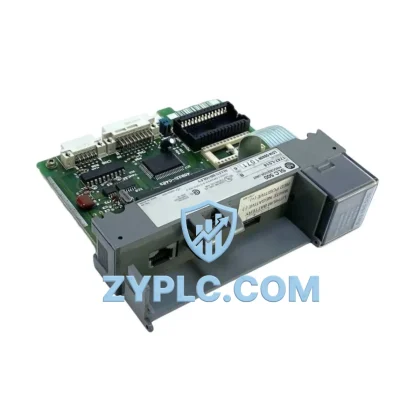
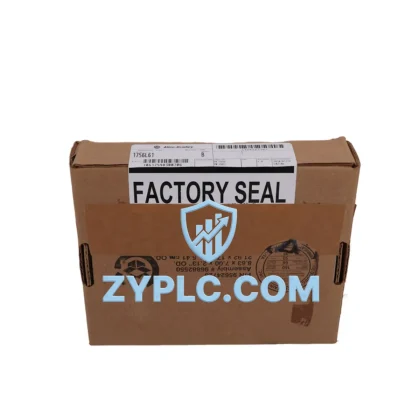
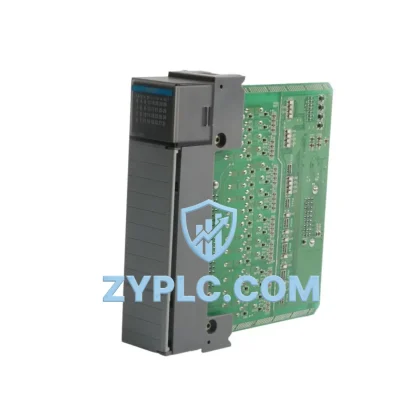
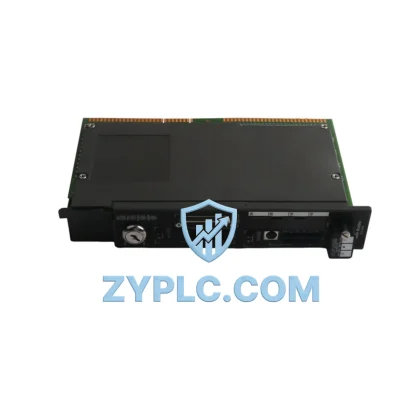
Yokogawa CP401-11 S1 System-Ready Processor for CENTUM CS3000 Architecture
The Yokogawa CP401-11 S1 is a field-proven central processing unit engineered for deployment within the CENTUM CS3000 Distributed Control System platform. As the computational core of the control layer, this processor module governs real-time scan cycles, inter-module communication, and deterministic execution of control logic across the entire automation hierarchy. Its role extends far beyond standalone computation — the CP401-11 S1 is a system-defining component that establishes the operational integrity of every connected subsystem, from field-level I/O to supervisory HMI interfaces.
In modern industrial automation, the processor module is the architectural anchor. The CP401-11 S1 fulfills this role by maintaining synchronous communication with I/O modules such as the AAI141-S00 analog input card and the ADV151-P00 digital output module, ensuring that field signals are processed with minimal latency and maximum fidelity. The processor’s internal bus architecture supports high-speed data exchange with the FCS (Field Control Station) backplane, enabling seamless integration with expansion I/O racks and remote I/O nodes across Vnet/IP or ESB communication networks.
System architects deploying the CP401-11 S1 benefit from its native compatibility with the CENTUM CS3000 engineering environment, including the System View and Control Drawing tools. This compatibility eliminates integration overhead during commissioning and allows engineers to configure, download, and verify control logic without hardware-specific workarounds. When paired with the BCV0103 bus converter or the RIO (Remote I/O) gateway modules, the CP401-11 S1 extends its control reach across geographically distributed process units — a critical capability in refinery, power generation, and chemical processing applications.
Redundancy is a core design consideration for any mission-critical control architecture. The CP401-11 S1 supports dual-redundant processor configurations when paired with a secondary CP401-11 unit and the appropriate redundancy switching module. In the event of a primary processor fault, bumpless transfer to the standby unit is achieved within milliseconds, ensuring continuous process operation without operator intervention. This redundancy architecture is further reinforced by the use of dual-redundant power supply modules such as the PW481 or PW482, which provide isolated power rails to the FCS station and eliminate single-point power failure risks.
At the network layer, the CP401-11 S1 interfaces with the Vnet/IP control network — Yokogawa’s proprietary high-speed deterministic Ethernet backbone — enabling real-time data exchange with other FCS stations, the HIS (Human Interface Station), and the EWS (Engineering Workstation). This network architecture supports system-wide tag browsing, alarm management, and historian data collection without impacting control loop performance. For plants requiring integration with third-party systems, the CP401-11 S1 ecosystem supports OPC-DA/UA gateway modules and Modbus TCP communication adapters, enabling contextual integration with MES, SCADA, and ERP platforms.
From a maintenance and lifecycle perspective, the CP401-11 S1 is designed for long-term operational continuity. Its modular form factor allows hot-swap replacement within the FCS station without requiring a full system shutdown, significantly reducing planned maintenance windows. Diagnostic LEDs on the module faceplate provide immediate visual indication of processor status, communication health, and fault conditions, enabling maintenance technicians to isolate issues rapidly. When combined with the CENTUM CS3000 system’s built-in self-diagnostic routines, the CP401-11 S1 supports predictive maintenance workflows that extend mean time between failures (MTBF) across the control architecture.
Inventory availability and supply chain reliability are equally important considerations for plant operators managing long-term automation assets. ZYPLC maintains verified stock of the CP401-11 S1, supported by rigorous incoming inspection and functional testing protocols. Each unit is dispatched with a 12-Month Warranty, providing procurement teams and plant engineers with the assurance needed for both emergency replacement and planned capital projects. Our global logistics network ensures timely delivery to process industries across Asia, the Middle East, Europe, and the Americas.
Architecture Specification Table
| Parameter |
Specification |
| System Role |
Central Processing Unit — CENTUM CS3000 Field Control Station (FCS) |
| Compatible Platform |
Yokogawa CENTUM CS3000 DCS |
| Module Series |
CP401 Series |
| Part Number |
CP401-11 S1 |
| Processor Function |
Real-time control execution, I/O scan, inter-module communication |
| Communication Interface |
Vnet/IP (Ethernet-based deterministic control network) |
| Redundancy Support |
Dual-redundant processor configuration supported |
| Backplane Compatibility |
CENTUM CS3000 FCS station backplane / ESB bus |
| Power Supply Compatibility |
PW481 / PW482 redundant power supply modules |
| Operating Temperature |
0°C to 55°C (standard industrial environment) |
| Installation Environment |
Control cabinet / FCS station rack mount |
| Country of Origin |
Japan |
| Warranty |
12-Month Warranty — all units functionally tested prior to dispatch |
Coordinated Control System Design
The CP401-11 S1 achieves its full architectural value when deployed as part of a coordinated CENTUM CS3000 system. At the control layer, the processor works in concert with a secondary CP401-11 unit in redundant configurations, with the redundancy switching module managing seamless failover. The FCS station backplane connects the processor to analog input modules such as the AAI141-S00 (4–20 mA signal acquisition) and digital output modules including the ADV151-P00, which drives field actuators and solenoid valves based on processed control logic.
Power integrity across the FCS station is maintained by the PW481 and PW482 redundant power supply modules, which provide isolated 24 VDC rails to the processor and I/O subsystems. At the network layer, the CP401-11 S1 communicates via Vnet/IP with the HIS (Human Interface Station) running CENTUM CS3000 HMI software, providing operators with real-time process visualization, alarm management, and trend displays. The EWS (Engineering Workstation) connects to the same Vnet/IP backbone, enabling online logic modification and system diagnostics without interrupting live control operations.
For plants requiring expanded I/O capacity, the CP401-11 S1 supports connection to remote I/O nodes via the BCV0103 bus converter, extending the control architecture to field junction boxes and remote marshalling panels. Communication gateways within the CENTUM CS3000 ecosystem also support Modbus RTU/TCP and PROFIBUS DP integration, allowing the CP401-11 S1 to exchange data with variable frequency drives, intelligent motor control centers, and third-party field devices. Terminal modules and marshalling components within the FCS cabinet complete the signal chain, providing organized, labeled termination points for field wiring and simplifying both initial commissioning and long-term maintenance activities.
Application in Layered Automation Systems
The CP401-11 S1 is deployed across a broad spectrum of process industries where system reliability, deterministic control, and long-term maintainability are non-negotiable requirements. In petroleum refining and petrochemical processing, the module serves as the control core for distillation column management, reactor temperature control, and compressor surge protection — applications where millisecond-level response times and bumpless redundancy switchover are essential to both process safety and product quality.
In electric power generation and grid-connected utilities, the CP401-11 S1 manages boiler combustion control, turbine governor interfaces, and auxiliary system sequencing within CENTUM CS3000 FCS stations. Its deterministic scan cycle and Vnet/IP communication architecture ensure that control actions are executed within defined time windows, supporting the stringent reliability requirements of power plant operations. Water and wastewater treatment facilities deploy the CP401-11 S1 for pump station control, chemical dosing management, and SCADA integration — leveraging its OPC-UA gateway compatibility to connect plant-level control with centralized monitoring systems.
Mining and metallurgical operations benefit from the CP401-11 S1’s robust operating temperature range and its compatibility with high-density I/O configurations, enabling control of conveyor systems, crusher circuits, flotation cell management, and smelter process control within a unified CENTUM CS3000 architecture. Packaging and discrete manufacturing lines utilize the module’s fast scan cycle and digital I/O coordination capabilities to synchronize conveyor drives, filling stations, labeling systems, and end-of-line inspection equipment — achieving the throughput consistency and traceability required by modern production environments.
Architecture Engineering FAQ
Q1: Is the CP401-11 S1 compatible with both new CENTUM CS3000 installations and existing legacy system expansions?
A: Yes. The CP401-11 S1 is fully compatible with existing CENTUM CS3000 FCS station architectures, making it suitable for both greenfield installations and brownfield expansion projects. It integrates directly with existing backplane infrastructure, I/O modules, and Vnet/IP network configurations without requiring firmware upgrades or hardware modifications to adjacent modules. This contextual integration capability significantly reduces commissioning time and engineering risk in expansion projects.
Q2: What redundancy architecture is supported, and how is failover managed during a processor fault?
A: The CP401-11 S1 supports a dual-redundant processor configuration in which a primary and standby CP401-11 unit operate in parallel within the same FCS station. The redundancy switching module continuously monitors processor health and initiates bumpless transfer to the standby unit upon detection of a primary fault — typically within 10–30 milliseconds. Control loop execution continues without interruption, and the HIS operator station displays a redundancy status alarm to notify engineering personnel of the switchover event. The faulty primary module can then be replaced online without requiring a process shutdown.
Q3: What does the 12-Month Warranty cover, and what support is available for system integration and commissioning?
A: All CP401-11 S1 units supplied by ZYPLC are covered by a 12-Month Warranty from the date of dispatch, covering manufacturing defects and functional failures under normal operating conditions. Each unit undergoes functional testing and inspection prior to shipment to verify processor operation, communication interface integrity, and backplane connector condition. For system integration and commissioning support, our technical team is available to assist with FCS station configuration, Vnet/IP network setup, redundancy verification, and I/O module compatibility confirmation. Contact us at [email protected] or +86 19859288691 for pre-sales technical consultation and post-delivery support.
© 2026 ZYPLC. All rights reserved.
Original Source: https://zyplc.com
Contact: +86 19859288691 | [email protected]