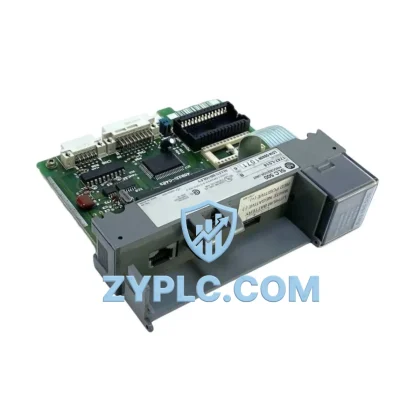
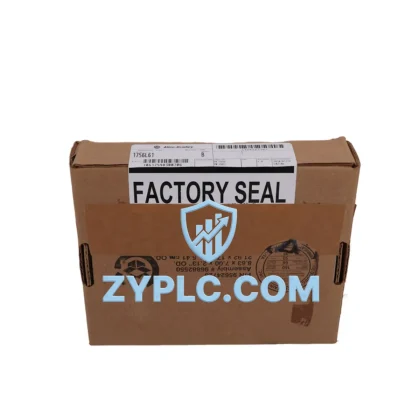
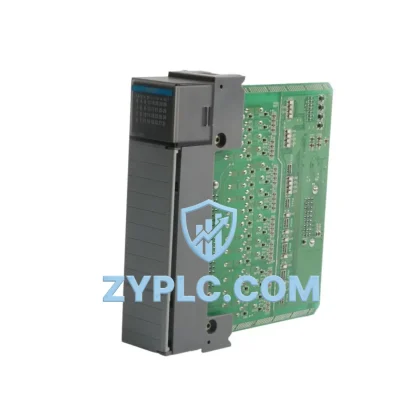
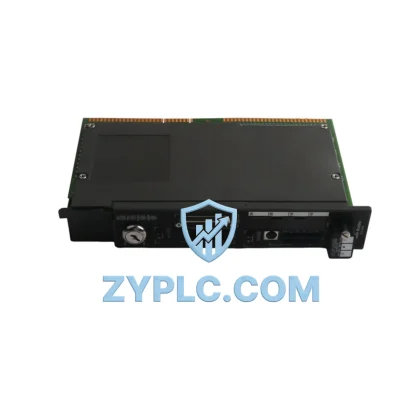
Yokogawa CP461-11-S1 Energy-Saving CPU Module CS3000: Precision Control for Optimized Production Lines
The Yokogawa CP461-11-S1 is a high-performance CPU module engineered for the CENTUM CS3000 Distributed Control System (DCS), one of Yokogawa’s most trusted process automation platforms in continuous and batch manufacturing environments. Designed to handle complex multi-loop control strategies with minimal computational overhead, the CP461-11-S1 plays a central role in reducing unnecessary energy consumption across the entire control architecture — from field device polling cycles to inter-controller communication bursts.
In modern industrial facilities where energy costs represent a significant share of operating expenditure, the efficiency of the CPU module directly influences how effectively the plant responds to load changes, setpoint deviations, and equipment state transitions. The CP461-11-S1 achieves this through optimized scan cycle management, deterministic task scheduling, and tight integration with Yokogawa’s field network infrastructure, enabling operators to maintain precise control without over-driving actuators, drives, or heating elements.
Efficiency Performance Table
| Parameter |
Specification / Value |
| SKU / Part Number |
CP461-11-S1 |
| Brand |
Yokogawa |
| Series / Platform |
CENTUM CS3000 DCS |
| Module Type |
CPU Module (Field Control Station) |
| Power Consumption |
Low-power design; optimized for continuous 24/7 operation |
| Control Execution Efficiency |
Deterministic scan cycle; supports multi-loop PID and advanced control |
| Compatible Systems |
CENTUM CS3000 FCS, ESB Bus, ER Bus, Vnet/IP |
| Application Environment |
Oil & Gas, Petrochemical, Power Generation, Pharmaceuticals, Pulp & Paper |
| Energy Optimization Value |
Reduces control loop overshoot; minimizes actuator wear and energy spikes |
| Origin |
Japan |
| Warranty |
12-Month Warranty — Tested & Verified Before Shipment |
Energy-Aware Automation Architecture
The CP461-11-S1 operates as the computational core of a Field Control Station (FCS) within the CENTUM CS3000 architecture. Its role extends beyond simple logic execution — it actively governs how control signals are generated, timed, and transmitted to downstream devices, which has a direct bearing on energy efficiency at the system level.
In a typical energy-optimized plant layout, the CP461-11-S1 works in close coordination with Yokogawa ESB Bus I/O modules such as the AAI141-S analog input card and AAI543-S analog output card, which handle real-time process variable acquisition and control output delivery. Accurate, low-latency I/O scanning ensures that the CPU can respond to process deviations before they escalate into energy-wasting oscillations or equipment overloads.
On the drive side, the CP461-11-S1 interfaces with variable frequency drive (VFD) systems — including Yokogawa-compatible drives and third-party inverters — through standardized 4–20 mA or HART signals via the I/O subsystem. This allows the CPU to implement speed-reference optimization algorithms that reduce motor energy consumption during partial-load conditions, a critical factor in pump, fan, and compressor applications where affinity laws apply. When paired with a Yokogawa WT series power analyzer or equivalent power monitoring module, the CP461-11-S1 can receive real-time power consumption feedback and adjust control outputs accordingly, closing the energy optimization loop.
For plants running Vnet/IP as the plant-wide control network, the CP461-11-S1 participates in high-speed inter-FCS data exchange, enabling coordinated energy management across multiple process units. This is particularly valuable in combined heat and power (CHP) plants or multi-unit chemical facilities where load balancing between process areas can yield measurable reductions in total energy draw. The Yokogawa HIS (Human Interface Station) running CENTUM CS3000 R3 software provides operators with real-time energy dashboards, trend displays, and alarm management that complement the CP461-11-S1’s control execution.
In redundant configurations, the CP461-11-S1 pairs with a standby CPU module via the ER Bus, ensuring bumpless switchover without process disturbance — eliminating the energy spikes and production losses associated with unplanned controller failures. The Yokogawa PW481 power supply module provides stable, conditioned DC power to the FCS chassis, protecting the CPU and I/O cards from voltage fluctuations that could otherwise cause erratic control behavior and increased energy consumption.
For facilities integrating legacy field devices, the CP461-11-S1 supports communication through FOUNDATION Fieldbus H1 and PROFIBUS DP interface modules, enabling digital communication with smart transmitters, positioners, and motor control centers. This digital integration eliminates signal conversion losses and enables device-level diagnostics that support predictive maintenance — a key pillar of energy-efficient plant operation.
Power Optimization in Real Production Lines
In continuous process industries, unplanned downtime and poor control loop tuning are among the largest contributors to energy waste. A poorly tuned PID loop driving a steam control valve, for example, can cause persistent hunting behavior that not only degrades product quality but also forces boilers to operate at higher-than-necessary firing rates. The CP461-11-S1, with its high-resolution scan cycle and support for advanced control function blocks, enables engineers to implement properly tuned regulatory control strategies that keep process variables stable within tight bands — directly reducing the energy overhead associated with process variability.
In batch manufacturing environments such as pharmaceutical or food processing plants, the CP461-11-S1 supports sequential function chart (SFC) execution that coordinates equipment startup and shutdown sequences in an energy-optimized order. Rather than energizing all drives and heaters simultaneously at batch start — which creates demand spikes that increase peak power charges — the CPU can stagger equipment activation according to a pre-programmed energy-aware sequence.
Predictive maintenance integration is another area where the CP461-11-S1 contributes to long-term energy savings. By continuously monitoring control output saturation, valve travel accumulation, and loop performance indices, the FCS can flag equipment that is beginning to degrade — such as a pump with increasing slip or a heat exchanger with fouling — before the degradation reaches a point where energy consumption rises significantly. This data, surfaced through the CENTUM CS3000 HIS or exported to a plant historian, gives maintenance teams the information they need to schedule interventions during planned shutdowns rather than reacting to failures.
Every CP461-11-S1 unit supplied by ZYPLC undergoes full functional testing prior to shipment, including power-on verification, communication link checks, and control execution validation. Units are shipped with a 12-month warranty, and our inventory is maintained to support rapid deployment for both planned upgrades and emergency replacement scenarios. Lead times are minimized through local stock availability, reducing the production energy losses associated with extended downtime waiting for parts.
Energy Optimization FAQ
Q1: How does the CP461-11-S1 contribute to measurable energy savings in a process plant?
The CP461-11-S1 enables tighter control loop performance, which directly reduces process variability and the associated energy overhead. By minimizing overshoot and oscillation in temperature, flow, and pressure loops, the CPU helps keep utilities — steam, compressed air, cooling water — operating at demand-matched levels rather than at conservative over-supply margins. In motor-driven applications, optimized setpoint tracking via VFD integration can reduce energy consumption by 15–30% compared to fixed-speed operation with poor control.
Q2: Is the CP461-11-S1 compatible with existing CENTUM CS3000 systems without hardware modification?
Yes. The CP461-11-S1 is a direct-fit replacement for compatible CPU module slots within the CENTUM CS3000 FCS chassis. It is compatible with existing ESB Bus I/O cards, ER Bus redundancy configurations, and Vnet/IP network infrastructure. No changes to field wiring or I/O card assignments are required in most replacement scenarios. We recommend verifying the firmware revision of your existing system before installation to ensure compatibility.
Q3: What is the testing and quality assurance process for CP461-11-S1 units from ZYPLC?
Each CP461-11-S1 unit undergoes a multi-stage inspection process that includes visual inspection, power-on functional test, communication interface verification, and control execution validation. Units that pass all test stages are tagged, documented, and prepared for shipment. The 12-month warranty covers defects in materials and workmanship under normal operating conditions. Our team can provide test reports upon request for critical applications.
Q4: What is the lead time and availability for the CP461-11-S1?
ZYPLC maintains stock of the CP461-11-S1 to support both planned maintenance and emergency replacement requirements. Standard orders are processed and shipped within 1–3 business days. For urgent requirements, expedited shipping options are available. Contact our sales team at plc.sales@zyplc.com or +86 19859288691 to confirm current stock levels and delivery timelines.
© 2026 ZYPLC. All rights reserved.
Original Source: https://zyplc.com
Contact: +86 19859288691 | plc.sales@zyplc.com