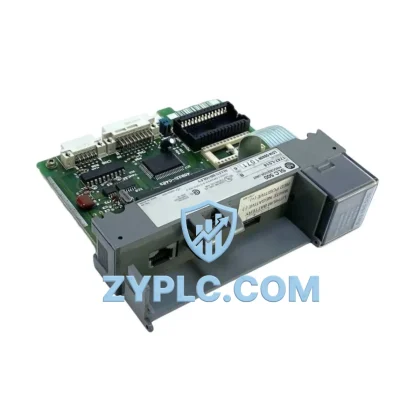
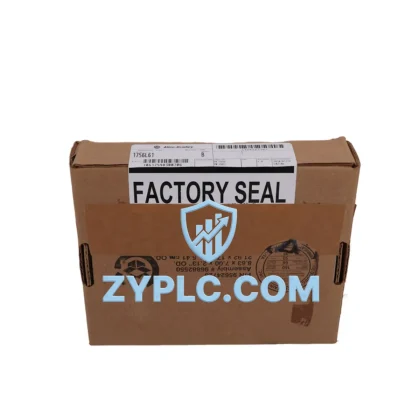
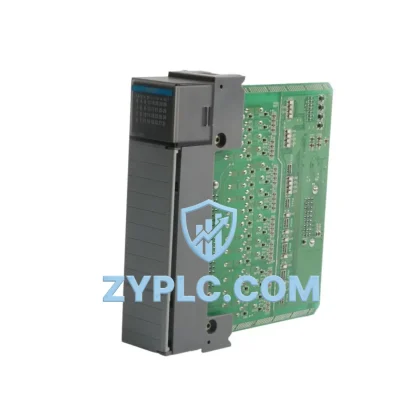
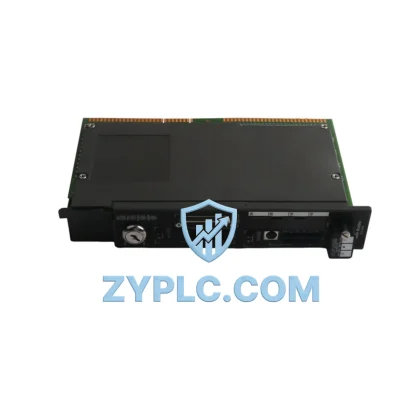
Yokogawa CP461-50-S2 Energy-Saving Processor Module: Precision Energy Control for Centum CS Automation
The Yokogawa CP461-50-S2 is a high-performance central processing unit designed for the Centum CS and Centum CS3000 distributed control system (DCS) platform. As the computational core of the control domain, the CP461-50-S2 governs real-time process execution, I/O coordination, and inter-station communication — directly influencing how efficiently a plant consumes energy across every connected loop and field device.
In modern industrial facilities where energy costs represent a significant share of operating expenditure, the processor module is not merely a control component — it is the decision engine that determines whether motors run at optimal load, whether drives respond to demand signals with minimal latency, and whether energy-intensive equipment cycles are coordinated to avoid peak-load penalties. The CP461-50-S2 delivers the scan-cycle precision and deterministic execution needed to make those decisions reliably, shift after shift.
Efficiency Performance Table
| Parameter |
Specification / Value |
| Model / SKU |
CP461-50-S2 |
| Brand |
Yokogawa |
| Series |
Centum CS / Centum CS3000 |
| Module Type |
Central Processor Unit (CPU) — DCS Control Domain |
| Power Consumption |
Low-power embedded architecture; optimized for continuous 24/7 operation |
| Execution Efficiency |
Deterministic real-time scan cycle; supports high-speed control loops for motor and drive regulation |
| Compatible Systems |
Centum CS, Centum CS3000 DCS; compatible with Yokogawa EWS, HIS operator stations |
| I/O Coordination |
Supports Yokogawa AAI, ADV, ADA, AAT, and digital I/O modules via V-net/IP and ESB bus |
| Application Environment |
Oil & gas, petrochemical, power generation, pharmaceutical, pulp & paper, water treatment |
| Energy Optimization Value |
Enables closed-loop energy management: motor load balancing, VFD coordination, demand-side control |
| Origin |
Japan |
| Warranty |
12-Month Warranty — all units tested prior to shipment |
| Stock Status |
In Stock — ready to ship |
Energy-Aware Automation Architecture
The CP461-50-S2 operates at the center of a tightly integrated automation architecture. Its real value in energy optimization emerges when it is deployed alongside complementary Yokogawa Centum CS3000 components that together form a closed-loop energy management system.
On the field side, Yokogawa AAI141-S00 analog input modules collect 4–20 mA signals from current transformers, power transducers, and flow transmitters — feeding live energy consumption data directly into the CP461-50-S2’s control function blocks. Simultaneously, ADV151-P00 digital I/O modules handle discrete status signals from motor control centers (MCCs), circuit breakers, and contactor feedback loops, giving the processor a complete picture of equipment operating state.
For drive-level energy regulation, the CP461-50-S2 communicates setpoints and speed references to variable frequency drives (VFDs) — such as the Yaskawa A1000 or Fuji FRENIC-MEGA series — via analog output modules like the Yokogawa AAO141. This allows the DCS to dynamically adjust motor speed in response to process demand, eliminating the fixed-speed energy waste that accounts for a large portion of industrial electricity consumption. A pump running at 80% speed, for example, consumes roughly 51% of the energy of the same pump at full speed — a saving the CP461-50-S2 can sustain continuously through PID loop execution.
At the supervisory level, the processor interfaces with Yokogawa HIS (Human Interface Station) operator consoles running CENTUM VP or CS3000 R3 software, where energy KPIs — kWh per ton of product, specific energy consumption per batch, and demand trend graphs — are displayed in real time. Engineers can configure alarm thresholds for abnormal energy draw, triggering automatic load-shedding sequences managed entirely within the CP461-50-S2’s function block diagram (FBD) environment.
For plants requiring energy sub-metering at the zone or equipment level, the CP461-50-S2 can integrate with Yokogawa WT series power analyzers or third-party power quality meters via Modbus RTU/TCP or FOUNDATION Fieldbus H1 communication cards such as the Yokogawa ALF111. This enables granular energy accounting — identifying which production lines, compressors, or HVAC systems are consuming disproportionate power relative to their output contribution.
Redundancy configurations using paired CP461-50-S2 modules with Yokogawa EB401 ESB bus interface units ensure that energy optimization logic continues executing without interruption even during module switchover events — a critical requirement in continuous process industries where an unplanned stop can cost more in wasted energy and off-spec product than the hardware itself.
Power Optimization in Real Production Lines
In a typical petrochemical plant running Centum CS3000, the CP461-50-S2 manages hundreds of PID control loops simultaneously — each one representing an opportunity to reduce energy waste. A poorly tuned flow control loop that hunts around its setpoint forces a pump to work harder than necessary, consuming excess electricity and accelerating mechanical wear. The CP461-50-S2’s fast scan cycle and stable execution environment allow control engineers to implement aggressive, well-tuned loop parameters that keep processes on setpoint with minimal overshoot — directly reducing the energy penalty of process variability.
In batch manufacturing environments such as pharmaceutical or food processing, the processor coordinates equipment sequencing to flatten the facility’s electrical demand curve. By staggering motor start sequences, managing compressed air system charge cycles, and coordinating chiller loading through the DCS function block logic, the CP461-50-S2 helps plants avoid demand spikes that trigger utility penalty charges — savings that can reach tens of thousands of dollars annually in high-tariff regions.
Predictive maintenance integration is another dimension of energy optimization enabled by the CP461-50-S2. By trending motor current signatures, vibration proxy signals from smart transmitters, and runtime hour counters within the DCS historian, maintenance teams can identify degrading bearings, cavitating pumps, or fouled heat exchangers before they reach failure — each of which, if left unaddressed, causes the affected equipment to draw progressively more power for the same process output. Early intervention, triggered by DCS-based condition monitoring logic running on the CP461-50-S2, restores equipment to its design efficiency point and avoids the energy waste of degraded operation.
Every CP461-50-S2 unit supplied by ZYPLC undergoes full functional testing prior to shipment, including power-on verification, communication bus integrity checks, and memory diagnostics. Units are supplied with a 12-month warranty and are available from stock for immediate dispatch — minimizing plant downtime and ensuring that energy optimization programs are not delayed by long lead times on critical spare parts.
Energy Optimization FAQ
Q1: How does the CP461-50-S2 contribute to measurable energy savings in a DCS-controlled plant?
The CP461-50-S2 executes PID and advanced control algorithms that keep process variables — flow, pressure, temperature, level — precisely on setpoint. Tight control reduces the energy wasted by over-pumping, over-heating, or over-compressing to compensate for process variability. When integrated with VFD speed references and demand-side load management logic, plants typically report 10–25% reductions in motor-related energy consumption compared to fixed-speed or manual control baselines.
Q2: Is the CP461-50-S2 compatible with my existing Centum CS3000 system, and can it replace an older CP461 variant?
The CP461-50-S2 is designed for the Centum CS and Centum CS3000 control domain architecture. It is generally backward-compatible with existing FCS (Field Control Station) chassis and ESB bus configurations. Before replacement, we recommend verifying the firmware revision of your existing system and confirming slot compatibility with your FCS unit model. Our technical team can assist with compatibility assessment prior to purchase.
Q3: What testing does ZYPLC perform before shipping the CP461-50-S2?
Every CP461-50-S2 unit is powered on and tested for communication bus integrity, processor initialization, and memory function before dispatch. Units that do not pass full functional verification are not shipped. A test report is available upon request. All units are covered by a 12-month warranty from the date of shipment.
Q4: What is the lead time, and do you hold stock of the CP461-50-S2?
Yes — the CP461-50-S2 is held in stock and available for immediate shipment. For urgent plant requirements or emergency spare situations, same-day or next-day dispatch can be arranged. Contact our sales team at plc.sales@zyplc.com or +86 19859288691 to confirm availability and arrange expedited delivery.
© 2026 ZYPLC. All rights reserved.
Original Source: https://zyplc.com
Contact: +86 19859288691 | plc.sales@zyplc.com