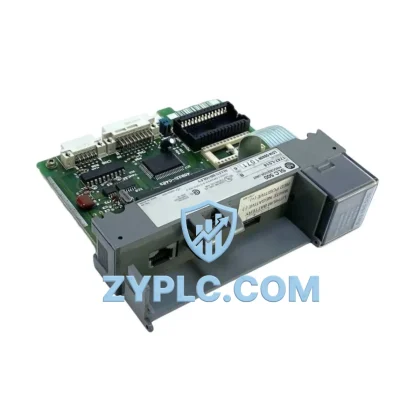
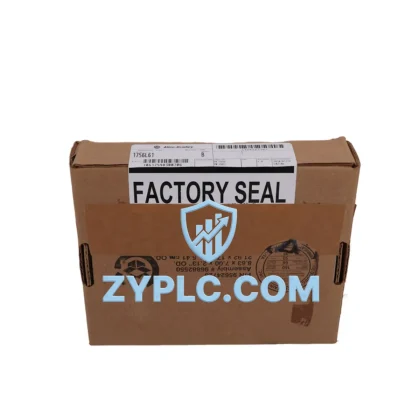
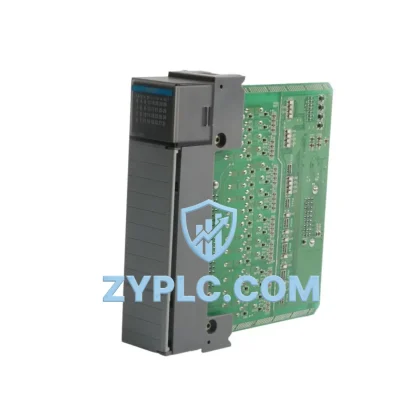
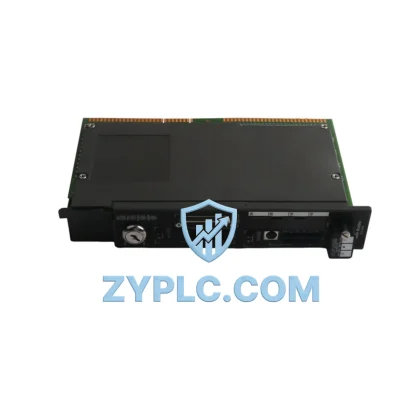
Yokogawa CP471-00 S1 System-Ready Processor for CS 3000 Architecture
The Yokogawa CP471-00 S1 is a high-performance DCS processor module engineered for deployment within the Centum CS 3000 distributed control system platform. In modern industrial automation, the processor module is not a standalone component — it is the computational core that governs signal acquisition, logic execution, loop control, and inter-subsystem communication across the entire control hierarchy. The CP471-00 S1 fulfills this role with precision, offering engineers a reliable foundation for building scalable, redundant, and maintainable process control architectures across manufacturing, power generation, petrochemical, water treatment, mining, metallurgy, and packaging industries.
Understanding the CP471-00 S1 requires viewing it within the full context of the Centum CS 3000 system architecture. This processor module resides at the control layer, where it receives process variable data from field instruments via I/O modules, executes configured control strategies, and transmits output commands to final control elements such as control valves, variable frequency drives, and motor starters. Its role is inseparable from the upstream and downstream components that define the system’s operational integrity.
Architecture Specification Table
| Parameter |
Specification |
| System Role |
Central Processing Unit — Centum CS 3000 Field Control Station (FCS) |
| SKU / Part Number |
CP471-00 S1 |
| Brand |
Yokogawa |
| Series |
Centum CS 3000 |
| Product Type |
DCS Processor Module |
| Processor Architecture |
Dual-redundant capable CPU for FCS redundancy configuration |
| Control Functions |
PID loop control, sequence control, batch control, advanced regulatory control |
| Communication Capability |
V-net (Yokogawa proprietary control bus), supports inter-FCS and HIS communication |
| I/O Compatibility |
Compatible with Centum CS 3000 I/O modules via node bus and ESB bus |
| Installation Environment |
DIN rail / rack-mount within Centum CS 3000 FCS cabinet |
| Operating Temperature |
0°C to 55°C (standard industrial environment) |
| Power Supply Compatibility |
Works with Centum CS 3000 power supply modules (e.g., PW481, PW482 series) |
| Origin |
Japan |
| Warranty |
12-Month Warranty — all units tested and verified prior to shipment |
Coordinated Control System Design
The CP471-00 S1 processor module achieves its full potential only when integrated within a coherently designed Centum CS 3000 system. At the control layer, the CP471-00 S1 works in tandem with a redundant processor pair — typically a second CP471-00 S1 unit — to ensure bumpless switchover in the event of a primary processor fault. This redundancy architecture is fundamental to high-availability process plants where unplanned downtime carries significant operational and safety consequences.
At the I/O layer, the CP471-00 S1 communicates with analog input modules such as the AAI141 and AAI543, which handle 4–20 mA process variable signals from field transmitters. Digital I/O modules including the ADV151 and ADV551 manage discrete signals for motor control, valve position feedback, and interlock logic. These I/O modules connect to the processor via the ESB bus or node bus, depending on the cabinet configuration, ensuring deterministic scan cycle performance across all I/O points.
At the network layer, the CP471-00 S1 interfaces with the V-net control bus — Yokogawa’s high-speed, deterministic communication backbone — which links multiple Field Control Stations (FCS) and Human Interface Stations (HIS) within the same plant network. For plants requiring integration with external systems, the ACG10S or ACG30S communication gateway modules provide OPC, Modbus, and HART protocol bridging, enabling the Centum CS 3000 architecture to exchange data with third-party SCADA systems, historian servers, and MES platforms.
At the power layer, the CP471-00 S1 relies on dedicated power supply modules — such as the PW481 series — which provide regulated, filtered DC power to the processor and I/O subsystems. Redundant power supply configurations are strongly recommended for critical process applications, ensuring that a single power supply failure does not interrupt processor operation. The power architecture is designed to support hot-swap replacement without requiring a full system shutdown.
At the human-machine interface layer, the CP471-IC 3000 system connects to HIS (Human Interface Stations) running Yokogawa’s CENTUM VP or CS 3000 operator interface software. Operators monitor real-time process data, acknowledge alarms, and execute manual overrides through these HIS workstations, which receive live data streams from the CP471-00 S1 via the V-net bus. For remote monitoring, the Exaopc OPC server software enables integration with plant-wide data infrastructure.
At the execution layer, the CP471-00 S1 drives final control elements through analog output modules such as the AAO141, which converts digital control signals into 4–20 mA commands for pneumatic control valves, electro-hydraulic actuators, and variable frequency drives. The processor’s fast scan cycle — typically configurable from 100 ms to 1000 ms — ensures that control loop response times meet the dynamic requirements of both slow thermal processes and fast pressure or flow control loops.
Application in Layered Automation Systems
In petrochemical and refinery applications, the CP471-00 S1 manages critical regulatory control loops including reactor temperature, distillation column pressure, and feed flow ratio control. Its redundant architecture ensures continuous operation during planned maintenance windows, and its compatibility with HART-enabled I/O modules allows field device diagnostics to be surfaced directly at the operator workstation without interrupting process control.
In power generation facilities, the CP471-00 S1 is deployed within boiler control systems, turbine governor interfaces, and auxiliary plant control stations. The processor’s deterministic scan cycle and V-net communication reliability are essential for maintaining synchronization between multiple FCS units managing different sections of the power island. Redundant processor and power supply configurations are standard practice in this sector.
In water and wastewater treatment plants, the CP471-00 S1 governs pump sequencing, chemical dosing control, filtration cycle management, and effluent quality monitoring. Its ability to handle both analog PID loops and discrete sequence logic within a single processor makes it well-suited for the mixed-signal environment typical of water treatment facilities. Long-term reliability and low maintenance overhead are key selection criteria in this sector, both of which the CP471-00 S1 addresses through its proven Centum CS 3000 platform heritage.
In mining and metallurgical processing, the CP471-00 S1 supports ore crushing control, flotation cell management, smelter temperature regulation, and conveyor system coordination. The harsh electrical environment of mining operations — characterized by high-voltage switching transients and ground noise — demands robust processor isolation and communication integrity, both of which are addressed by the Centum CS 3000 system’s shielded V-net bus and optically isolated I/O modules.
In pharmaceutical and food processing applications, the CP471-00 S1 supports batch control sequences compliant with ISA-88 standards, managing ingredient addition, mixing, heating, and CIP (clean-in-place) cycles. The processor’s audit trail and event logging capabilities support regulatory compliance requirements, while its modular architecture allows production line expansion without disrupting existing control logic.
Architecture Engineering FAQ
Q1: Is the CP471-00 S1 compatible with both redundant and simplex FCS configurations in Centum CS 3000?
Yes. The CP471-00 S1 supports both simplex and dual-redundant Field Control Station configurations within the Centum CS 3000 architecture. In redundant mode, two CP471-00 S1 modules operate in a primary/standby arrangement with automatic bumpless switchover. The redundancy configuration is defined during system engineering and does not require hardware modification — only the appropriate software configuration and cabling within the FCS cabinet. This flexibility allows engineers to specify the appropriate availability level based on process criticality and budget constraints.
Q2: What is the recommended approach for replacing a CP471-00 S1 in a live production environment?
In a redundant FCS configuration, the standby CP471-00 S1 can be replaced while the primary processor maintains control — a procedure known as online replacement. The replacement module must be loaded with the current FCS application software before being brought online. In a simplex configuration, replacement requires a planned shutdown of the associated FCS. Engineers should verify firmware version compatibility between the replacement module and the existing system software revision before installation. ZYPLC supplies CP471-00 S1 units with a 12-Month Warranty and provides pre-shipment functional verification to minimize commissioning risk.
Q3: How does the CP471-00 S1 integrate with modern plant data infrastructure, and is it compatible with OPC UA or historian systems?
The CP471-00 S1 communicates natively over Yokogawa’s V-net control bus, which connects to HIS workstations running Centum CS 3000 or CENTUM VP software. For integration with OPC-based historian systems — such as OSIsoft PI, Wonderware Historian, or Ignition — the Exaopc OPC server software provides a standardized data interface. The ACG10S or ACG30S gateway modules extend connectivity to Modbus TCP, PROFIBUS, and other third-party protocols. This layered communication architecture ensures that the CP471-00 S1 can serve as the control core of a fully connected, data-driven plant environment without requiring replacement of the existing DCS infrastructure.
© 2026 ZYPLC. All rights reserved.
Original Source: https://zyplc.com
Contact: +86 19859288691 | plc.sales@zyplc.com