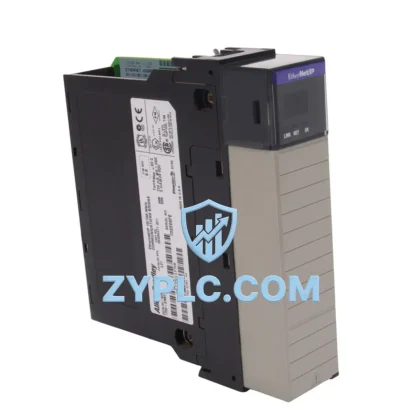
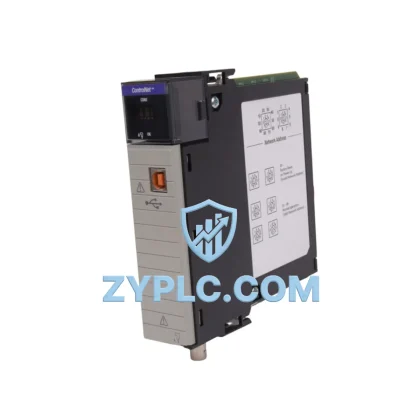
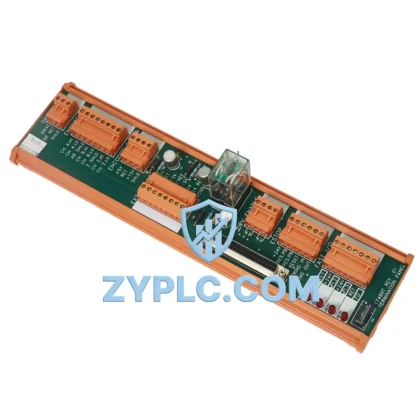
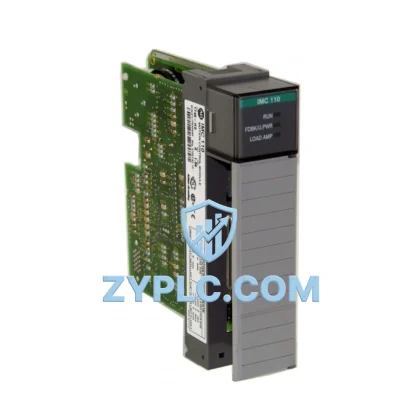
Yokogawa EB401-50 S1 System-Ready Vnet/IP Interface for CENTUM VP Architecture
The Yokogawa EB401-50 S1 is a dedicated Vnet/IP interface module engineered for seamless integration within the CENTUM VP distributed control system (DCS) architecture. As a critical node in the control network layer, this module bridges field-level I/O subsystems with the supervisory control domain, enabling deterministic, high-speed communication across the entire automation hierarchy. Its role extends beyond simple data transfer — it actively supports system redundancy, real-time diagnostics, and scalable architecture expansion, making it an indispensable component for engineers designing or maintaining large-scale process control environments.
In a fully layered automation system, the EB401-50 S1 occupies the network communication layer, interfacing directly with CENTUM VP field control stations (FCS) such as the AFV10D and AFV30D. These FCS units rely on the Vnet/IP backbone to synchronize process data with the human-machine interface (HMI) layer, typically realized through Yokogawa’s FAST/TOOLS SCADA or the integrated HIS (Human Interface Station). The EB401-50 S1 ensures that this data pipeline remains stable, low-latency, and fault-tolerant — a prerequisite for continuous process industries including refining, petrochemicals, and power generation.
From an I/O integration perspective, the module coordinates with remote I/O units such as the Yokogawa NX-series I/O modules and the ESB bus coupler cards, aggregating analog and digital signals from field instruments before forwarding structured process data upstream. This architecture eliminates point-to-point wiring complexity and supports modular expansion without disrupting live process operations. Engineers can add additional I/O nodes or communication segments while the system remains in service, a capability that significantly reduces planned downtime during capacity upgrades.
Power architecture compatibility is another key consideration. The EB401-50 S1 is designed to operate within the CENTUM VP field control unit (FCU) chassis, which is typically powered by redundant power supply modules such as the Yokogawa PW481 or PW482 series. Dual-power configurations ensure that a single power supply failure does not interrupt control network communication, maintaining system availability in line with IEC 61511 functional safety requirements for SIL-rated applications.
For system redundancy, the EB401-50 S1 supports dual-redundant Vnet/IP ring topology, where two independent network paths are maintained simultaneously. In the event of a cable fault or switch failure, automatic failover occurs within milliseconds, preserving real-time control loop integrity. This redundancy model is complemented by the use of managed industrial Ethernet switches compatible with the Vnet/IP protocol, and integrates naturally with Yokogawa’s ProSafe-RS safety instrumented system when deployed in a hybrid DCS-SIS architecture.
At the execution layer, the EB401-50 S1 communicates with final control elements including Yokogawa YVP series valve positioners and variable frequency drives via the FCS function blocks. The module’s deterministic communication scheduling ensures that control outputs reach actuators within defined cycle times, supporting tight regulatory control loops in applications such as distillation column pressure control, boiler feedwater flow regulation, and compressor surge protection.
Maintenance and long-term asset management are simplified through the module’s hot-swap capability and self-diagnostic functions. Technicians can replace the EB401-50 S1 without powering down the FCU chassis, and the module automatically re-synchronizes with the Vnet/IP network upon reinsertion. Diagnostic data including network traffic statistics, error counters, and module health status are accessible through the CENTUM VP system builder and Plant Resource Manager (PRM), enabling predictive maintenance strategies that extend mean time between failures (MTBF) across the control network infrastructure.
From a project engineering standpoint, the EB401-50 S1 is fully supported by Yokogawa’s CENTUM VP engineering environment, including the system builder tool for network topology configuration and the test function for pre-commissioning validation. Its compatibility with the R6.09 and later CENTUM VP software revisions ensures alignment with current cybersecurity hardening guidelines, including role-based access control and encrypted engineering communications.
All units supplied by ZYPLC are tested, verified against original factory specifications, and covered by a 12-Month Warranty. Our inventory management system ensures consistent stock availability for both immediate project requirements and long-term maintenance contracts, supporting your operational continuity without supply chain disruption.
Architecture Specification Table
| Parameter |
Specification |
| System Role |
Vnet/IP Network Interface Module — CENTUM VP DCS |
| Compatible Platform |
Yokogawa CENTUM VP (R6.09 and later) |
| Communication Protocol |
Vnet/IP (Industrial Ethernet, 100 Mbps) |
| Network Topology |
Dual-redundant ring (primary + secondary path) |
| Mounting |
FCU chassis backplane slot |
| Power Supply |
Supplied via FCU chassis (compatible with PW481/PW482) |
| Operating Temperature |
0°C to 55°C |
| Relative Humidity |
5% to 95% RH (non-condensing) |
| Electrical Isolation |
Galvanic isolation on network ports |
| Hot-Swap Support |
Yes — online replacement without FCU shutdown |
| Diagnostic Functions |
Network traffic monitoring, error counters, health status via PRM |
| Certifications |
CE, UL (refer to Yokogawa product documentation) |
| Country of Origin |
Japan |
| Warranty |
12-Month Warranty (ZYPLC) |
Coordinated Control System Design
The EB401-50 S1 achieves its full value when deployed as part of a coordinated CENTUM VP system architecture. In a typical mid-scale DCS installation, the module operates alongside the AFV10D Field Control Station as the primary process controller, with the ESB bus coupler connecting remote I/O nodes on the field bus segment. Analog input signals from pressure transmitters and flow meters are conditioned by AAI141-S00 analog input modules, while discrete outputs to solenoid valves and motor starters are handled by ADO141-P00 digital output modules.
At the network layer, the EB401-50 S1 connects to a managed industrial Ethernet switch supporting Vnet/IP ring redundancy, ensuring that both the primary HIS workstation and the FAST/TOOLS SCADA server receive uninterrupted process data. For safety-critical loops, the architecture extends to a ProSafe-RS Safety Controller integrated via the Vnet/IP backbone, enabling coordinated emergency shutdown sequences without independent wiring infrastructure.
Power integrity across the FCU chassis is maintained by dual PW482 redundant power supply modules, while the Yokogawa YVP110 valve positioner at the execution layer receives setpoint commands from the FCS function blocks routed through the EB401-50 S1 network path. For applications requiring expanded I/O capacity, additional NX-series remote I/O units can be added to the ESB segment without modifying the Vnet/IP network configuration, demonstrating the scalability inherent in this architecture.
Application in Layered Automation Systems
The Yokogawa EB401-50 S1 is deployed across a broad range of process industries where network communication reliability directly impacts production safety and efficiency. In petroleum refining, the module supports continuous crude distillation unit control, where millisecond-level communication latency between the FCS and HIS is essential for maintaining column pressure and temperature profiles within specification. In power generation, it forms part of the boiler management system network, coordinating feedwater control, burner management, and turbine protection functions across a unified Vnet/IP domain.
In petrochemical and chemical processing plants, the EB401-50 S1 enables multi-unit coordination across reactor, separation, and utilities sections, with the dual-redundant network topology providing the fault tolerance required for continuous 24/7 operations. Water and wastewater treatment facilities benefit from the module’s ability to integrate geographically distributed pump stations and treatment units into a single CENTUM VP supervisory domain, reducing operator workload and enabling centralized alarm management.
For mining and minerals processing applications, the module’s wide operating temperature range and robust industrial design support deployment in harsh environments, including concentrator plants and smelter control rooms. In pharmaceutical manufacturing, the EB401-50 S1 supports FDA 21 CFR Part 11-compliant batch control architectures when integrated with Yokogawa’s Exaquantum historian and batch management software, providing the audit trail and data integrity required for regulated production environments.
Architecture Engineering FAQ
Q1: Is the EB401-50 S1 compatible with both redundant and non-redundant CENTUM VP FCS configurations?
Yes. The EB401-50 S1 supports both simplex and dual-redundant FCS configurations. In redundant deployments, two EB401-50 S1 modules are installed in the primary and secondary FCU chassis respectively, with automatic switchover managed by the CENTUM VP system software. Network configuration is performed through the CENTUM VP system builder, where the Vnet/IP domain address and node parameters are assigned. No additional hardware is required beyond the standard redundant FCU chassis and managed Ethernet switches.
Q2: Can the EB401-50 S1 be integrated into an existing CENTUM VP system running an earlier software revision?
The EB401-50 S1 is qualified for use with CENTUM VP R6.09 and later software revisions. For systems running earlier versions, a software upgrade assessment is recommended prior to module installation. Yokogawa’s system migration tools support in-service software upgrades with minimal process interruption. ZYPLC can provide pre-sales technical consultation to verify compatibility with your specific system revision and hardware generation before purchase.
Q3: What does the 12-Month Warranty cover, and what support is available during the warranty period?
The 12-Month Warranty provided by ZYPLC covers manufacturing defects and functional failures under normal operating conditions. During the warranty period, replacement units are dispatched upon confirmed fault diagnosis, minimizing system downtime. Our technical team provides remote diagnostic support to assist with fault isolation and module verification. For urgent requirements, expedited shipping options are available to support critical maintenance windows. Contact our team at [email protected] or +86 19859288691 for warranty claims and technical support.
© 2026 ZYPLC. All rights reserved.
Original Source: https://zyplc.com
Contact: +86 19859288691 | [email protected]