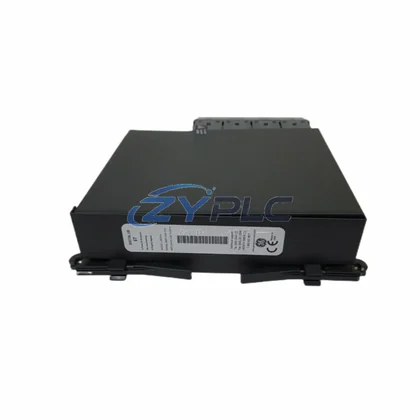
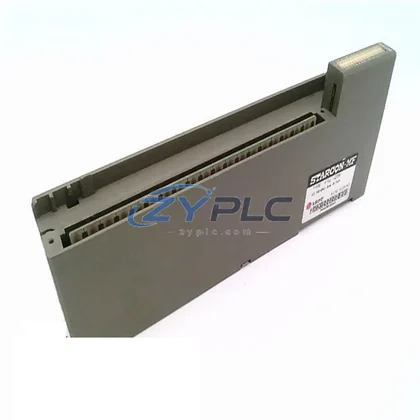
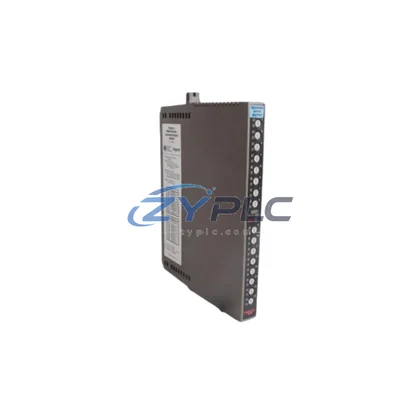
The Yokogawa ER5*C is a high-precision RTD (Resistance Temperature Detector) input module engineered for the Centum CS Distributed Control System platform. Designed to meet the demanding requirements of modern industrial maintenance planning, the ER5*C delivers accurate, real-time temperature data acquisition that forms the backbone of efficient motor control, drive regulation, and process maintenance planning across continuous manufacturing environments.
In energy-intensive industries — from petrochemical refining and pharmaceutical batch processing to steel rolling and food production — the ability to monitor thermal conditions with sub-degree precision directly translates into measurable reductions in unplanned downtime. The ER5*C integrates seamlessly into the Centum CS control architecture, enabling plant engineers to correlate temperature readings with drive load, motor current draw, and process throughput, creating a closed-loop feedback system that actively minimizes unplanned downtime risk.
Product Specification Table
| Parameter |
Specification / Value |
| SKU / Part Number |
ER5*C |
| Brand |
Yokogawa |
| Series / Platform |
Centum CS DCS |
| Module Type |
RTD (Resistance Temperature Detector) Input Module |
| Input Channels |
Multi-channel RTD signal acquisition |
| Measurement Accuracy |
High-precision, ±0.1°C class (typical for Centum CS RTD modules) |
| Power Consumption |
Low-power design, optimized for continuous 24/7 DCS operation |
| Compatible Systems |
Yokogawa Centum CS DCS, Centum CS 1000 / CS 3000 (with appropriate I/O bus) |
| Application Environment |
Process industries: oil & gas, chemical, power generation, food & beverage, pharmaceuticals |
| Maintenance Value |
Enables real-time thermal feedback for drive and motor energy control loops |
| Origin |
Japan |
| Inventory Status |
RFQ Available — shipment arranged after confirmation |
| Warranty |
warranty terms confirmed during quotation |
| Pre-shipment Testing |
Full functional test performed before dispatch |
System Compatibility and Application
The ER5*C does not operate in isolation — its true value emerges when integrated within a broader industrial automation system. Within the Centum CS platform, the module communicates over the ESB (Engineering Station Bus) and V-net control bus, feeding temperature data directly into the DCS controller cards such as the ACM11 and ACM12 processor modules, which execute PID and advanced control algorithms to regulate downstream actuators and drives.
On the drive side, the ER5*C temperature signals are used to govern variable frequency drives (VFDs) — for example, Yokogawa’s own drive solutions or compatible third-party inverters — ensuring that motor speed is adjusted dynamically based on actual thermal load rather than fixed setpoints. This prevents over-driving motors during low-demand periods, a common source of avoidable unplanned downtime in pump and fan applications. The Yokogawa EJA110A differential pressure transmitter, often deployed alongside RTD modules in heat exchanger monitoring loops, provides complementary flow data that, when combined with ER5*C temperature readings, allows the DCS to calculate real-time heat transfer efficiency and adjust energy input accordingly.
For power quality and operating load monitoring, the ER5*C works in concert with power monitoring I/O modules such as the AAI141 analog input card, which captures current and voltage signals from motor control centers (MCCs). Together, these modules feed the Centum CS historian and the Exaquantum plant information management system (PIMS), where energy KPIs — including specific operating load (SEC) per production unit — are trended and analyzed. This data-driven approach allows maintenance and process engineers to identify energy anomalies before they escalate into unplanned downtime.
Communication between the ER5*C-equipped I/O nodes and the supervisory layer is handled through the Centum CS V-net, a deterministic, high-speed control network that ensures temperature data latency remains within the millisecond range required for tight energy control loops. Where HART-enabled field instruments are present, the AAI835 HART analog input module complements the ER5*C by providing digital diagnostic data from smart transmitters, further enriching the condition monitoring dataset without requiring additional wiring infrastructure.
In facilities that have migrated toward open connectivity standards, the Centum CS platform supports OPC-UA and Modbus TCP gateways, allowing ER5*C temperature data to be shared with third-party maintenance planning systems (EMS) and MES platforms. This interoperability ensures that the energy insights generated at the field level — captured by the ER5*C — propagate upward through the entire operational technology (OT) stack, from the field device layer through the control layer to the enterprise energy dashboard.
Maintenance and Replacement Notes
In a typical continuous process plant, thermal inefficiency is one of the largest contributors to unplanned downtime. Overheated motors run at reduced efficiency and consume disproportionate amounts of power; underheated reactors require additional energy input to compensate for heat loss. The Yokogawa ER5*C addresses both failure modes by providing the Centum CS controller with the precise, real-time temperature data needed to maintain processes within their optimal thermal operating windows.
Consider a heat exchanger network in a refinery: without accurate RTD feedback, operators often apply conservative safety margins — running heating systems at higher-than-necessary temperatures to avoid process upsets. With the ER5*C delivering ±0.1°C class accuracy directly into the DCS control loop, the system can operate closer to the true process optimum, reducing steam consumption and lowering the thermal load on cooling water circuits. In facilities with multiple heat exchangers, this effect compounds across the network, yielding significant reductions in total site operating load.
On motor-driven equipment such as compressors, pumps, and agitators, the ER5*C’s temperature readings serve as a key input to predictive maintenance algorithms running within the Centum CS platform or the connected Yokogawa OpreX Asset Management suite. By trending motor winding temperatures over time, the system can detect early signs of insulation degradation or bearing wear — conditions that cause motors to draw abnormal load and consume more energy than their rated efficiency curves predict. Early intervention, triggered by ER5*C data, prevents both unplanned downtime and catastrophic motor failures that result in costly unplanned downtime.
Production line throughput optimization also benefits directly from precise temperature control. In batch processes, accurate temperature measurement shortens cycle times by enabling faster, more confident ramp rates — the controller knows exactly when the process has reached setpoint, rather than waiting for conservative timeout periods to expire. Faster cycle times mean more production output per unit of energy consumed, improving the overall energy intensity of the facility.
All units supplied by ZYPLC undergo a comprehensive pre-shipment functional test, verifying channel accuracy, signal integrity, and communication handshake with the Centum CS bus. Each ER5*C module is backed by a warranty terms confirmed during quotation, and our inventory is maintained in climate-controlled storage to preserve module integrity. Fast dispatch from stock ensures minimal lead time, reducing the risk of extended production downtime during emergency replacements.
Product Sourcing FAQ
Q1: How does the Yokogawa ER5*C contribute to measurable operational stability on a production line?
The ER5*C provides high-accuracy RTD temperature data to the Centum CS DCS controller in real time. This enables the control system to maintain processes within their optimal thermal operating windows, reducing over-heating, minimizing steam and cooling water consumption, and allowing variable frequency drives to modulate motor speed based on actual thermal demand rather than fixed schedules. The result is a direct reduction in unplanned downtime across heating, cooling, and motor-driven systems.
Q2: Is the ER5*C compatible with both Centum CS 1000 and Centum CS 3000 systems?
The ER5*C is designed for the Centum CS platform family. Compatibility with specific sub-variants (CS 1000, CS 3000) depends on the I/O bus configuration and firmware revision of the host system. We recommend verifying the target system’s I/O nest type and bus specification before ordering. Our technical team can assist with compatibility confirmation based on your system’s engineering drawings or existing module inventory.
Q3: What is the recommended replacement or upgrade path if the ER5*C is being retired from an aging Centum CS system?
For facilities migrating from Centum CS to the current Centum VP platform, Yokogawa provides migration tools and I/O marshalling solutions that allow existing field wiring to be reused with new I/O modules. In cases where the Centum CS system is being maintained rather than replaced, sourcing tested, warranted spare ER5*C modules from ZYPLC is the most cost-effective approach to extending system life without incurring full migration costs.
Q4: What testing and warranty coverage does ZYPLC provide for the ER5*C?
Every ER5*C module supplied by ZYPLC is subjected to a full pre-shipment functional test, including channel-by-channel signal verification and bus communication checks. Modules are stored in controlled conditions to prevent electrostatic and environmental damage. All units are covered by a warranty terms confirmed during quotation from the date of shipment, covering defects in materials and workmanship. Expedited replacement support is available to minimize production downtime in the event of a warranty claim.