Yokogawa F3DA04-1N Industrial Network Interface for FA-M3 Systems: Bridging Field Devices and Smart Factory Data Links
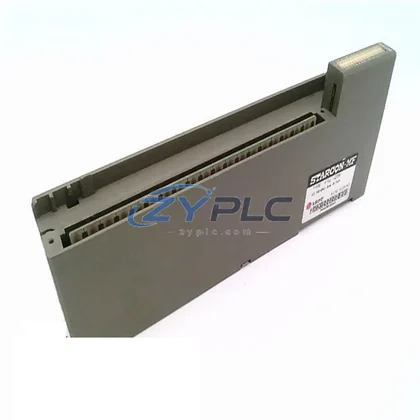
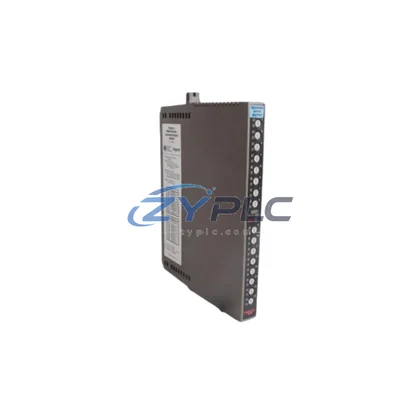
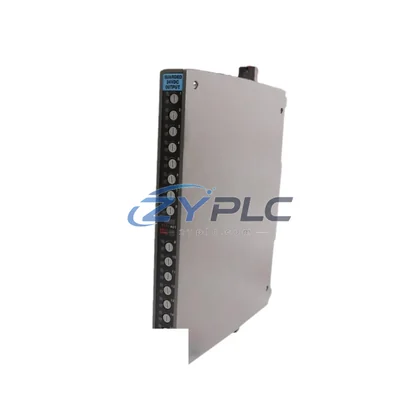
The Yokogawa F3DA04-1N is a 4-channel analog output module engineered for the FA-M3 range-free multi-controller platform — one of Yokogawa’s most widely deployed distributed control architectures in process automation, chemical processing, oil & gas, and smart manufacturing environments. As industrial sites evolve toward fully connected production ecosystems, the F3DA04-1N serves as a critical signal-output node within the FA-M3 backplane, converting digital control commands from the CPU into precise 4–20 mA current or 1–5 V voltage signals that drive field actuators, control valves, variable frequency drives, and positioners in real time.
In a modern smart factory, data does not flow in isolation. The F3DA04-1N sits at the intersection of the control layer and the field device layer, receiving setpoint commands from the FA-M3 CPU module — such as the F3SP71-4N or F3SP76-7S sequence CPU — and translating them into analog output signals that directly govern process variables including flow rate, pressure, temperature, and motor speed. This tight integration between the CPU and the analog output module ensures sub-millisecond response latency, which is essential for closed-loop PID control in continuous process industries.
Compatibility & Integration Notes
| Parameter |
Specification |
| Module SKU |
F3DA04-1N |
| Brand / Series |
Yokogawa / FA-M3 |
| Output Channels |
4 Channels (Isolated) |
| Output Signal Type |
4–20 mA DC / 1–5 V DC (selectable) |
| Communication Protocol |
FA-M3 Internal Bus (high-speed backplane) |
| Network Compatibility |
Ethernet/IP, MODBUS TCP (via FA-M3 network modules) |
| System Integration |
SCADA, DCS, HMI, PLC, Remote I/O |
| Interface Type |
FA-M3 Backplane Slot (direct-mount) |
| Transmission Speed |
High-speed synchronous with FA-M3 CPU scan cycle |
| Product Type |
Analog Output Module |
| Origin |
Japan |
| Warranty |
warranty terms confirmed during quotation |
Connected Automation Data Flow
Understanding the F3DA04-1N requires viewing it within the full data chain of an FA-M3-based control system. At the top of the architecture, engineering workstations and SCADA servers — often running Yokogawa’s FAST/TOOLS or third-party platforms such as Wonderware or Ignition — communicate with the FA-M3 CPU over Ethernet using MODBUS TCP or OPC-DA/UA protocols, facilitated by network interface modules such as the F3LE01-5T or F3LE11-0T Ethernet communication module. These modules bridge the upper-level supervisory network to the FA-M3 internal bus, where the F3DA04-1N resides.
Within the FA-M3 base unit, the CPU module — for example the F3SP71-4N or the high-performance F3SP76-7S — executes ladder logic and function block programs that calculate output setpoints based on real-time process feedback. Analog input data from field sensors is collected by companion modules such as the F3AD08-0N 8-channel analog input module or the F3AD04-0N 4-channel analog input module, which digitize 4–20 mA signals from pressure transmitters, flow meters, and temperature sensors. These digitized values feed the CPU’s control algorithms, and the resulting output commands are written to the F3DA04-1N’s output registers, which then drive the corresponding field actuators.
On the field side, the F3DA04-1N’s 4–20 mA outputs connect directly to control valves, electro-pneumatic positioners, variable frequency drives (VFDs), and proportional solenoid valves. In applications where remote I/O expansion is required — for example, in distributed plant layouts — the FA-M3 system can be extended using remote I/O bases connected via the F3LP02-0N MELSECNET/H or dedicated FA-M3 remote I/O link modules, allowing the F3DA04-1N’s output capacity to be replicated across multiple field panels without additional CPU overhead.
For HMI integration, operator panels and touch screens communicate with the FA-M3 CPU via RS-232C, RS-485, or Ethernet, using protocols such as MODBUS RTU or proprietary Yokogawa communication drivers. The real-time output values written to the F3DA04-1N are mirrored in the CPU’s data registers, making them instantly accessible to HMI screens for live process visualization, trend logging, and alarm management. This seamless data visibility — from field actuator to operator display — is the foundation of transparent, data-driven production management.
Solving Data Isolation in Industrial Sites
One of the most persistent challenges in legacy industrial environments is protocol fragmentation: field devices speaking proprietary analog signals, PLCs using vendor-specific communication buses, and SCADA systems unable to access real-time process data without costly middleware. The Yokogawa FA-M3 platform, with the F3DA04-1N as its analog output backbone, directly addresses this challenge by providing a unified, high-speed internal bus that connects analog I/O, digital I/O, communication, and CPU modules within a single cohesive architecture.
By standardizing on the FA-M3 backplane, engineers eliminate the signal conversion bottlenecks that arise when mixing incompatible I/O systems. The F3DA04-1N’s isolated 4-channel outputs ensure that signal crosstalk and ground loop interference — common sources of data corruption in dense field wiring environments — are suppressed, maintaining measurement integrity across the entire control loop. Combined with the FA-M3’s deterministic scan cycle, this isolation guarantees that output updates reach field devices within the controller’s defined cycle time, eliminating the timing jitter that can destabilize PID control loops.
For remote monitoring and diagnostics, the FA-M3 system’s Ethernet connectivity — enabled by modules such as the F3LE01-5T — allows maintenance engineers to access live output values, module status registers, and diagnostic flags from any networked workstation or mobile device. This remote visibility reduces unplanned downtime by enabling predictive maintenance: engineers can detect output drift, channel faults, or communication errors before they escalate into process upsets. The F3DA04-1N’s channel-level diagnostics, accessible via the CPU’s system registers, provide granular fault information that accelerates root-cause analysis and minimizes mean time to repair (MTTR).
As production requirements evolve, the FA-M3’s modular architecture allows the system to scale without disruption. Additional F3DA04-1N modules can be inserted into available backplane slots, expanding analog output capacity incrementally. For sites requiring higher channel density, the FA-M3 supports multi-base configurations connected via expansion cables, enabling hundreds of I/O points to be managed under a single CPU — a critical advantage for large-scale process plants undergoing digital transformation.
Every F3DA04-1N unit supplied by ZYPLC undergoes pre-shipment functional testing, verifying output accuracy, channel isolation, and communication integrity before dispatch. All units are covered by a warranty terms confirmed during quotation and are available from availability subject to RFQ confirmation, ensuring rapid delivery to support both planned maintenance schedules and emergency replacement requirements.
Industrial Connectivity FAQ
Q1: What communication protocols does the Yokogawa F3DA04-1N support for SCADA integration?
The F3DA04-1N communicates via the FA-M3 high-speed internal backplane bus. For SCADA integration, the FA-M3 system uses network interface modules such as the F3LE01-5T or F3LE11-0T to support MODBUS TCP, Ethernet/IP, and OPC-DA/UA protocols, enabling seamless connectivity to FAST/TOOLS, Wonderware, Ignition, and other SCADA platforms without additional protocol converters.
Q2: How does the F3DA04-1N ensure network stability and output accuracy in high-noise industrial environments?
Each of the four output channels is individually isolated, suppressing ground loops and electromagnetic interference common in industrial field wiring. The FA-M3’s deterministic scan cycle ensures output updates are delivered within a fixed, predictable time window, maintaining closed-loop control stability even in electrically noisy environments such as motor control centers and variable frequency drive panels.
Q3: Can the FA-M3 system be expanded with additional F3DA04-1N modules without reconfiguring the existing control program?
Yes. The FA-M3’s modular slot architecture allows additional analog output modules to be added to available backplane slots or expansion bases with minimal engineering effort. New module addresses are assigned automatically by the CPU, and existing ladder logic programs require only incremental additions to address the new output channels — preserving the integrity of the existing control application.
Q4: What pre-shipment testing and warranty coverage does ZYPLC provide for the F3DA04-1N?
All F3DA04-1N units supplied by ZYPLC are functionally tested prior to shipment, including output signal accuracy verification across all four channels, channel isolation testing, and FA-M3 backplane communication checks. Each unit is backed by a warranty terms confirmed during quotation covering manufacturing defects and functional failures, with technical support available throughout the warranty period.