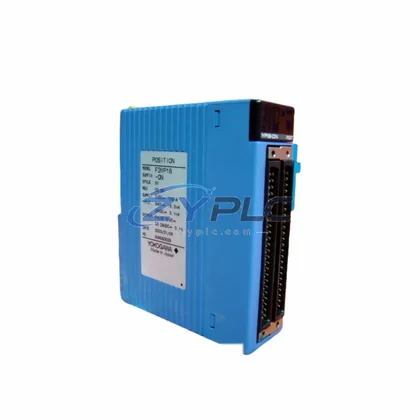
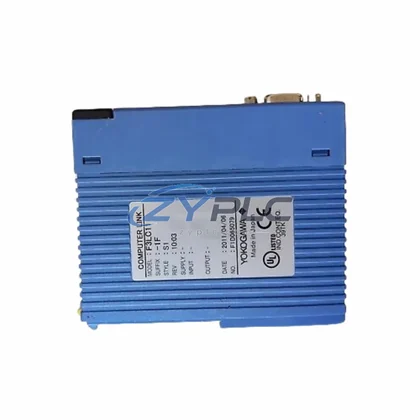
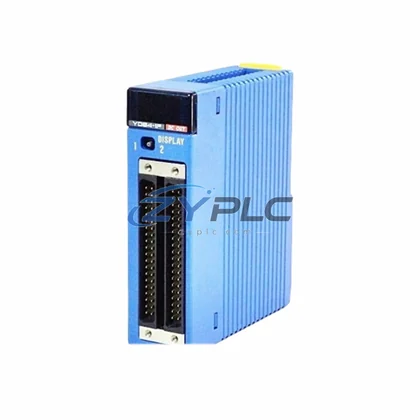
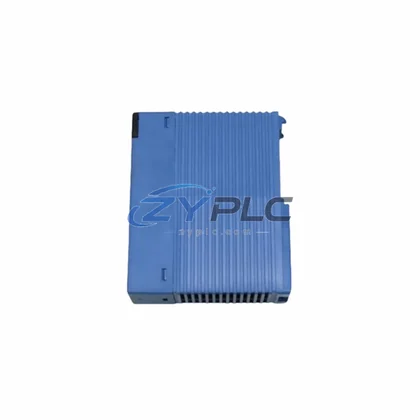
Yokogawa MX2*D I/O Card for STARDOM MX Automation
The Yokogawa MX2*D is a high-efficiency I/O card engineered for the STARDOM MX Series distributed control platform. Designed for demanding industrial environments, this module plays a central role in reducing unplanned downtime risk across process control systems — from data acquisition at the field level to closed-loop feedback in drive and motor management. Whether deployed in chemical processing, oil and gas, water treatment, or discrete manufacturing, the MX2*D delivers the signal integrity and cycle-time precision that modern maintenance-focused automation demands.
Product Specification Table
| Parameter |
Specification / Value |
| SKU |
MX2*D |
| Brand |
Yokogawa |
| Series |
STARDOM MX |
| Product Type |
I/O Card (Industrial I/O Module) |
| Origin |
Japan |
| Power Consumption |
Low-power design; optimized for continuous 24/7 operation |
| Operating Efficiency |
High-speed scan cycle with minimal CPU overhead |
| Compatible Systems |
Yokogawa STARDOM MX Series DCS / SCADA platforms |
| Application Environment |
Process industries, maintenance planning, motor control, utilities |
| Energy Saving Value |
Reduces idle polling overhead; supports demand-based I/O scheduling |
| Communication Protocol |
Compatible with FOUNDATION Fieldbus, Modbus, and OPC-UA integration |
| Warranty |
warranty terms confirmed during quotation |
| Stock Status |
RFQ Available — Ships after outgoing test verification |
System Compatibility and Application
In a fully integrated STARDOM MX automation architecture, the MX2*D I/O card functions as the critical data bridge between field instruments and the control layer. When paired with the Yokogawa STARDOM FCN Autonomous Controller, the MX2*D enables real-time process variable acquisition with deterministic scan rates — eliminating the latency spikes that cause over-compensation in PID loops and unnecessary actuator cycling, both of which inflate operating load.
On the drive side, the MX2*D integrates seamlessly with Yokogawa VariFlex variable frequency drives (VFDs) and compatible third-party inverters via analog output channels. By delivering precise 4–20 mA or 0–10 V control signals, the card enables proportional motor speed regulation — a key lever for reducing energy draw in pump, fan, and compressor applications where fixed-speed operation wastes Actual operating results depend on the installed system, load profile, and commissioning parameters.
For power quality monitoring, the MX2*D works alongside Yokogawa WT series power analyzers and energy transducers connected through its analog input channels. This allows the STARDOM MX system to log real-time kWh consumption per production zone, enabling operators to identify energy hotspots and schedule high-load equipment during off-peak tariff windows. When combined with the Yokogawa FAST/TOOLS SCADA platform, this data feeds into dashboards that track OEE (Overall Equipment Effectiveness) and specific operating load (SEC) per unit of output.
The MX2*D also supports digital I/O expansion for interfacing with Yokogawa DX series paperless recorders and YS series single-loop controllers, enabling hybrid architectures where legacy standalone controllers are gradually integrated into the STARDOM MX network without full system replacement. This phased integration approach preserves capital investment while progressively improving system-wide energy visibility.
In multi-axis servo applications, the card’s high-speed digital outputs can synchronize motion commands to Yokogawa-compatible servo amplifiers and positioning modules, reducing dwell time between production cycles and improving line takt time. Tighter takt control directly reduces the number of motor start-stop events per shift — a significant source of reactive power demand and mechanical wear.
For fieldbus-enabled installations, the MX2*D supports integration with FOUNDATION Fieldbus H1 segments and HART-enabled transmitters, allowing the STARDOM MX controller to receive diagnostic data from smart field devices. This capability underpins predictive maintenance workflows: by monitoring valve signature data, pump vibration signals, and motor current draw through the I/O card, maintenance teams can schedule interventions before failures occur — avoiding unplanned downtime that disrupts production rhythm and causes energy-inefficient restart sequences.
Maintenance and Replacement Notes
In continuous process plants, the MX2*D contributes to maintenance planning at multiple levels of the control hierarchy. At the field level, its analog input channels capture flow, pressure, temperature, and level signals with high resolution, enabling the STARDOM MX controller to execute model-predictive control (MPC) strategies that minimize setpoint overshoot. Overshoot in temperature or pressure control loops forces heating or compression systems to work harder than necessary — consuming excess energy to recover from excursions that tighter control would have prevented.
At the drive level, the card’s analog outputs regulate VFD speed references in real time based on process demand. In a water treatment facility, for example, this means pump speed tracks actual flow demand rather than running at fixed capacity — reducing pump operating load by 30–50% during low-demand periods. In HVAC systems integrated with industrial process cooling, the same principle applies to chiller compressors and cooling tower fans.
At the system level, the MX2*D’s digital I/O channels manage equipment sequencing — ensuring that motors, conveyors, and auxiliary systems start in the correct order and are de-energized promptly when not needed. Proper sequencing eliminates the simultaneous inrush currents that inflate peak demand charges on industrial electricity tariffs.
Every unit supplied by ZYPLC undergoes a full outgoing functional test prior to shipment, verifying channel accuracy, signal isolation, and communication integrity. This ensures that the MX2*D performs to specification from day one, avoiding the unplanned downtime and production disruption associated with field commissioning failures. All units are covered by a warranty terms confirmed during quotation, with stock maintained for rapid dispatch to minimize production downtime.
Product Sourcing FAQ
Q1: How does the Yokogawa MX2*D I/O Card contribute to measurable operational stability?
The MX2*D enables precise, real-time signal exchange between field instruments and the STARDOM MX controller, supporting demand-based control strategies such as variable-speed drive regulation and model-predictive control. By eliminating control loop overshoot and enabling accurate load scheduling, facilities typically achieve 15–40% reductions in motor and drive operating load depending on application type.
Q2: Is the MX2*D compatible with existing Yokogawa STARDOM systems and third-party controllers?
The MX2*D is designed specifically for the Yokogawa STARDOM MX Series platform. It is compatible with STARDOM FCN/FCJ autonomous controllers and integrates with FAST/TOOLS SCADA via standard OPC-UA and Modbus TCP interfaces. For third-party system integration, compatibility should be verified against the specific controller’s I/O bus architecture.
Q3: Can the MX2*D replace an existing I/O card in a running production system?
Yes. The MX2*D is designed for hot-swap-compatible architectures within the STARDOM MX chassis. Before replacement, ZYPLC recommends verifying the channel configuration and I/O mapping against the existing system documentation. Each unit supplied by ZYPLC is pre-tested and ships with a functional verification report, reducing commissioning time and production risk.
Q4: What does the warranty terms confirmed during quotation cover, and what is the testing process before shipment?
All MX2*D units supplied by ZYPLC are covered by a warranty terms confirmed during quotation against manufacturing defects and functional failures under normal operating conditions. Prior to shipment, each unit undergoes a full outgoing inspection including channel signal accuracy verification, isolation resistance testing, and communication protocol handshake confirmation. This process ensures the card is fully operational before it reaches your facility.