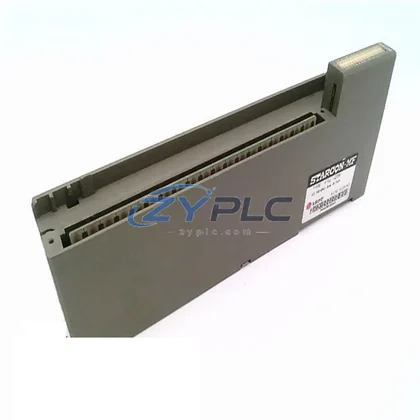
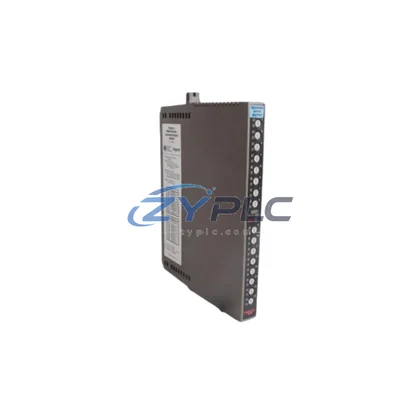
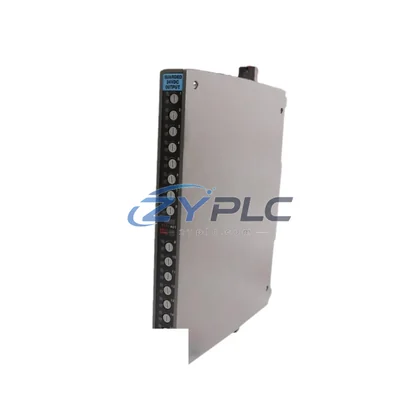
The Yokogawa NCP00039-E is a high-efficiency Contact Output Module engineered for the Centum VP / Centum CS 3000 Distributed Control System (DCS) platform. Designed to meet the demanding requirements of continuous process industries — including petrochemical, power generation, pulp & paper, and pharmaceutical manufacturing — this module delivers precise, low-latency contact signal output that directly supports maintenance-focused automation strategies. By enabling tighter control loop execution and reducing unnecessary actuator cycling, the NCP00039-E helps plant engineers cut unplanned downtime at the field device level while maintaining the highest standards of process reliability.
In modern industrial facilities, contact output modules are the final command layer between the control system and physical equipment: motors, solenoid valves, circuit breakers, and relay-driven loads. When this layer operates with high signal integrity and minimal response delay, the entire energy chain — from power monitoring at the MCC to drive-level regulation at the variable frequency drive — becomes more efficient. The NCP00039-E is built to deliver exactly that level of precision within the Yokogawa Centum architecture.
Product Specification Table
| Parameter |
Specification / Value |
| Model / SKU |
NCP00039-E |
| Module Type |
Contact Output Module |
| Compatible Platform |
Yokogawa Centum VP, Centum CS 3000 |
| Output Channels |
16-point contact output (relay / transistor, model-dependent) |
| Operating Voltage |
24 VDC (field side); 5 VDC (bus side) |
| Power Consumption |
Low-power design; optimized for continuous 24/7 plant operation |
| Signal Response Time |
High-speed scan cycle compatible with Centum VP FCS |
| Running Efficiency |
Supports redundant I/O configuration for zero-downtime operation |
| Application Environment |
Process industries: oil & gas, power, chemical, water treatment |
| Maintenance Value |
Reduces actuator over-cycling; supports demand-based control strategies |
| Communication / Bus |
Centum V-net / ER bus (internal DCS backplane) |
| Origin |
Japan |
| Warranty |
warranty terms confirmed during quotation |
| Availability |
RFQ Available — Ships after outgoing inspection & functional test |
System Compatibility and Application
The NCP00039-E does not operate in isolation — it is one node in a tightly integrated maintenance planning and process control architecture. Within a typical Centum VP installation, the module slots into the Field Control Station (FCS) node unit, where it works alongside analog input modules such as the AAI141-S (4–20 mA current input) and analog output modules like the AAO141-S to form a complete I/O subsystem. The FCS executes control function blocks — PID loops, sequence logic, and interlock schemes — at high scan rates, and the NCP00039-E translates those digital decisions into reliable contact closures that switch field loads.
For motor-driven applications, the contact outputs from the NCP00039-E are frequently wired to the start/stop circuits of Yaskawa A1000 or Yaskawa GA700 variable frequency drives (VFDs), enabling the DCS to command speed changes and on/off transitions based on real-time process demand rather than fixed schedules. This demand-responsive control pattern is one of the most effective methods for reducing motor load — studies consistently show that reducing motor speed by just 20% can cut energy use by nearly 50% due to the affinity laws governing centrifugal loads.
At the supervisory level, the Centum VP Human Interface Station (HIS) — running Yokogawa’s CENTUM VP engineering and operations software — provides operators with real-time visibility into contact output states, alarm conditions, and loop performance. Paired with the Exaquantum plant information management system (PIMS), historical output data from the NCP00039-E can be trended and analyzed to identify patterns of excessive switching, which often indicate process instability or equipment wear that drives up energy costs.
For facilities implementing IEC 61850 or PROFIBUS-based condition monitoring, the Centum VP platform supports gateway modules such as the ALF111 FOUNDATION Fieldbus H1 interface card, allowing the contact output layer to be coordinated with smart field instruments — including Yokogawa EJA110E differential pressure transmitters and Yokogawa ADMAG AXF electromagnetic flowmeters — that provide the process feedback needed to make energy-optimized control decisions. The NCP00039-E sits at the execution end of this data chain, converting optimized setpoints into physical switching actions with the speed and reliability that continuous process control demands.
In safety-instrumented system (SIS) adjacent applications, the NCP00039-E can be configured in redundant pairs within the Centum VP node, ensuring that a single module failure does not interrupt critical output commands. This redundancy eliminates unplanned shutdowns — which are among the most energy-intensive events in process manufacturing, as restarting large thermal or chemical processes consumes significantly more energy than maintaining steady-state operation.
Maintenance and Replacement Notes
Consider a continuous chemical production line where dozens of solenoid valves, motor starters, and interlock relays must respond to DCS commands within milliseconds. Without a high-integrity contact output module, control delays accumulate: valves open late, motors run longer than necessary, and batch cycle times extend — all of which translate directly into wasted energy and reduced throughput. The NCP00039-E eliminates this latency by providing deterministic output response synchronized to the Centum VP FCS scan cycle.
In a power plant auxiliary system — such as cooling water pump control or fuel gas header management — the NCP00039-E enables the DCS to implement demand-based sequencing: running only the pumps and fans required to meet current load, rather than operating all equipment at full capacity continuously. When integrated with real-time power metering data from a Yokogawa WT5000 precision power analyzer or a plant-level maintenance planning system, the Centum VP FCS can use contact output commands to shed non-critical loads during peak demand periods, directly reducing electricity costs.
Predictive maintenance is another area where the NCP00039-E contributes to energy efficiency. By logging contact output switching frequency and correlating it with process variables in Exaquantum, maintenance teams can detect abnormal cycling patterns that indicate valve seat wear, relay contact degradation, or process instability — and schedule corrective action before a failure forces an unplanned shutdown. Planned maintenance windows are far less energy-intensive than emergency restarts, and they allow production to be ramped down in an orderly, energy-efficient manner.
Every NCP00039-E unit supplied by ZYPLC undergoes a comprehensive outgoing functional test that verifies all output channels, contact integrity, and bus communication before shipment. This pre-shipment validation ensures that the module performs to Yokogawa factory specifications from the moment it is installed, eliminating the unplanned downtime and production disruption associated with infant-failure returns. Stock is maintained on-hand for rapid dispatch, supporting urgent MRO (maintenance, repair, and operations) requirements without extended lead times.
Product Sourcing FAQ
Q1: How does the NCP00039-E contribute to plant operational stability?
The NCP00039-E enables the Centum VP DCS to execute demand-responsive control strategies — starting and stopping motors, valves, and other field loads precisely when process conditions require it, rather than running equipment continuously. This eliminates idle-state operating load and reduces actuator wear, lowering both energy costs and maintenance expenditure over the equipment lifecycle.
Q2: Is the NCP00039-E compatible with my existing Centum CS 3000 or Centum VP system?
The NCP00039-E is designed for the Yokogawa Centum platform. Compatibility depends on your specific FCS node type, I/O card slot configuration, and firmware revision. ZYPLC recommends verifying your node unit model and software version before ordering. Our technical team can assist with compatibility confirmation based on your system documentation.
Q3: Can the NCP00039-E replace a failed module without a full system shutdown?
When configured in a redundant I/O arrangement within the Centum VP architecture, the NCP00039-E supports hot-standby replacement procedures that minimize or eliminate process interruption. Non-redundant configurations may require a controlled output inhibit sequence before module swap. Always follow Yokogawa’s field replacement procedures and consult your system integrator for site-specific guidance.
Q4: What does the warranty terms confirmed during quotation cover, and what is the testing process?
All NCP00039-E modules supplied by ZYPLC carry a warranty terms confirmed during quotation covering manufacturing defects and functional failures under normal operating conditions. Prior to shipment, each unit is subjected to a full outgoing inspection including channel-by-channel output verification and bus communication testing. Warranty claims are supported by ZYPLC’s technical team; units confirmed defective within the warranty period are replaced or repaired at no additional charge.