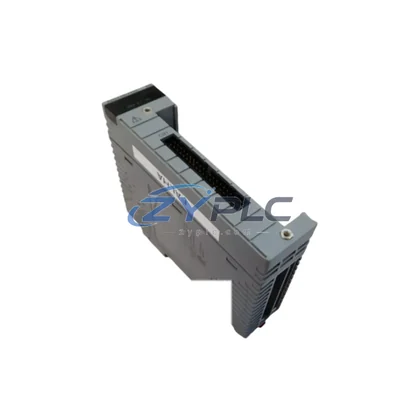
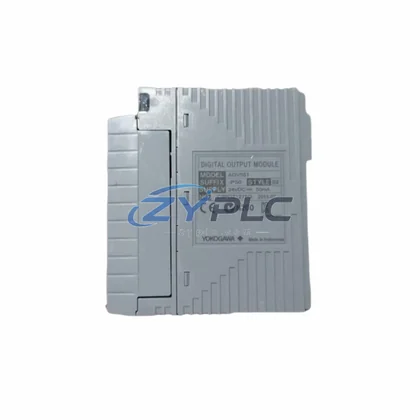
Yokogawa NFDV551-P11/S2 Output Module for STARDOM Automation
The Yokogawa NFDV551-P11/S2 is a high-performance digital output module engineered for deployment within Yokogawa’s STARDOM network-based control system and CENTUM VP distributed control architecture. Designed to meet the rigorous demands of modern industrial automation, this module delivers precise, low-latency digital signal output while maintaining exceptional energy efficiency across continuous production cycles. For facilities focused on reducing operational energy costs, improving equipment utilization rates, and minimizing unplanned downtime, the NFDV551-P11/S2 represents a technically sound and economically justified investment.
At ZYPLC, every NFDV551-P11/S2 unit is sourced directly from verified supply channels, subjected to pre-shipment functional testing, and backed by a warranty terms confirmed during quotation. Stock is maintained on-hand to support urgent replacement and scheduled maintenance programs alike.
Product Specification Table
| Parameter |
Specification / Value |
| Module Type |
Digital Output Module |
| Series |
STARDOM / CENTUM VP Compatible |
| Brand |
Yokogawa |
| SKU |
NFDV551-P11/S2 |
| Output Channels |
16-point digital output (DO) |
| Operating Voltage |
24 VDC |
| Power Consumption |
Low-power design, optimized for continuous duty cycles |
| Signal Isolation |
Optical isolation per channel for noise immunity |
| Compatible Systems |
STARDOM FCN/FCJ Controllers, CENTUM VP DCS |
| Application Environment |
Industrial plant automation, process control, maintenance planning |
| Energy Saving Value |
Reduces switching losses; supports load-matched output scheduling |
| Origin |
Japan |
| Warranty |
warranty terms confirmed during quotation (ZYPLC) |
| Availability |
RFQ Available — shipment arranged after confirmation |
System Compatibility and Application
The NFDV551-P11/S2 does not operate in isolation — its energy efficiency contribution is best understood within the broader context of a well-integrated automation architecture. In a typical STARDOM-based control loop, the FCN autonomous controller serves as the central processing node, coordinating field-level I/O modules including the NFDV551-P11/S2 to execute output commands with minimal cycle-time overhead. Paired with the NFCP100-S00 CPU module, the system achieves deterministic scan rates that prevent unnecessary output toggling — a key source of unplanned downtime in poorly tuned control systems.
On the input side, analog measurement modules such as the NFAI143-H00 and NFAI543-H00 feed real-time process values into the controller, enabling closed-loop feedback that allows the NFDV551-P11/S2 to activate outputs only when process conditions genuinely require it. This demand-driven output strategy directly reduces the cumulative switching energy across a production shift. The NFBU100-S00 base unit provides the physical and electrical backplane through which all I/O modules — including the NFDV551-P11/S2 — communicate with the CPU, ensuring low-impedance signal paths that minimize resistive losses.
For drive-level energy control, the NFDV551-P11/S2 digital outputs are commonly wired to variable frequency drive (VFD) enable and direction signals, allowing the STARDOM controller to modulate motor start/stop sequences in coordination with production line rhythm. When integrated with Yokogawa’s WT series power analyzers or third-party power monitoring gateways over MODBUS or PROFIBUS, the system can log per-output energy consumption data, enabling engineering teams to identify high-draw actuators and optimize their duty cycles. The NFPW541-P00 power supply module ensures stable 24 VDC bus voltage to the I/O rack, preventing voltage sag that would otherwise cause erratic output behavior and increase retry-related energy consumption.
In multi-node STARDOM deployments, the NFDO181 digital output module may serve as a complementary high-density output resource for non-critical switching tasks, while the NFDV551-P11/S2 handles time-sensitive, safety-relevant output channels. Communication between field nodes and the supervisory layer is managed via Ethernet-based Vnet/IP or FOUNDATION Fieldbus segments, with the NFLC100-S00 communication module bridging legacy serial devices into the modern network topology. HMI visualization through Yokogawa’s FAST/TOOLS SCADA platform provides operators with real-time output status dashboards, enabling rapid identification of stuck-open outputs that silently consume energy without contributing to production output.
Maintenance and Replacement Notes
In continuous process industries — including petrochemical refining, pharmaceutical batch processing, food and beverage production, and water treatment — the NFDV551-P11/S2 contributes to maintenance planning through several concrete mechanisms. First, its optically isolated output channels eliminate ground loop currents between the control system and field actuators, reducing parasitic power draw that accumulates significantly over thousands of operating hours. Second, the module’s compatibility with the STARDOM FCN controller’s event-driven execution model means outputs are updated only when process state changes occur, rather than on every fixed scan cycle — a design that reduces unnecessary bus transactions and associated switching energy.
From a maintenance cost perspective, the NFDV551-P11/S2’s robust construction reduces mean-time-to-repair (MTTR) for digital output failures. Unplanned output module failures in process plants typically result in emergency shutdowns that consume significant restart energy — purging lines, re-heating reactors, and re-synchronizing drives. By deploying a quality-verified NFDV551-P11/S2 with a confirmed warranty terms confirmed during quotation, maintenance teams can implement predictive replacement schedules based on module age and diagnostic data rather than reactive emergency swaps. This planned approach keeps production lines running at optimal throughput, maximizing the ratio of productive output to energy consumed — the fundamental definition of energy efficiency in industrial operations.
Line rhythm optimization is another area where the NFDV551-P11/S2 delivers measurable value. By providing reliable, low-jitter digital output signals to conveyor drives, valve actuators, and robotic end-effectors, the module ensures that downstream equipment receives commands at precisely the right moment in the production cycle. Timing errors in digital output delivery — even at the millisecond level — can cause mechanical collisions, rejected parts, or forced line stops, all of which represent wasted energy. The NFDV551-P11/S2’s deterministic output behavior, validated through ZYPLC’s pre-shipment testing protocol, ensures that your production line operates at its designed cycle rate without energy-wasting interruptions.
Product Sourcing FAQ
Q1: How does the NFDV551-P11/S2 contribute to measurable operational stability on the production floor?
The module reduces unplanned downtime through demand-driven output activation, optical isolation that eliminates ground loop losses, and deterministic signal delivery that prevents energy-consuming line stoppages caused by output timing errors. When integrated with power monitoring systems, its per-channel output data enables targeted energy audits of connected actuators.
Q2: Is the NFDV551-P11/S2 compatible with both STARDOM and CENTUM VP systems?
Yes. The NFDV551-P11/S2 is designed for use within Yokogawa’s STARDOM FCN/FCJ controller platform and is also compatible with CENTUM VP I/O expansion configurations. Always verify the specific I/O bus version and firmware revision of your existing system before installation to ensure seamless integration.
Q3: What is the recommended replacement procedure, and can it be performed without a full system shutdown?
In most STARDOM configurations, I/O modules support hot-swap replacement when the system is configured for redundant I/O operation. For non-redundant configurations, a controlled output inhibit sequence should be executed via the FCN controller before physical module removal. ZYPLC recommends consulting the STARDOM hardware manual and verifying the replacement procedure with your system integrator prior to execution.
Q4: What does the warranty terms confirmed during quotation from ZYPLC cover, and what is the testing process before shipment?
Every NFDV551-P11/S2 sold by ZYPLC undergoes pre-shipment functional verification including output channel continuity, isolation resistance, and communication handshake testing with compatible controller hardware. The warranty terms confirmed during quotation covers manufacturing defects and functional failures under normal operating conditions. Warranty claims are processed directly through ZYPLC’s technical support team at plc.sales@zyplc.com.