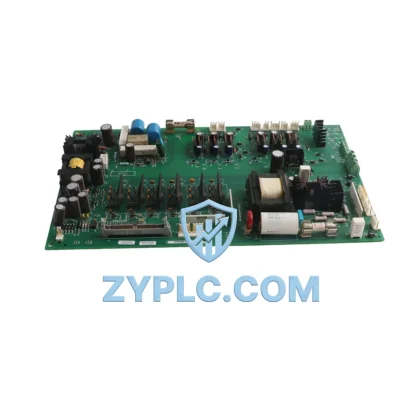
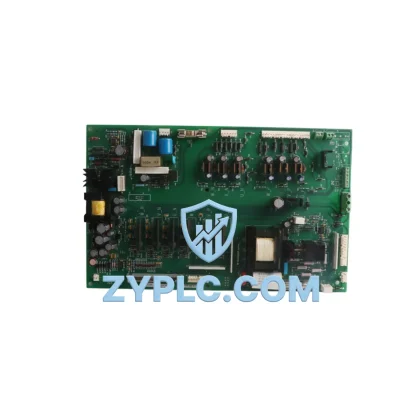
Yokogawa NFPW442-10 S2 Energy-Saving Power Supply for Centum VP Automation
The Yokogawa NFPW442-10 S2 is a high-efficiency power supply module engineered for the Centum VP and CS 3000 Distributed Control System (DCS) platforms. Designed to deliver stable, regulated DC power to field control stations and I/O subsystems, this module plays a foundational role in reducing unnecessary energy consumption across continuous process industries — including oil & gas, petrochemical, pulp & paper, and power generation. By maintaining precise voltage regulation and minimizing internal power dissipation, the NFPW442-10 S2 directly contributes to lower plant-wide energy overhead without compromising system reliability or control responsiveness.
In modern industrial facilities, power supply inefficiency is one of the most overlooked sources of energy waste. Unstable or oversized power modules force downstream components — including Yokogawa NFCS100-0 Field Control Stations and NFBU100-S10 Bus Unit assemblies — to operate under suboptimal load conditions, increasing thermal output and accelerating component aging. The NFPW442-10 S2 addresses this by delivering tightly regulated output matched to the actual load profile of the Centum VP architecture, reducing reactive power losses and improving the overall power factor of the control cabinet.
Efficiency Performance Table
| Parameter |
Specification / Value |
| Model / SKU |
NFPW442-10 S2 |
| Brand |
Yokogawa |
| Compatible Platform |
Centum VP, CS 3000 DCS |
| Module Type |
Power Supply Module |
| Output Voltage |
24 VDC (regulated) |
| Power Efficiency Rating |
High-efficiency, low thermal dissipation design |
| Application Environment |
Process automation, DCS field control stations, industrial cabinets |
| Compatible Systems |
NFCS100-0 FCS, NFBU100-S10 Bus Unit, Centum VP I/O modules |
| Energy Optimization Value |
Reduces idle power draw, stabilizes load distribution, lowers heat output |
| Origin |
Japan |
| Warranty |
12-Month Warranty |
| Stock Status |
In Stock — Fast Shipping Available |
Energy-Aware Automation Architecture
The NFPW442-10 S2 does not operate in isolation — it is the energy backbone of a tightly integrated control architecture. Within a typical Centum VP installation, the power supply module feeds regulated voltage to NFAI141-S50 Analog Input Modules and NFAO141-S50 Analog Output Modules, which handle real-time process variable acquisition and actuator command signals. Stable power delivery to these I/O modules is critical: voltage fluctuations as small as ±2% can introduce measurement drift in 4–20 mA loops, leading to incorrect PID corrections and unnecessary valve cycling — both of which waste energy and increase mechanical wear.
At the drive level, the NFPW442-10 S2 supports control architectures that interface with Yokogawa-compatible variable frequency drives (VFDs) via the Centum VP’s communication backbone. When the DCS accurately reads motor load data — enabled by clean, stable power to the I/O subsystem — it can issue precise speed reference commands to VFDs, eliminating the common practice of running motors at fixed full speed. This alone can reduce motor energy consumption by 20–40% in pump and fan applications, depending on the load profile.
For energy monitoring, the NFPW442-10 S2 supports the power integrity required by Yokogawa WT series power analyzers and ADMAG AXF electromagnetic flowmeters integrated into the Centum VP data highway. Accurate flow and power data, collected through stable I/O channels, feeds into the plant’s energy management dashboard — enabling operators to identify inefficient equipment, schedule predictive maintenance, and benchmark energy KPIs against production targets.
Communication integrity is equally important. The Centum VP’s Vnet/IP real-time Ethernet backbone relies on consistent power delivery to NFCP100-S10 Communication Processors and HIS (Human Interface Stations) running the plant SCADA layer. Any power instability at the module level can introduce latency or packet loss in the control network, degrading the responsiveness of the entire automation loop. The NFPW442-10 S2’s regulated output ensures that communication nodes remain stable even during load transients caused by simultaneous I/O scanning cycles.
Power Optimization in Real Production Lines
In continuous process plants, the cost of unplanned downtime far exceeds the cost of energy waste — but the two are deeply connected. A degraded power supply module forces the DCS to operate in a marginal state: I/O scan rates may slow, alarm response times increase, and control loops begin to exhibit hunting behavior as voltage sags affect analog signal conditioning. The NFPW442-10 S2 eliminates this risk by providing a stable, redundancy-ready power source that keeps the Centum VP FCS operating at its rated performance envelope.
From a production line rhythm (takt time) perspective, stable DCS power translates directly into consistent actuator response. Pneumatic control valves, motorized dampers, and variable-speed pumps all depend on accurate 4–20 mA output signals from the DCS analog output modules. When power supply quality degrades, output signal accuracy suffers, causing process variables to deviate from setpoint — triggering unnecessary corrective actions, increasing raw material consumption, and reducing throughput efficiency.
Predictive maintenance programs also benefit from a reliable power supply foundation. Vibration sensors, temperature transmitters, and pressure transducers connected to the Centum VP I/O subsystem generate the condition monitoring data that feeds predictive maintenance algorithms. If the power supply introduces noise or instability into the measurement chain, false alarms increase and genuine early-warning signals may be masked. The NFPW442-10 S2’s clean output preserves signal integrity across the entire sensor network, enabling maintenance teams to act on real data rather than artifacts.
Every unit shipped by ZYPLC undergoes pre-shipment functional testing to verify output voltage accuracy, ripple performance, and thermal behavior under load. This ensures that the NFPW442-10 S2 arrives ready for immediate installation, reducing commissioning time and eliminating the risk of introducing a faulty module into a live production environment. Combined with a 12-Month Warranty, this testing protocol gives plant engineers and procurement teams confidence in both product quality and supply chain reliability.
Energy Optimization FAQ
Q1: How does the NFPW442-10 S2 contribute to measurable energy savings in a Centum VP system?
By delivering tightly regulated 24 VDC output with minimal ripple and low internal dissipation, the NFPW442-10 S2 reduces the thermal overhead of the control cabinet and ensures that downstream I/O modules and communication processors operate at their rated efficiency points. This stable power foundation enables accurate motor speed control via VFD integration, which is typically the largest source of energy savings in process plants — often 20–40% reduction in motor energy consumption for variable-load applications.
Q2: Is the NFPW442-10 S2 compatible with both Centum VP and CS 3000 systems?
Yes. The NFPW442-10 S2 is designed for use within the Yokogawa Centum VP and CS 3000 DCS platforms. It is compatible with standard FCS field control station enclosures and integrates with the existing bus unit and I/O module architecture without requiring additional adapters or configuration changes.
Q3: What is the recommended replacement and testing procedure when swapping a power supply module in a live plant?
For hot-swap capable configurations, the NFPW442-10 S2 can be replaced without shutting down the entire FCS, provided the system is configured with redundant power supply slots. Prior to installation, each unit from ZYPLC is pre-tested for output voltage accuracy and ripple performance. After installation, verify output voltage at the bus unit terminals and confirm that all I/O module status indicators return to normal within one scan cycle.
Q4: What does the 12-Month Warranty cover, and what is the support process?
The 12-Month Warranty covers manufacturing defects, output voltage deviation beyond specification, and premature component failure under normal operating conditions. If a warranty claim is required, contact ZYPLC directly via the information below. Our technical team will assess the fault, arrange a replacement unit, and provide documentation for your maintenance records.
© 2026 ZYPLC. All rights reserved.
Original Source: https://zyplc.com
Contact: +86 19859288691 | plc.sales@zyplc.com