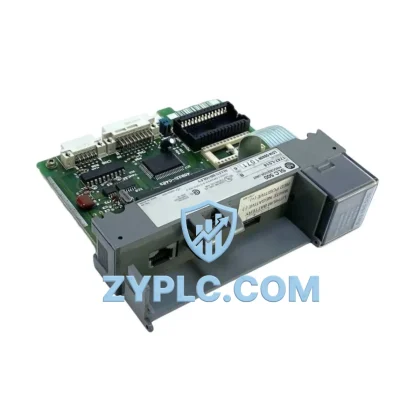
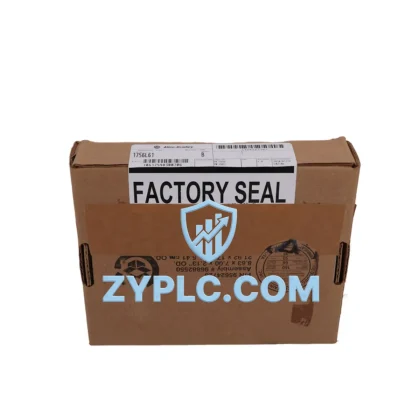
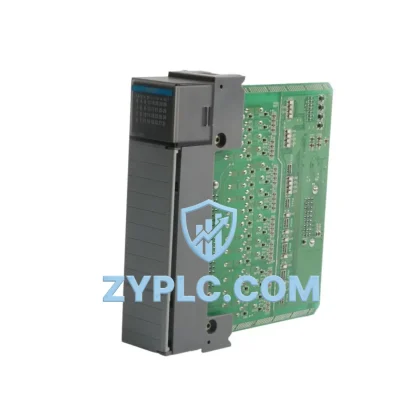
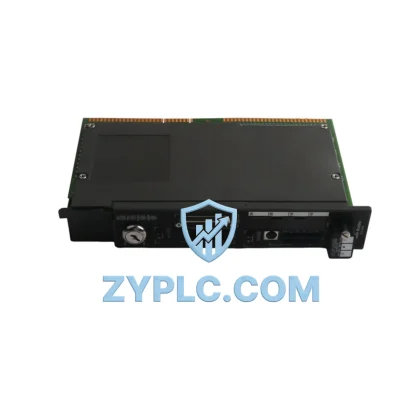
YOKOGAWA NP53*A System-Ready MFCU Processor for CENTUM Architecture: Control System Coordination and Upstream-Downstream Synergy
In modern distributed control system (DCS) deployments, the integrity of the entire automation architecture depends on the reliability and compatibility of every module within the control layer. The YOKOGAWA NP53*A Basic MFCU (Multi-Function Control Unit) Processor Card is a foundational component engineered for seamless integration within YOKOGAWA’s CENTUM series DCS platforms. Rather than functioning as a standalone unit, the NP53*A is designed to operate as a coordinated node within a layered control hierarchy — interfacing with I/O subsystems, communication networks, power distribution modules, and human-machine interface (HMI) stations to deliver consistent, scalable, and maintainable process automation.
The NP53*A processor card occupies a critical position in the control layer of CENTUM-based architectures. It executes control algorithms, manages real-time data acquisition from field instruments, and coordinates signal flow between the field I/O layer and the supervisory SCADA or DCS operator stations. Its architecture supports deterministic scan cycles essential for process-critical applications in industries such as oil and gas, petrochemical refining, power generation, water treatment, metallurgy, and continuous manufacturing.
Architecture Specification Table
| Parameter |
Specification |
| Model / SKU |
NP53*A |
| Brand |
YOKOGAWA |
| Series |
CENTUM DCS |
| Module Type |
Basic MFCU Processor Card |
| System Role |
Control Layer Processor — Real-Time Algorithm Execution & I/O Coordination |
| Architecture Compatibility |
CENTUM CS, CENTUM CS 1000, CENTUM CS 3000 (series-dependent) |
| Communication Capability |
V-net / Vnet/IP (CENTUM proprietary control bus); supports peer-to-peer and supervisory communication |
| Redundancy Support |
Dual-redundant processor configuration supported within CENTUM redundancy architecture |
| Installation Environment |
Industrial control cabinet; DIN rail or backplane-mounted within CENTUM field control station (FCS) |
| Operating Temperature |
0°C to 55°C (standard industrial range) |
| Power Supply Compatibility |
Compatible with CENTUM-series power supply modules (e.g., PW481, PW482 series) |
| Country of Origin |
Japan |
| Warranty |
12-Month Warranty — covers manufacturing defects and functional failure under normal operating conditions |
Coordinated Control System Design
The NP53*A does not operate in isolation. Its value is fully realized when integrated within a complete CENTUM field control station (FCS) architecture. A typical deployment begins with the backplane or node unit — such as the YOKOGAWA ANB10D or ANB11D node unit — which provides the physical mounting and internal bus connectivity for the processor card and its associated I/O modules. The NP53*A processor communicates with analog input modules (e.g., AAI141, AAI143) and analog output modules (e.g., AAO141) to acquire process variables and issue control signals to final control elements.
On the digital side, the processor interfaces with digital input/output modules such as the ADV151 and ADV551 series, enabling discrete logic control alongside continuous process regulation. For applications requiring intrinsically safe field wiring, the NP53*A architecture supports integration with YOKOGAWA’s barrier and isolator modules, maintaining signal integrity from hazardous area instruments.
At the network layer, the NP53*A communicates over YOKOGAWA’s V-net or Vnet/IP control bus, enabling real-time data exchange with other FCS nodes, engineering workstations (EWS), and operator stations (OPS) running CENTUM’s human interface station (HIS) software. This network architecture ensures that the NP53*A’s control outputs and diagnostic data are continuously visible to operators and available for historian logging and advanced process control (APC) applications.
Power integrity is maintained through dedicated CENTUM power supply modules — such as the PW481 or PW482 — which provide regulated DC power to the processor card and I/O modules within the FCS cabinet. In redundant configurations, dual power supply modules ensure uninterrupted operation even during a single power supply failure, complementing the NP53*A’s own redundancy capabilities.
For system-level redundancy, the NP53*A supports dual-processor configurations where a standby processor card mirrors the active unit in real time. Upon detection of a fault in the primary processor, bumpless switchover to the standby NP53*A is executed without disrupting the control loop — a critical requirement in continuous process industries where unplanned shutdowns carry significant safety and economic consequences.
Application in Layered Automation Systems
Petrochemical and Refinery Process Control: In refinery distillation columns, reactor temperature control, and compressor surge protection systems, the NP53*A executes PID and advanced control algorithms with the deterministic timing required for safe and efficient operation. Its integration with CENTUM’s alarm management and safety instrumented system (SIS) interfaces ensures that process excursions are detected and responded to within defined safety integrity levels.
Power Generation and Utilities: In thermal power plants and combined-cycle facilities, the NP53*A manages boiler combustion control, turbine speed regulation, and auxiliary system sequencing. Its V-net communication capability allows seamless data exchange with plant-level SCADA systems and energy management platforms, supporting both real-time control and long-term performance optimization.
Water and Wastewater Treatment: Municipal and industrial water treatment facilities rely on CENTUM-based DCS architectures for continuous monitoring and control of filtration, chemical dosing, and effluent treatment processes. The NP53*A’s stable scan cycle and robust I/O coordination ensure consistent process quality even under variable load conditions.
Metallurgy and Mining: In smelting furnaces, ore processing lines, and mine ventilation systems, the NP53*A provides the processing backbone for multi-loop control strategies. Its compatibility with high-density I/O modules allows a single FCS node to manage hundreds of field signals, reducing cabinet footprint and simplifying system maintenance.
Packaging and Discrete Manufacturing: For hybrid automation environments combining continuous process control with discrete machine sequencing, the NP53*A’s flexible function block programming supports both regulatory and sequential control within a unified CENTUM architecture — eliminating the need for separate PLC platforms and reducing integration complexity.
Architecture Engineering FAQ
Q1: Is the NP53*A compatible with both CENTUM CS and CENTUM CS 3000 systems, and can it be used as a direct replacement in an existing FCS node?
The NP53*A is designed for use within YOKOGAWA’s CENTUM series DCS platforms. Compatibility with a specific CENTUM generation (CS, CS 1000, or CS 3000) depends on the node unit, backplane revision, and firmware version in use. Before deploying the NP53*A as a replacement in an existing FCS, it is strongly recommended to verify the hardware revision compatibility with YOKOGAWA’s engineering documentation or contact our technical team. Our 12-Month Warranty covers the module against manufacturing defects, and we provide pre-shipment functional verification to support your replacement planning.
Q2: How does the NP53*A support redundant processor configurations, and what is the switchover behavior during a processor fault?
In a redundant CENTUM FCS configuration, two NP53*A processor cards operate in an active-standby arrangement. The standby processor continuously synchronizes its memory and control state with the active unit via the internal node bus. Upon detection of a hardware fault or communication failure in the active processor, the CENTUM system executes a bumpless switchover — transferring control to the standby NP53*A without interrupting ongoing control loops or generating spurious output signals. This behavior is managed by the CENTUM FCS supervisory logic and requires no operator intervention, making it suitable for unattended or remote process control applications.
Q3: What long-term maintenance and supply considerations apply to the NP53*A, and how does the 12-Month Warranty support ongoing operations?
As a legacy and long-lifecycle CENTUM component, the NP53*A is subject to availability constraints in the open market. We maintain dedicated inventory of tested NP53*A units to support planned maintenance cycles, emergency replacements, and system expansion projects. Each unit is supplied with a 12-Month Warranty covering functional performance under normal operating conditions, giving maintenance engineers confidence in the reliability of replacement modules. For facilities operating CENTUM-based DCS systems over multi-year horizons, we recommend establishing a spare parts agreement to ensure NP53*A availability aligns with your planned maintenance windows and turnaround schedules.
© 2026 ZYPLC. All rights reserved.
Original Source: https://zyplc.com
Contact: +86 19859288691 | [email protected]