Yokogawa PW501-S1 Energy-Saving Power Supply Centum CS3000: Precision Efficiency Control for Industrial Automation
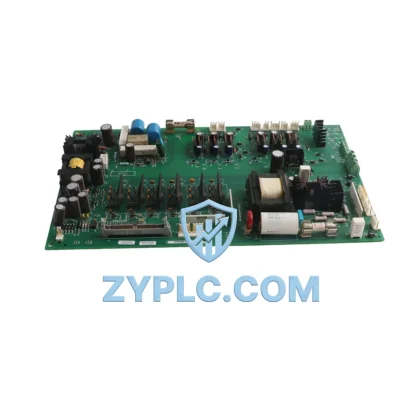
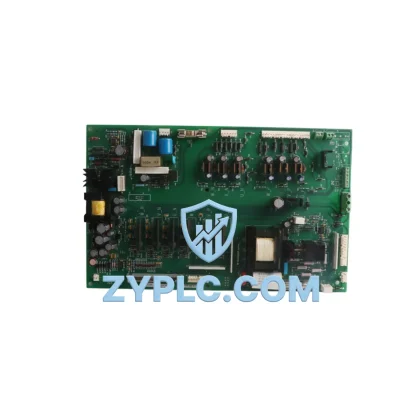
The Yokogawa PW501-S1 is a high-efficiency power supply module engineered for the Centum CS3000 Distributed Control System (DCS). Designed to deliver stable, regulated DC power to field control stations and I/O subsystems, the PW501-S1 plays a foundational role in reducing unnecessary energy draw across continuous process environments — from petrochemical refineries and LNG terminals to pharmaceutical batch lines and power generation facilities. With a 12-month warranty, factory-tested inventory, and same-week shipping capability, the PW501-S1 is a reliable choice for both planned upgrades and emergency replacement scenarios.
In modern industrial plants, power supply inefficiency is one of the most overlooked contributors to elevated energy costs. Unstable or oversized power modules force downstream components — including I/O cards, communication modules, and field transmitters — to operate outside their optimal load range, increasing heat dissipation and shortening component lifespan. The PW501-S1 addresses this by delivering precisely conditioned output voltage with minimal ripple, ensuring that every connected module in the Centum CS3000 field control station operates at peak efficiency.
Efficiency Performance Table
| Parameter |
Specification |
| Product SKU |
PW501-S1 |
| Brand / Series |
Yokogawa / Centum CS3000 |
| Module Type |
Power Supply Module (DCS) |
| Input Voltage |
100–240 VAC, 50/60 Hz |
| Output Voltage |
24 VDC regulated |
| Conversion Efficiency |
≥88% (typical full load) |
| Compatible Systems |
Centum CS3000, Centum VP (legacy compatibility) |
| Application Environment |
Process automation, DCS field control stations, industrial I/O racks |
| Energy-Saving Value |
Reduces idle power draw; supports load-balanced redundant power configurations |
| Warranty |
12-Month Warranty — tested before shipment |
| Origin |
Japan |
| Stock Status |
In Stock — available for immediate dispatch |
Energy-Aware Automation Architecture
The PW501-S1 does not operate in isolation — its efficiency impact is multiplied when integrated into a well-designed Centum CS3000 automation architecture. In a typical field control station, the PW501-S1 supplies regulated power to analog input modules such as the AAI143-H00, which handles 4–20 mA signals from flow transmitters and pressure sensors. Accurate signal acquisition at the I/O layer is the first step in energy-aware control: when field data is clean and stable, the control system can make faster, more precise adjustments to process variables, avoiding the energy waste associated with hunting or oscillating control loops.
On the output side, the ADV151-P00 digital output module translates control decisions into switching commands for solenoid valves, motor starters, and relay-driven actuators. When the PW501-S1 maintains stable bus voltage, these output modules switch with consistent timing, reducing the risk of false triggers that can cause unnecessary motor starts — one of the most energy-intensive events in a production line. Paired with the CP451-10 field control unit, the system achieves deterministic scan cycles that keep process variables within tight bands, minimizing corrective energy expenditure.
For drive-level energy optimization, the Centum CS3000 architecture integrates with Yokogawa’s variable frequency drive ecosystem. The PW482-10 power supply module supports higher-density I/O configurations in expanded field stations, while communication between the DCS and variable speed drives is managed through FOUNDATION Fieldbus or HART protocol interfaces — including the AIP827 and AIP830 field communication modules. These interfaces allow the DCS to dynamically adjust motor speed setpoints based on real-time demand signals, cutting energy consumption during low-load periods without sacrificing throughput.
Energy monitoring at the system level is handled through Yokogawa’s power monitoring instruments. The AMM12C multi-input module aggregates energy consumption data from multiple field devices, feeding it back to the DCS historian for trend analysis and KPI reporting. When combined with the EC401-10 Ethernet communication module, this data can be forwarded to plant-wide energy management systems (EMS) or MES platforms, enabling cross-department visibility into energy utilization rates and equipment efficiency scores.
For redundant power configurations — critical in continuous process plants where a power supply failure can trigger an unplanned shutdown — the PW501-S1 is designed to operate in parallel with a second unit. The PW501-S2 serves as the redundant counterpart, and together they form a load-sharing pair that eliminates single points of failure while distributing thermal load evenly, extending the operational lifespan of both modules. The AAI841-H00 analog output module, powered through this redundant bus, maintains precise control of final control elements even during a power module switchover event, ensuring production continuity and preventing energy-intensive process upsets.
Power Optimization in Real Production Lines
In a continuous chemical processing plant running 24/7, unplanned downtime caused by a failed power supply module can cost tens of thousands of dollars per hour in lost production, emergency maintenance labor, and process restart energy. The PW501-S1’s robust design — with wide input voltage tolerance and built-in overvoltage and overcurrent protection — significantly reduces the probability of such events. Its high conversion efficiency means less heat is generated within the control cabinet, reducing the load on cabinet cooling systems and lowering the facility’s overall HVAC energy consumption.
From a production line rhythm (takt time) perspective, stable DCS power directly influences control loop scan rates. When power supply ripple is high, analog input modules may report noisy signals, causing the controller to apply excessive filtering or increase scan intervals — both of which slow the system’s response to process disturbances. The PW501-S1’s low-ripple output keeps I/O modules operating at their rated scan frequencies, preserving the tight control loop performance that underpins efficient production pacing.
Predictive maintenance programs also benefit from a stable power infrastructure. When the PW501-S1 operates within its rated parameters, the diagnostic data generated by connected I/O and communication modules is more reliable, enabling condition-monitoring algorithms to detect early signs of field device degradation — such as increasing valve friction or motor bearing wear — before they escalate into failures. This proactive approach reduces both emergency maintenance costs and the energy waste associated with degraded equipment operating inefficiently over extended periods.
Every PW501-S1 unit shipped by ZYPLC undergoes a full functional test prior to dispatch, verifying output voltage accuracy, ripple levels, and protection circuit response. Units are sourced from verified supply channels and stored under controlled conditions to preserve module integrity. With in-stock availability and a 12-month warranty covering both parts and labor for module-level defects, the PW501-S1 represents a low-risk, high-value procurement decision for maintenance engineers and automation project managers alike.
Energy Optimization FAQ
Q1: How does the PW501-S1 contribute to measurable energy savings in a Centum CS3000 system?
The PW501-S1’s high conversion efficiency (≥88%) reduces the amount of input AC power wasted as heat compared to older or lower-grade power supply modules. In a field control station with multiple I/O racks, replacing an aging power module with the PW501-S1 can reduce cabinet heat load, lower cooling energy requirements, and improve the overall power factor of the control system infrastructure.
Q2: Is the PW501-S1 compatible with the Centum VP system as well as CS3000?
The PW501-S1 is primarily specified for the Centum CS3000 platform. While certain mechanical and electrical characteristics overlap with Centum VP field station hardware, compatibility should be verified against the specific field control station model and firmware revision before installation. Our technical team can assist with cross-reference verification prior to order confirmation.
Q3: What is the recommended replacement strategy when a PW501-S1 fails in a live production environment?
For systems configured with redundant power supply pairs (PW501-S1 + PW501-S2), the failed module can be hot-swapped without interrupting the field control station’s operation, provided the redundant unit is healthy. For single-supply configurations, a planned maintenance window is recommended. ZYPLC maintains in-stock inventory of the PW501-S1 to support rapid replacement scenarios, with same-week dispatch available for urgent orders.
Q4: What does the 12-month warranty cover, and what testing is performed before shipment?
All PW501-S1 units are functionally tested before shipment, including output voltage verification, load regulation testing, and protection circuit validation. The 12-month warranty covers module-level defects in materials and workmanship under normal operating conditions. Warranty claims are processed directly through ZYPLC, with replacement units dispatched promptly to minimize production downtime.
© 2026 ZYPLC. All rights reserved.
Original Source: https://zyplc.com
Contact: +86 19859288691 | plc.sales@zyplc.com