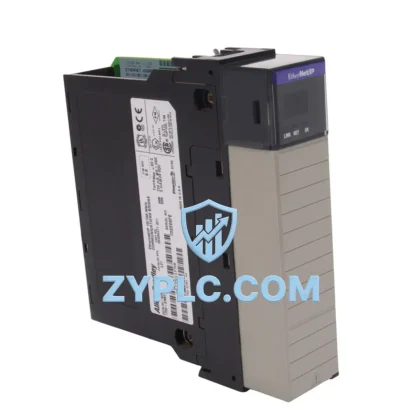
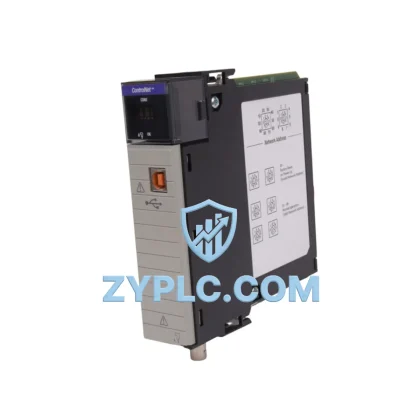
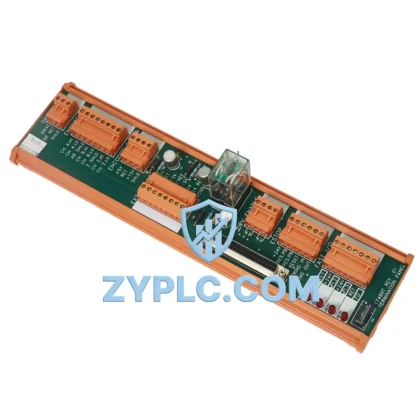
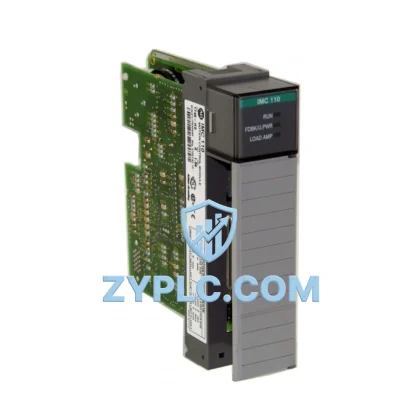
Yokogawa SAI143-H63/PRP S3 System-Ready Signal Conditioner for CENTUM VP Architecture
The Yokogawa SAI143-H63/PRP S3 is a high-precision analog input signal conditioner module engineered for seamless Contextual Integration within the CENTUM VP distributed control system (DCS) architecture. Designed to operate at the I/O layer of a multi-tier automation hierarchy, this module serves as a critical bridge between field instrumentation and the process control domain, ensuring accurate signal acquisition, conditioning, and transmission across the full control loop. Its role within the CENTUM VP platform extends beyond simple signal conversion — it actively contributes to system consistency, redundancy capability, and long-term maintenance efficiency across complex industrial installations.
In a layered automation architecture, the SAI143-H63/PRP S3 occupies the field I/O tier, receiving analog signals from transmitters, sensors, and field devices and delivering conditioned data to the CENTUM VP controller domain. This positioning makes it a foundational component in ensuring signal integrity from the process floor to the control layer. When deployed alongside the Yokogawa AFV10D or AFV30D field control stations, the module enables tight synchronization between field measurements and control execution cycles, reducing latency and improving loop stability across high-density process environments.
The module’s compatibility with the CENTUM VP node unit backplane — including the ANB10D and ANB11D node bus units — allows it to be installed within standard I/O nest configurations without requiring additional interface hardware. This plug-and-compatible design simplifies engineering during both initial commissioning and subsequent system expansions. When the control architecture requires additional I/O capacity, the SAI143-H63/PRP S3 can be added to existing node units with minimal disruption to live process operations, supporting modular scalability that is essential in phased plant expansion projects.
From a redundancy design perspective, the PRP suffix in the SAI143-H63/PRP S3 designation indicates support for Parallel Redundancy Protocol, enabling the module to participate in fault-tolerant network topologies. This is particularly relevant in architectures where the CENTUM VP system is integrated with IEC 62439-3-compliant ring or dual-path Ethernet networks, ensuring that signal data continues to flow without interruption even in the event of a single network path failure. When combined with redundant power supply modules such as the Yokogawa APW11D or APW12D, the overall I/O subsystem achieves a high level of availability suitable for safety-critical and continuous process applications.
At the network layer, the SAI143-H63/PRP S3 communicates through the CENTUM VP Vnet/IP control network, which provides deterministic, high-speed data exchange between I/O modules, field control stations, and the human-machine interface (HMI) layer. This communication architecture supports integration with the Yokogawa FAST/TOOLS SCADA platform and the Exaopc OPC server, enabling plant-wide data visibility and historian connectivity. For installations requiring fieldbus integration, the module can coexist within architectures that also include FOUNDATION Fieldbus H1 segments managed through Yokogawa’s AFG10D or similar fieldbus interface modules, providing a unified I/O strategy across both conventional and digital field device networks.
In terms of application environments, the SAI143-H63/PRP S3 is well-suited for deployment in oil and gas processing facilities, petrochemical plants, power generation stations, water and wastewater treatment systems, and continuous manufacturing lines where analog signal accuracy and system uptime are non-negotiable. Its operating temperature range and vibration tolerance make it appropriate for installation in both climate-controlled control rooms and field-mounted junction enclosures, provided appropriate environmental protection is applied. In mining and metallurgical applications, where process variables such as temperature, pressure, and flow must be monitored continuously across large geographic areas, the module’s ability to maintain signal fidelity over extended cable runs is a significant operational advantage.
For engineering teams responsible for long-term system maintenance, the SAI143-H63/PRP S3 offers the advantage of direct replacement compatibility within existing CENTUM VP I/O nests, eliminating the need for backplane modifications or firmware reconfiguration when replacing aging modules. This characteristic reduces planned maintenance windows and minimizes the risk of configuration errors during module swap procedures. ZYPLC maintains verified stock of this module and provides a 12-Month Warranty on all units shipped, supporting procurement teams that require documented quality assurance as part of their supplier qualification process.
Architecture Specification Table
| Parameter |
Specification |
| System Role |
Analog Input Signal Conditioner — I/O Layer, CENTUM VP DCS |
| Full Model Number |
SAI143-H63/PRP S3 |
| Brand |
Yokogawa |
| Series |
CENTUM VP |
| Module Type |
Analog Input Signal Conditioner |
| Input Signal Type |
4–20 mA analog (with HART pass-through capability, model dependent) |
| Channel Count |
16 channels (H63 configuration) |
| Communication Protocol |
Vnet/IP; PRP (Parallel Redundancy Protocol, IEC 62439-3) |
| Backplane Compatibility |
CENTUM VP ANB10D / ANB11D Node Bus Units |
| Power Supply Compatibility |
APW11D / APW12D Redundant Power Supply Modules |
| Operating Temperature |
0°C to 55°C (standard installation) |
| Installation Environment |
Control room / field enclosure (IP20 minimum) |
| Redundancy Support |
PRP dual-path Ethernet fault tolerance |
| Warranty |
12-Month Warranty — all units supplied by ZYPLC |
| Origin |
Japan |
Coordinated Control System Design
The SAI143-H63/PRP S3 achieves its full operational value when integrated within a coordinated CENTUM VP system architecture. At the controller level, the Yokogawa AFV10D and AFV30D field control stations process the conditioned analog data delivered by the SAI143 module, executing PID control algorithms and interlock logic that govern downstream actuators and drives. The node bus units ANB10D and ANB11D provide the physical backplane infrastructure that connects multiple I/O modules — including analog output modules such as the SAO143 and digital I/O modules such as the SDV144 — into a unified I/O nest, enabling high-density signal management within a compact cabinet footprint.
Power integrity across the I/O nest is maintained by the APW11D or APW12D redundant power supply modules, which provide dual-feed power distribution to all installed I/O modules, including the SAI143-H63/PRP S3. At the HMI layer, the Yokogawa FAST/TOOLS or Exaquantum historian platform receives process data from the CENTUM VP Vnet/IP network, providing operators with real-time visualization and long-term trend analysis. For installations requiring communication with third-party systems, the Yokogawa AIP829 or similar communication gateway modules enable protocol translation between the CENTUM VP domain and external Modbus, PROFIBUS, or OPC-UA networks, ensuring that the SAI143’s signal data is accessible across the full plant information hierarchy.
Application in Layered Automation Systems
In petroleum refining and petrochemical processing plants, the SAI143-H63/PRP S3 is deployed within CENTUM VP-based DCS architectures to monitor critical process variables including reactor temperature profiles, column pressure differentials, and feed flow rates. Its 16-channel analog input capacity allows a single module to consolidate signals from multiple field transmitters within a single process unit, reducing cabinet space requirements and simplifying cable management in high-density control rooms.
In power generation facilities — including thermal, combined-cycle, and renewable energy plants — the module supports continuous monitoring of turbine inlet temperatures, generator output parameters, and auxiliary system pressures. Its PRP network redundancy capability is particularly valued in power plant applications where control system availability directly impacts grid stability and regulatory compliance. In water and wastewater treatment systems, the SAI143-H63/PRP S3 provides reliable analog input conditioning for flow meters, level transmitters, and chemical dosing sensors distributed across large treatment facilities, supporting both local control and remote SCADA integration through the CENTUM VP Vnet/IP network.
In mining and metallurgical operations, the module is used within CENTUM VP architectures that manage ore processing, smelting, and materials handling systems, where robust signal conditioning under high-vibration and high-temperature ambient conditions is essential. Packaging and discrete manufacturing lines also benefit from the module’s modular scalability, allowing production engineers to expand I/O capacity incrementally as new process lines are commissioned without requiring controller replacement or system-wide reconfiguration.
Architecture Engineering FAQ
Q1: Is the SAI143-H63/PRP S3 directly compatible with existing CENTUM VP I/O nests without hardware modification?
Yes. The SAI143-H63/PRP S3 is designed for direct installation into CENTUM VP-compatible node bus units including the ANB10D and ANB11D. No backplane modification or additional interface hardware is required. The module is recognized automatically by the CENTUM VP system builder upon installation, and channel configuration is performed through the standard engineering environment without requiring firmware updates to the host controller.
Q2: How does the PRP designation affect network architecture planning for redundant CENTUM VP systems?
The PRP (Parallel Redundancy Protocol) designation indicates that the SAI143-H63/PRP S3 supports dual-path Ethernet operation in compliance with IEC 62439-3. In a redundant CENTUM VP network topology, the module simultaneously transmits data over two independent Ethernet paths. If one path fails, the receiving node continues to process data from the surviving path without any switchover delay, achieving zero-recovery-time redundancy. This capability requires that the network infrastructure — including switches and cabling — be configured in a PRP-compliant dual-ring or dual-star topology.
Q3: What does the 12-Month Warranty from ZYPLC cover, and how does it support long-term maintenance planning?
All SAI143-H63/PRP S3 units supplied by ZYPLC are covered by a 12-Month Warranty from the date of shipment. This warranty covers manufacturing defects and functional failures under normal operating conditions as specified in the Yokogawa product documentation. For maintenance engineers managing spare parts programs, the 12-Month Warranty provides documented quality assurance that supports supplier qualification requirements and reduces the financial risk associated with holding critical spare modules in inventory. ZYPLC also maintains ongoing stock of CENTUM VP I/O modules to support rapid replacement needs during unplanned outages.
© 2026 ZYPLC. All rights reserved.
Original Source: https://zyplc.com
Contact: +86 19859288691 | plc.sales@zyplc.com