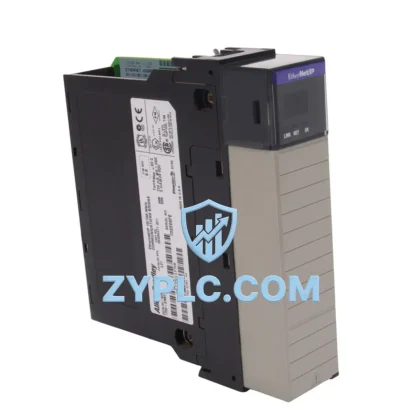
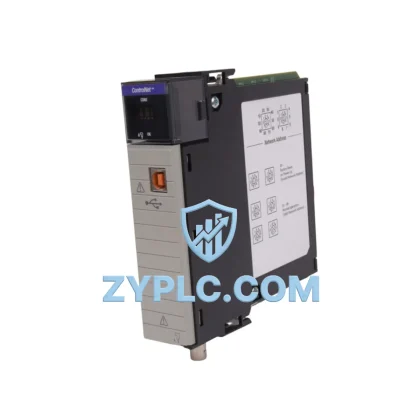
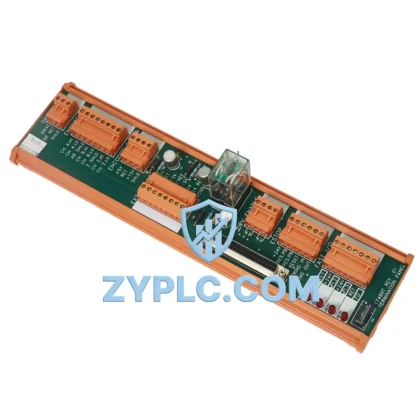
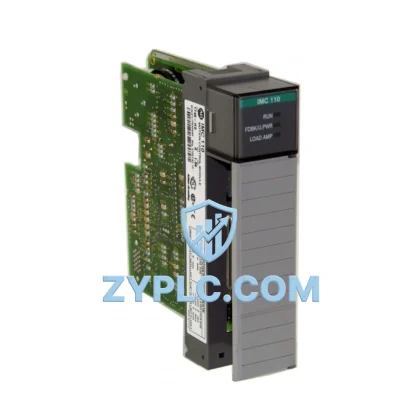
Yokogawa SAI143-HE3 S3 System-Ready Signal Amplifier for CENTUM Architecture
In a fully integrated distributed control system, every layer of the architecture depends on the precision and reliability of its signal conditioning components. The Yokogawa SAI143-HE3 S3 Signal Amplifier occupies a critical position within the CENTUM CS3000 and CENTUM VP DCS platforms, serving as the bridge between field-level instrumentation and the control execution layer. Designed to amplify, isolate, and condition analog input signals from transmitters, sensors, and field devices, the SAI143-HE3 S3 ensures that the data flowing into the control system is accurate, stable, and free from electrical interference — a prerequisite for reliable process control in demanding industrial environments.
The SAI143-HE3 S3 is engineered to slot directly into the CENTUM node unit architecture, where it works in close coordination with the Field Control Station (FCS) and its associated I/O modules. Within a typical CENTUM CS3000 or CENTUM VP installation, the FCS acts as the central execution engine, processing real-time control logic while relying on a structured I/O subsystem to gather field data. The SAI143-HE3 S3 fits into this subsystem as a dedicated signal amplifier card, receiving low-level analog signals from pressure transmitters, flow meters, temperature sensors, and level instruments, then conditioning those signals to the standard ranges required by the FCS input cards. This tight integration with the CENTUM node unit backplane ensures minimal signal latency and maximum data fidelity across the control loop.
Within the broader system architecture, the SAI143-HE3 S3 operates alongside a range of complementary Yokogawa components. The AAI141-S and AAI143-S analog input modules share the same node unit environment and are often deployed in parallel configurations to handle high-density I/O requirements. The AMM12 and AMM22 multi-point monitor modules provide additional signal monitoring capability within the same cabinet, while the AIP588 I/O power supply module ensures stable, regulated power delivery to all I/O cards in the node unit. For applications requiring redundant signal paths, the SAI143-HE3 S3 can be paired with redundant FCS configurations, where the ACF11 field communication module manages data exchange between the node unit and the control network. This layered redundancy design is a hallmark of CENTUM architecture and ensures that a single component failure does not interrupt process control continuity.
At the network layer, the CENTUM VP platform uses Vnet/IP — Yokogawa’s proprietary high-speed control network — to connect FCS units, HMI stations, and engineering workstations into a unified control domain. The SAI143-HE3 S3, as part of the FCS I/O subsystem, contributes directly to the quality of data available on the Vnet/IP network. Accurate, well-conditioned analog signals translate into reliable process variables that SCADA systems, historian servers, and operator HMI displays can use for real-time monitoring, trend analysis, and alarm management. In CENTUM VP installations integrated with Yokogawa’s FAST/TOOLS SCADA platform or third-party DCS supervisory systems, the integrity of field signal data — which the SAI143-HE3 S3 helps guarantee — is foundational to effective plant-wide visibility.
The SAI143-HE3 S3 is equally well-suited to applications where signal isolation is a primary concern. In environments with significant electrical noise — such as motor control centers, variable frequency drive (VFD) panels, or high-voltage switchgear rooms — the amplifier’s galvanic isolation capability prevents ground loops and common-mode interference from corrupting analog measurements. This makes it a preferred choice for installations in petrochemical plants, power generation facilities, water treatment stations, and metallurgical processing lines, where field wiring runs long distances and passes through electrically noisy cable trays. By isolating the field circuit from the control system circuit, the SAI143-HE3 S3 protects both the measurement accuracy and the longevity of the connected I/O hardware.
From a maintenance and lifecycle perspective, the SAI143-HE3 S3 is designed for straightforward replacement within the CENTUM node unit. Its card-format design allows hot-swap replacement in systems configured for redundant I/O, minimizing process interruption during maintenance windows. Engineering teams performing system audits or preventive maintenance can verify signal amplifier performance using the CENTUM VP engineering environment, which provides diagnostic access to I/O card status, signal quality indicators, and fault history logs. This integration with the platform’s built-in diagnostics reduces the need for external test equipment and accelerates fault isolation during troubleshooting.
Every SAI143-HE3 S3 unit supplied by ZYPLC undergoes pre-shipment functional testing to verify signal amplification accuracy, isolation integrity, and compatibility with CENTUM node unit backplane interfaces. Stock is maintained in our warehouse to support urgent replacement requirements, with global shipping available to project sites across Asia, Europe, the Middle East, and the Americas. All units are covered by a 12-Month Warranty, providing assurance of product quality and performance from the date of delivery.
Architecture Specification Table
| Parameter |
Specification |
| System Role |
Analog Signal Amplifier — CENTUM CS3000 / CENTUM VP Node Unit I/O |
| SKU |
SAI143-HE3 S3 |
| Brand |
Yokogawa |
| Series |
CENTUM CS3000 / CENTUM VP |
| Product Type |
Signal Amplifier / Signal Conditioning Module |
| Signal Type |
Analog Input (4–20 mA / 1–5 V) |
| Isolation |
Galvanic isolation between field circuit and control circuit |
| Communication |
Vnet/IP (via FCS node unit backplane integration) |
| Installation |
Node unit card slot — CENTUM CS3000 / VP FCS cabinet |
| Operating Environment |
Industrial control cabinet; standard DCS environmental ratings |
| Origin |
Japan |
| Warranty |
12-Month Warranty — all units pre-shipment tested |
Coordinated Control System Design
The SAI143-HE3 S3 does not operate in isolation — it is one component in a carefully coordinated CENTUM system architecture. In a typical CENTUM VP FCS cabinet, the node unit backplane hosts a combination of I/O cards, power supply modules, and communication interfaces that together form the field interface layer of the DCS. The AAI141-S and AAI143-S analog input modules handle direct 4–20 mA signal acquisition from field transmitters, while the SAI143-HE3 S3 provides the amplification and isolation stage for signals that require conditioning before entering the input card. The AIP588 I/O power supply module delivers regulated DC power to all cards in the node unit, ensuring stable operation across the full I/O complement.
At the control execution level, the FCS processor card — such as the CP451 or CP461 in CENTUM CS3000 configurations — executes the control logic that acts on the conditioned signals provided by the SAI143-HE3 S3 and its companion I/O modules. The ACF11 field communication module manages the Vnet/IP data exchange between the FCS and the rest of the CENTUM domain, including HMI stations running Yokogawa’s CENTUM VP HIS (Human Interface Station) software. Operators monitoring the process from the HIS console rely on the accuracy of field data that originates at the signal amplifier level — making the SAI143-HE3 S3 a foundational element of the entire operator visibility chain.
For cabinet-level power distribution, the Yokogawa UPS and power conditioner modules provide clean, uninterrupted power to the FCS and its I/O subsystem, protecting the SAI143-HE3 S3 and associated cards from power quality events that could affect measurement accuracy. In redundant FCS configurations, dual node units with mirrored I/O card sets — including paired SAI143-HE3 S3 amplifiers — ensure that signal conditioning capability is maintained even during a primary card failure, supporting the high-availability requirements of continuous process industries.
Application in Layered Automation Systems
The SAI143-HE3 S3 finds application across a wide range of process industries where CENTUM CS3000 or CENTUM VP DCS platforms are deployed. In oil refinery and petrochemical plant environments, the amplifier conditions signals from pressure and differential pressure transmitters monitoring reactor vessels, distillation columns, and heat exchangers, feeding accurate process data into the FCS control loops that regulate temperature, pressure, and flow. In power generation facilities — including thermal, combined-cycle, and nuclear plants — the SAI143-HE3 S3 supports the signal conditioning requirements of boiler control, turbine monitoring, and auxiliary system automation, where measurement accuracy directly affects plant efficiency and safety.
Water and wastewater treatment plants using CENTUM VP for process automation rely on the SAI143-HE3 S3 to condition signals from flow meters, pH sensors, dissolved oxygen analyzers, and level transmitters distributed across treatment stages. In metallurgical and mining operations, the amplifier supports signal conditioning for furnace temperature monitoring, conveyor load measurement, and slurry flow control, where harsh electrical environments make galvanic isolation particularly valuable. Pharmaceutical and food processing facilities using CENTUM VP for batch control and continuous process management benefit from the SAI143-HE3 S3’s precision signal conditioning in applications where measurement accuracy is tied directly to product quality and regulatory compliance.
Architecture Engineering FAQ
Q: Is the SAI143-HE3 S3 compatible with both CENTUM CS3000 and CENTUM VP node units?
A: Yes. The SAI143-HE3 S3 is designed for use within the Yokogawa CENTUM node unit architecture and is compatible with both CENTUM CS3000 and CENTUM VP FCS configurations. It installs into the standard node unit card slot and interfaces with the backplane bus used by both platform generations. Customers upgrading from CS3000 to CENTUM VP can typically retain existing SAI143-series signal amplifier cards, reducing hardware replacement costs during platform migration.
Q: Can the SAI143-HE3 S3 be replaced without shutting down the FCS?
A: In CENTUM configurations with redundant node units and hot-swap capable I/O, the SAI143-HE3 S3 can be replaced while the redundant I/O path maintains signal continuity. For non-redundant configurations, replacement requires a planned maintenance window. ZYPLC recommends maintaining a spare SAI143-HE3 S3 on-site to minimize replacement time. All units supplied by ZYPLC are pre-tested and ready for immediate installation.
Q: What warranty and support does ZYPLC provide for the SAI143-HE3 S3?
A: Every SAI143-HE3 S3 supplied by ZYPLC is covered by a 12-Month Warranty from the date of delivery. Units undergo pre-shipment functional testing to verify signal amplification performance and backplane interface integrity. ZYPLC maintains stock of SAI143-series components to support urgent replacement requirements, with global shipping available. For technical inquiries, system compatibility questions, or volume procurement, contact our engineering sales team directly.
© 2026 ZYPLC. All rights reserved.
Original Source: https://zyplc.com
Contact: +86 19859288691 | plc.sales@zyplc.com