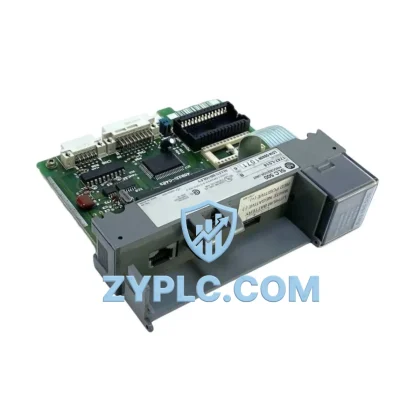
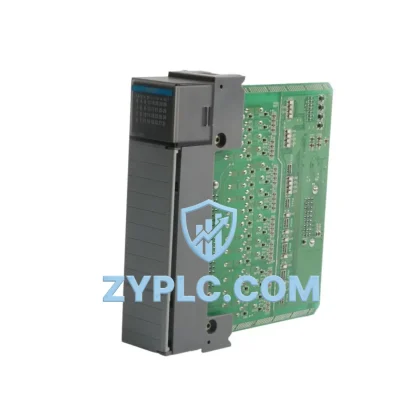
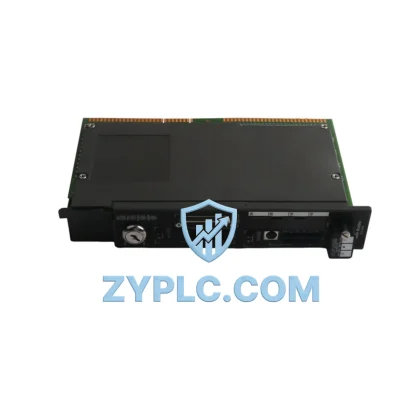
Yokogawa SB311-S1 Energy-Saving Processor for Optimized CENTUM Automation
The Yokogawa SB311-S1 is a high-performance processor module engineered for the CENTUM VP Distributed Control System (DCS), one of the most widely deployed process automation platforms in energy-intensive industries including petrochemical, power generation, pulp and paper, and pharmaceutical manufacturing. Designed to deliver precise, low-latency control execution, the SB311-S1 serves as the computational core of field control stations, directly governing how energy is consumed, distributed, and optimized across complex production environments.
In modern industrial facilities, the processor module is not merely a computing component — it is the decision-making engine that determines how efficiently motors run, how accurately valves respond, and how consistently process variables are maintained within their optimal energy bands. The SB311-S1 achieves this through its deterministic scan cycle execution, which eliminates control jitter and ensures that actuators receive precise commands at the right moment, preventing the energy waste associated with over-correction, hunting, and unnecessary valve cycling.
When integrated with Yokogawa’s CENTUM VP engineering environment, the SB311-S1 enables operators to implement advanced control strategies such as model predictive control (MPC) and cascade PID loops that continuously minimize energy consumption while maintaining product quality targets. This is particularly valuable in applications where steam consumption, compressed air usage, or electrical load must be tightly managed to meet both production and sustainability KPIs.
Efficiency Performance Table
| Parameter |
Specification / Value |
| Model |
SB311-S1 |
| Brand |
Yokogawa |
| Series |
CENTUM VP |
| Module Type |
Processor Module (Field Control Station) |
| Control Execution |
Deterministic, high-speed scan cycle |
| Power Consumption |
Low-power embedded processor architecture |
| Operating Efficiency |
Optimized for continuous 24/7 industrial operation |
| Compatible Systems |
CENTUM VP R4 / R5 / R6, Field Control Station (FCS) |
| Application Environment |
Petrochemical, Power, Pharma, Pulp & Paper, Water Treatment |
| Communication Protocols |
Vnet/IP, Foundation Fieldbus, HART, Modbus |
| Energy Optimization Value |
Reduces control deviation, minimizes actuator cycling, supports MPC |
| Origin |
Japan |
| Warranty |
12-Month Warranty |
| Availability |
In Stock — Tested & Ready to Ship |
Energy-Aware Automation Architecture
The SB311-S1 does not operate in isolation. Its energy optimization capability is fully realized when deployed within a well-architected CENTUM VP system where each layer — from field sensing to supervisory control — contributes to reducing unnecessary energy expenditure.
At the field level, analog input modules such as the AAI143-H00 and AAI543-H00 collect real-time process data — temperature, pressure, flow, and level — and transmit these values to the SB311-S1 for control computation. The accuracy and update rate of these I/O modules directly affect how efficiently the processor can respond to process disturbances. Paired with digital output modules like the ADV151-P00, the SB311-S1 can execute discrete control actions — starting and stopping motors, opening and closing valves — with the precision needed to avoid energy-wasting on/off cycling.
For drive-level energy management, the SB311-S1 integrates seamlessly with variable frequency drives (VFDs) through the CENTUM VP communication infrastructure. By modulating motor speed in response to real-time demand signals rather than running motors at fixed full speed, facilities can achieve energy reductions of 20–50% on pump and fan applications. The processor module’s fast scan cycle ensures that speed reference signals are updated continuously, preventing the lag that causes drives to overshoot their setpoints and consume excess power.
Power quality and energy consumption monitoring is handled upstream by dedicated power monitoring modules. The AMM12C multi-point power monitor, when integrated into the CENTUM VP network, provides the SB311-S1 with real-time visibility into electrical load distribution across the facility. This data enables the processor to implement load-shedding strategies during peak demand periods, reducing electricity costs without interrupting critical production processes.
The CP451-10 communication processor extends the SB311-S1’s reach to field devices using Foundation Fieldbus and HART protocols, enabling the processor to receive diagnostic data from smart transmitters and positioners. This diagnostic stream is the foundation of predictive maintenance — when a control valve begins to exhibit increased friction or a transmitter drifts from its calibration baseline, the SB311-S1 can flag the anomaly before it escalates into a process upset that wastes energy through off-spec production or unplanned shutdown.
At the supervisory level, the AIP827 interface module connects the field control station to the CENTUM VP operator stations, where engineers can monitor energy KPIs, adjust control parameters, and review historical trends. The ANB10D network interface card ensures high-availability communication between the SB311-S1 and the Vnet/IP control network, maintaining the data integrity that energy optimization strategies depend on. For redundancy-critical applications, a companion processor module such as the SSB401-S1 can be configured in a hot-standby pair with the SB311-S1, ensuring that control execution continues without interruption even during hardware maintenance events.
The PW482-10 power supply module provides stable, conditioned DC power to the field control station chassis, protecting the SB311-S1 from voltage fluctuations that could cause control interruptions. Stable power delivery is itself an energy efficiency measure — unstable supply voltages force processors to perform error recovery cycles that consume additional computational resources and can introduce control delays.
Power Optimization in Real Production Lines
In a typical continuous process plant, energy waste occurs not from a single large inefficiency but from the accumulation of hundreds of small control deviations — a temperature loop that oscillates ±2°C around its setpoint, a pump that runs at full speed when 70% would suffice, a compressor that cycles on and off because its pressure controller is tuned too aggressively. The SB311-S1 addresses these inefficiencies at their source: the control execution layer.
By executing control algorithms with deterministic timing and high computational accuracy, the SB311-S1 enables tighter loop tuning without the risk of instability. Tighter loops mean smaller deviations from setpoint, which translates directly into reduced energy consumption. A heat exchanger controlled to within ±0.5°C rather than ±3°C requires less steam to compensate for temperature swings. A level controller that responds smoothly rather than in large steps reduces the frequency of pump starts, extending motor life and reducing peak electrical demand charges.
Production line throughput — often called line takt — is also directly influenced by processor performance. When the SB311-S1 executes batch sequencing logic with precise timing, transition delays between production phases are minimized. Shorter transitions mean less time with equipment running at partial load, which is one of the most energy-inefficient operating states for motors, heaters, and compressors. Facilities that have optimized their batch control timing through processor upgrades have reported throughput improvements of 5–15% with no increase in energy consumption, effectively reducing the energy cost per unit of production.
Predictive maintenance enabled by the SB311-S1’s diagnostic data collection further reduces energy waste by preventing the gradual efficiency degradation that occurs when equipment is allowed to run in a deteriorating state. A pump with worn impellers consumes more electricity to deliver the same flow. A heat exchanger with fouled surfaces requires more steam to achieve the same heat transfer. By detecting these conditions early through process data analysis, maintenance teams can schedule interventions before efficiency losses become significant, maintaining the energy performance of the production line over time.
All units supplied by ZYPLC undergo full functional testing prior to shipment, including processor initialization, communication link verification, and control execution validation. Each SB311-S1 is covered by a 12-Month Warranty, and in-stock units are available for fast dispatch to minimize production downtime.
Energy Optimization FAQ
Q1: How does the SB311-S1 contribute to measurable energy savings in a CENTUM VP system?
The SB311-S1 enables tighter, more stable control loop execution, which directly reduces process variability. Lower variability means less energy is consumed compensating for deviations — whether in heating, pumping, or compression applications. When combined with advanced control strategies configured in CENTUM VP, facilities typically observe a 5–15% reduction in energy consumption for the controlled process units.
Q2: Is the SB311-S1 compatible with existing CENTUM VP installations?
Yes. The SB311-S1 is designed for use within the CENTUM VP Field Control Station architecture and is compatible with CENTUM VP R4, R5, and R6 systems. It supports standard Vnet/IP communication and integrates with existing I/O modules, communication processors, and operator stations without requiring system-wide reconfiguration.
Q3: Can the SB311-S1 replace a failed or end-of-life processor module without a full system shutdown?
In systems configured with redundant processor modules, the SB311-S1 can be replaced while the standby module maintains control execution, enabling a hot-swap procedure that avoids production interruption. For non-redundant configurations, a planned maintenance window is required. ZYPLC recommends maintaining a spare SB311-S1 in inventory to minimize replacement lead time.
Q4: What testing is performed on SB311-S1 units before shipment, and what does the warranty cover?
Every SB311-S1 supplied by ZYPLC undergoes functional testing including power-on initialization, communication interface verification, and control execution validation. The 12-Month Warranty covers hardware defects and functional failures under normal operating conditions. ZYPLC’s technical team provides pre-sales compatibility consultation and post-sales support to ensure successful integration.
© 2026 ZYPLC. All rights reserved.
Original Source: https://zyplc.com
Contact: +86 19859288691 | plc.sales@zyplc.com