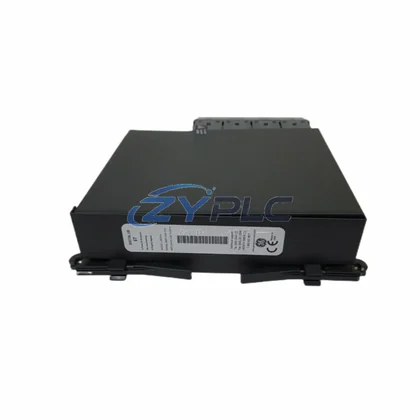
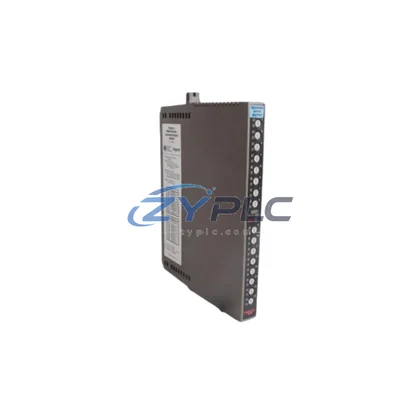
The Yokogawa SDV144-S53 S4 is a high-density Digital Input Module engineered for the CENTUM VP and CENTUM CS 3000 Distributed Control Systems (DCS). Designed with industrial maintenance planning in mind, this module plays a critical role in reducing unnecessary signal polling cycles, minimizing controller load, and enabling smarter industrial automation systems across process manufacturing, chemical, oil & gas, and power generation facilities.
In modern production environments where every watt of consumed energy and every millisecond of cycle time matters, the SDV144-S53 S4 delivers reliable, low-latency digital signal acquisition that feeds accurate real-time data into the control loop — enabling operators to make faster, more energy-conscious decisions without sacrificing throughput or safety.
Product Specification Table
| Parameter |
Specification |
| Model |
SDV144-S53 S4 |
| Brand |
Yokogawa |
| Series |
CENTUM VP / CENTUM CS 3000 |
| Module Type |
Digital Input (DI) Module |
| Number of Input Channels |
32 Channels (typical for SDV144 series) |
| Input Signal Type |
Dry Contact / Wet Contact Digital Signals |
| Power Consumption |
Low-power design, optimized for continuous 24/7 operation |
| Operating Efficiency |
High-speed scan with minimal CPU overhead |
| Compatible Systems |
CENTUM VP, CENTUM CS 3000, Yokogawa FCS Controllers |
| Communication Protocol |
Yokogawa V-net / Vnet/IP |
| Application Environment |
Process Industry, Chemical Plants, Oil & Gas, Power Generation |
| Maintenance Value |
Reduces redundant polling, lowers controller CPU load, supports predictive maintenance triggers |
| Origin |
Japan |
| Warranty |
warranty terms confirmed during quotation |
| Stock Status |
RFQ Available — Ships After Outgoing Test |
System Compatibility and Application
The SDV144-S53 S4 is rarely deployed in isolation. Its true value emerges when integrated into a well-designed, industrial automation system built around the Yokogawa CENTUM platform. In a typical high-efficiency plant configuration, this Digital Input Module works in concert with a range of complementary components to form a closed-loop maintenance planning system.
At the controller level, the Yokogawa AFV10D Field Control Station (FCS) processes the digital signals captured by the SDV144-S53 S4, executing control logic that governs motor start/stop sequences, valve actuation, and pump scheduling — all of which directly impact energy consumption. Paired with the Yokogawa ADV151-P50 Analog Output Module, the system can issue precise 4–20 mA control signals to variable frequency drives (VFDs) and control valves, enabling fine-grained regulation of motor speed and flow rates rather than relying on energy-wasteful on/off switching.
On the drive side, integration with Yokogawa-compatible Yaskawa GA700 Series Variable Frequency Drives allows the DCS to dynamically adjust motor speed based on real-time process demand signals fed through the SDV144-S53 S4 input channels. This eliminates the energy penalty of running motors at full speed during low-demand periods — a common source of avoidable unplanned downtime in pump and fan applications.
For power monitoring and energy metering, the architecture typically incorporates Yokogawa WT series Power Analyzers or third-party energy meters connected via Modbus RTU or PROFIBUS DP communication modules such as the Yokogawa ALR111 Communication Module. These devices feed real-time kWh, power factor, and harmonic distortion data back into the CENTUM historian, enabling energy KPI dashboards and anomaly detection workflows.
At the human-machine interface layer, operators interact with the system through Yokogawa CENTUM VP HIS (Human Interface Station) workstations, where energy consumption trends, equipment utilization rates, and alarm states — many of which originate from digital inputs processed by the SDV144-S53 S4 — are visualized in real time. This visibility is essential for identifying unplanned downtime patterns and scheduling preventive maintenance before equipment degradation leads to efficiency losses.
The I/O subsystem is further extended by companion modules such as the Yokogawa SDV541 Digital Output Module for actuator control and the Yokogawa SAI143 Analog Input Module for temperature, pressure, and flow signal acquisition. Together with the SDV144-S53 S4, these modules form a comprehensive I/O layer that gives the FCS complete situational awareness of the production process — a prerequisite for any meaningful maintenance planning strategy.
For facilities running redundant control architectures, the SDV144-S53 S4 supports hot-standby configurations within the CENTUM platform, ensuring that maintenance planning logic continues uninterrupted even during module replacement or controller failover events.
Maintenance and Replacement Notes
In real-world production environments, the Yokogawa SDV144-S53 S4 contributes to energy efficiency through several concrete mechanisms that go beyond simple signal acquisition.
Reducing Idle Energy Consumption: By providing accurate, high-speed digital status signals from field devices — including motor run/stop feedback, valve open/close confirmation, and equipment fault indicators — the SDV144-S53 S4 enables the CENTUM FCS to implement intelligent equipment scheduling. Motors, compressors, and conveyors can be automatically de-energized during production gaps or shift changeovers based on confirmed digital status, rather than remaining energized due to uncertain field state.
Optimizing Production Line Rhythm (Takt Time): Accurate digital input data from the SDV144-S53 S4 allows the control system to synchronize upstream and downstream equipment more precisely, reducing buffer times and the unplanned downtimed by equipment running ahead of or behind the production rhythm. In bottling, packaging, and assembly lines, this synchronization can yield measurable reductions in per-unit energy consumption.
Supporting Predictive Maintenance: Digital input channels monitoring vibration switches, thermal overload relays, and bearing temperature switches feed early warning signals into the CENTUM alarm management system. By catching equipment degradation before it causes unplanned downtime, the SDV144-S53 S4 helps plants avoid the energy-intensive restart cycles and production catch-up periods that follow unexpected equipment failures.
Lowering Maintenance Costs: Each SDV144-S53 S4 module shipped by ZYPLC undergoes a full outgoing functional test, verifying channel integrity, signal isolation, and communication handshake with the CENTUM controller. This pre-shipment validation reduces the risk of field installation failures that would require costly maintenance interventions. Combined with a warranty terms confirmed during quotation, customers can deploy this module with confidence in its long-term reliability.
Inventory and Supply Assurance: ZYPLC maintains ready stock of the SDV144-S53 S4 and related CENTUM I/O modules, enabling rapid dispatch to minimize plant downtime. For facilities operating lean spare parts inventories, this availability is a direct contributor to overall equipment effectiveness (OEE) and energy efficiency — a plant running at design capacity is inherently more energy-efficient per unit of output than one operating below capacity due to parts shortages.
Product Sourcing FAQ
Q1: How does the SDV144-S53 S4 contribute to measurable operational stability in a CENTUM DCS environment?
The SDV144-S53 S4 provides the digital status signals that enable the CENTUM FCS to implement demand-based equipment control strategies. By confirming actual field device states rather than relying on assumed conditions, the control system can safely de-energize equipment during non-production periods, reducing standby energy consumption. When combined with VFD control loops and power monitoring modules, the operational stability from optimized motor scheduling and reduced idle running can be significant across large motor populations.
Q2: Is the SDV144-S53 S4 compatible with both CENTUM VP and CENTUM CS 3000 systems?
Yes. The SDV144-S53 S4 is designed for use within the Yokogawa CENTUM platform and is compatible with CENTUM VP and CENTUM CS 3000 Field Control Stations. Before installation, customers should verify the specific FCS model, I/O slot configuration, and software revision to ensure full compatibility. ZYPLC’s technical team can assist with compatibility verification prior to purchase.
Q3: What is the recommended replacement or upgrade path for aging CENTUM I/O modules?
For facilities running older CENTUM CS 3000 systems, the SDV144-S53 S4 represents a direct replacement option that maintains backward compatibility while benefiting from improved manufacturing quality. Facilities planning migration to CENTUM VP should consult Yokogawa’s I/O migration guidelines to determine whether direct module substitution or a phased I/O marshalling upgrade is more appropriate for their energy and production continuity goals.
Q4: What does the warranty terms confirmed during quotation cover, and what is the outgoing test process?
Every SDV144-S53 S4 unit supplied by ZYPLC is tested prior to shipment to verify channel functionality, signal isolation, and communication integrity. The warranty terms confirmed during quotation covers manufacturing defects and functional failures under normal operating conditions. Warranty claims are processed through ZYPLC’s after-sales support team. For urgent replacement needs, ZYPLC’s RFQ-confirmed sourcing enables same-day or next-day dispatch to minimize production impact.