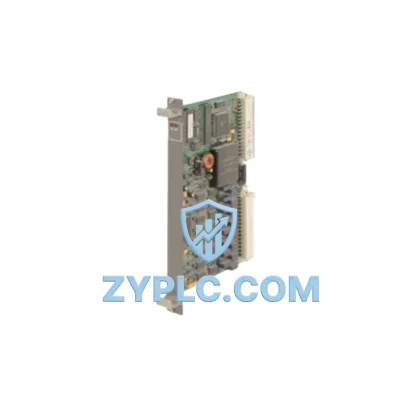
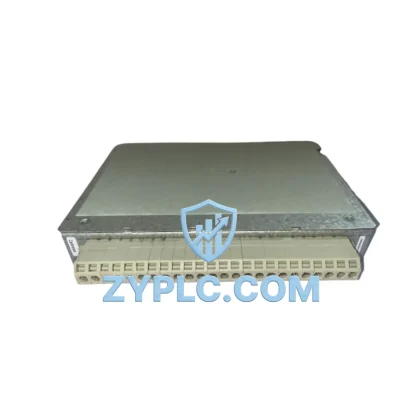
The Yokogawa SDV144-S63 S4 is a high-density digital input module engineered for seamless integration within the STARDOM FCN/FCJ distributed control architecture. Designed to operate as a precision signal acquisition node at the field I/O layer, this module plays a foundational role in bridging physical process signals with the supervisory control and data acquisition layer above. Its role is not simply to collect discrete on/off states — it is to ensure that every digital signal entering the control system is accurately timestamped, reliably transmitted, and contextually available to the CPU and communication layers that depend on it for real-time decision-making.
In a fully realized STARDOM control system, the SDV144-S63 S4 occupies a critical position within the I/O expansion rack, working in close coordination with the FCN Autonomous Controller (e.g., the FCN-100 or FCN-500 series) that serves as the central processing unit. The controller continuously polls the digital input module for field status updates — limit switch positions, motor run/stop feedback, valve open/close confirmation, and interlock signals — and uses this data to execute ladder logic, function block programs, or sequential control routines. Without a reliable digital input module at this layer, the entire control loop loses its grounding in physical reality.
The SDV144-S63 S4 is designed to work alongside complementary I/O modules within the same rack or chassis. In a typical STARDOM I/O expansion configuration, it may be installed adjacent to digital output modules such as the SDV541 or SDV542 series, analog input modules like the SAI143 or SAI543, and analog output modules such as the SAO143. This modular co-installation approach allows engineers to build a compact, high-channel-density I/O subsystem that minimizes cabinet footprint while maximizing signal coverage across the process field.
At the network layer, the STARDOM architecture relies on Ethernet-based communication — typically using the Vnet/IP protocol or standard industrial Ethernet — to connect the FCN controller to upstream SCADA systems, historian servers, and engineering workstations. The SDV144-S63 S4 contributes to this communication chain by ensuring that digital field data is available to the controller with minimal latency, supporting deterministic scan cycles that are essential for time-critical interlock and safety functions. When paired with a redundant FCN controller configuration, the module’s data is mirrored across both primary and standby CPUs, ensuring that no digital input state is lost during a controller switchover event.
Power integrity is another dimension of system architecture where the SDV144-S63 S4 must be considered holistically. The module draws its operating power from the rack’s backplane power supply — typically a dedicated 24 VDC power supply unit such as the Yokogawa PW481 or equivalent — and its stable operation depends on clean, regulated power delivery. In redundant power configurations, dual power supply modules feed the backplane simultaneously, with automatic failover ensuring that a single power supply fault does not interrupt I/O scanning. This power architecture directly supports the module’s role in high-availability control systems where unplanned downtime carries significant operational or safety consequences.
From a human-machine interface perspective, the digital input states captured by the SDV144-S63 S4 are ultimately rendered on operator workstations running FAST/TOOLS or equivalent SCADA software. Operators rely on accurate, real-time digital input data to monitor equipment status, acknowledge alarms, and initiate manual overrides. The integrity of this data chain — from field device through the SDV144-S63 S4, through the FCN controller, through the network, and onto the HMI screen — is what defines the quality of the operator’s situational awareness.
Product Specification Table
| Parameter |
Specification |
| System Role |
Field Digital Input Module — I/O Layer |
| Compatible Platform |
Yokogawa STARDOM FCN/FCJ Architecture |
| Module Series |
SDV144 Series (S63 / S4 Suffix) |
| Input Type |
Discrete Digital Input (Dry Contact / Wet Contact) |
| Input Channels |
16 Channels (typical for SDV144 class) |
| Input Voltage Range |
24 VDC Nominal Field Signal |
| Isolation |
Optical Isolation between Field and Logic Side |
| Communication Interface |
Backplane Bus (Vnet/IP compatible via FCN controller) |
| Installation Environment |
DIN Rail / Rack Mount, IP20, Industrial Cabinet |
| Operating Temperature |
0°C to 55°C |
| Power Supply |
Supplied via Backplane (24 VDC system bus) |
| Country of Origin |
Japan |
| Warranty |
12-Month Warranty (ZYPLC) |
System Compatibility Notes
The SDV144-S63 S4 achieves its full value only when viewed as part of a coordinated control system rather than a standalone component. In a complete STARDOM-based automation solution, it operates alongside the FCN-100 or FCN-500 autonomous controller, which handles all program execution and network communication. Digital output modules such as the SDV541 provide the complementary output side of the I/O layer, driving field actuators based on the logic decisions informed by the SDV144-S63 S4’s input data. Analog modules including the SAI143 analog input and SAO143 analog output extend the system’s signal handling capability to continuous process variables such as flow, pressure, and temperature.
At the communication gateway level, Yokogawa’s RJ71GN11-T2 or equivalent Ethernet communication modules bridge the STARDOM controller to plant-wide DCS or SCADA networks, enabling the digital input data from the SDV144-S63 S4 to be visible across the entire automation hierarchy. Terminal block modules and marshalling panels connected to the module’s field wiring terminals ensure clean, organized signal routing from junction boxes to the I/O rack. In redundant system designs, a secondary FCN controller and mirrored I/O configuration ensure that the digital input data stream remains uninterrupted even during planned maintenance or unexpected hardware faults.
Industrial Application Notes
The Yokogawa SDV144-S63 S4 is deployed across a wide range of industrial sectors where reliable digital signal acquisition is non-negotiable. In power generation and transmission facilities, it monitors circuit breaker status, transformer tap positions, and protection relay outputs, feeding this data to the STARDOM controller for grid stability management. In petrochemical and refinery applications, it captures valve position feedback, pump run signals, and emergency shutdown (ESD) system inputs, supporting both normal operations and safety instrumented system (SIS) functions.
Water and wastewater treatment plants use the SDV144-S63 S4 to monitor pump station status, level switch outputs, and flow control valve positions across geographically distributed remote terminal units (RTUs). In mining and metallurgical operations, the module handles conveyor belt run/stop signals, crusher interlock inputs, and hoisting system status — environments where signal reliability under electrical noise and vibration is paramount. Packaging and discrete manufacturing lines rely on the module for machine cycle feedback, part-present detection, and safety gate monitoring, integrating seamlessly with the STARDOM controller’s high-speed scan cycle to support rapid production throughput.
Product Compatibility FAQ
Q1: Is the SDV144-S63 S4 compatible with both FCN-100 and FCN-500 series controllers in a mixed-rack STARDOM configuration?
A: Yes. The SDV144-S63 S4 communicates via the STARDOM backplane bus and is compatible with the full range of FCN autonomous controllers. In mixed-rack configurations where both FCN-100 and FCN-500 units are deployed across different control segments, the module can be assigned to any FCN controller within the same I/O expansion chassis, provided the rack addressing and I/O mapping are correctly configured in the FAST/TOOLS or SCS engineering environment.
Q2: Can the SDV144-S63 S4 be installed in a redundant I/O architecture, and how does it behave during a controller switchover?
A: The SDV144-S63 S4 supports installation in redundant STARDOM architectures where dual FCN controllers share a common I/O rack. During a controller switchover — whether triggered by a hardware fault or a planned maintenance event — the standby controller assumes control of the I/O bus without interrupting the module’s scanning cycle. Digital input states are continuously mirrored to the standby controller, ensuring bumpless transfer and uninterrupted process monitoring. Proper redundancy configuration requires correct rack slot assignment and redundancy parameter settings in the engineering tool.
Q3: What does the 12-Month Warranty cover, and how does ZYPLC support long-term maintenance for the SDV144-S63 S4?
A: ZYPLC’s 12-Month Warranty covers hardware defects and functional failures under normal operating conditions from the date of shipment. In addition to warranty coverage, ZYPLC maintains in-stock inventory of the SDV144-S63 S4 and compatible STARDOM I/O modules to support rapid replacement in the event of field failures. Our technical team provides pre-sales architecture consultation, installation guidance, and post-sales support to ensure that the module integrates correctly into your existing STARDOM control system. For long-term maintenance planning, ZYPLC can assist with identifying compatible replacement modules and advising on system upgrade paths as the STARDOM platform evolves.
© 2026 ZYPLC. All rights reserved.
Original Source: https://zyplc.com
Contact: +86 19859288691 | plc.sales@zyplc.com