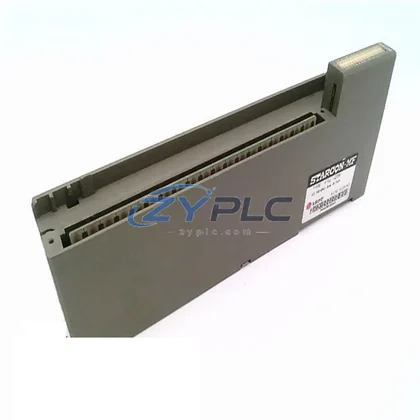
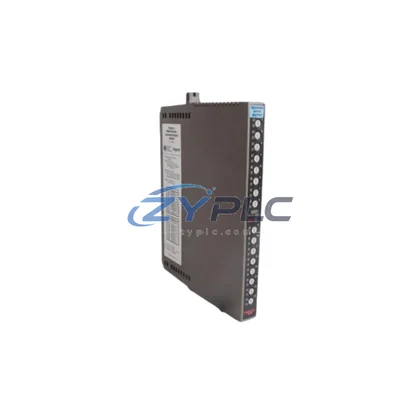
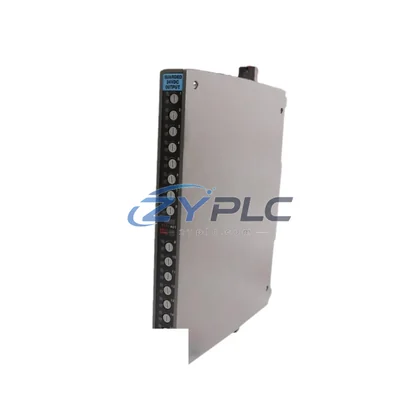
The YOKOGAWA SDV531-L23 is a high-density digital input module engineered for the CENTUM CS 3000 distributed control system. Designed to meet the demanding requirements of modern industrial automation, this module plays a critical role in reducing unplanned downtime risk across production lines by enabling precise, real-time signal acquisition from field devices. In energy-intensive manufacturing environments — from petrochemical plants to pharmaceutical production — the ability to accurately capture digital input states without signal latency or processing overhead directly translates into measurable reductions in idle energy draw and reactive maintenance costs.
Unlike generic I/O modules, the SDV531-L23 is factory-calibrated and firmware-matched to the CENTUM CS 3000 architecture, ensuring that every digital signal — whether from limit switches, proximity sensors, or motor status contacts — is processed with minimal CPU overhead on the FCU (Field Control Unit). This tight integration reduces polling cycles, lowers bus traffic on the V-net/IP control network, and allows the system controller to allocate processing resources more efficiently, contributing to a leaner, lower-power control loop.
Product Specification Table
| Parameter |
Specification / Value |
| SKU / Part Number |
SDV531-L23 |
| Brand |
YOKOGAWA |
| Compatible System |
CENTUM CS 3000 DCS |
| Module Type |
Digital Input (DI) Module |
| Input Channels |
32 channels (typical for SDV531 series) |
| Signal Voltage Range |
24 VDC (dry contact / wet contact compatible) |
| Power Consumption |
Low-power design; optimized for continuous 24/7 operation |
| Operating Environment |
Industrial control rooms, DCS cabinets, process automation panels |
| Communication / Bus |
CENTUM CS 3000 internal I/O bus (V-net compatible) |
| Maintenance Value |
Reduces FCU polling overhead; minimizes idle signal processing energy |
| Application Sectors |
Oil & Gas, Petrochemical, Power Generation, Pharmaceuticals, Pulp & Paper |
| Warranty |
warranty terms confirmed during quotation — tested and verified before shipment |
| Stock Status |
RFQ Available — available for shipment arranged after confirmation |
System Compatibility and Application
The SDV531-L23 does not operate in isolation — its true operational-efficiency value emerges when it is integrated within a well-designed automation architecture. In a typical CENTUM CS 3000 deployment, the SDV531-L23 works alongside the SDV541 digital output module to form a complete digital I/O pair, enabling closed-loop control of actuators, solenoid valves, and motor starters based on real-time field status. This pairing eliminates the need for redundant relay logic panels, reducing both panel power draw and heat generation in the control room.
On the drive side, the SDV531-L23 frequently interfaces with YOKOGAWA’s VSDRIVE series variable speed drives and compatible third-party inverters such as the Mitsubishi FR-A800 series or ABB ACS880, where digital run/stop and fault feedback signals are routed through the DI module into the CS 3000 controller. By accurately capturing drive status in real time, the system can implement operational-efficiency logic such as automatic speed reduction during low-demand periods or immediate fault isolation to prevent cascading motor failures.
For power monitoring integration, the SDV531-L23 can receive status pulses from YOKOGAWA WT series power analyzers or energy meters such as the Schneider Electric PM8000, feeding consumption event signals into the DCS historian. This enables the CENTUM CS 3000 Exaopc OPC server to correlate operating load data with production throughput, giving plant engineers actionable insight into energy-per-unit metrics without requiring a separate SCADA layer.
In servo and motion-adjacent applications, the SDV531-L23 captures position confirmation signals from YOKOGAWA servo amplifiers or third-party servo drives, ensuring that the FCU only commands the next motion step after physical confirmation — eliminating wasted motion cycles and the associated energy overhead. Combined with the SCP401 sequence control processor and ALR111 alarm module, the SDV531-L23 forms part of a tightly integrated control loop that minimizes unnecessary actuator cycling, a common source of hidden unplanned downtime in automated production lines.
For facilities using FOUNDATION Fieldbus or HART-enabled field instruments, the SDV531-L23 complements the ADV151 analog input module by handling the discrete signal layer while analog modules manage continuous process variables. This division of signal processing responsibility keeps each module operating within its optimal load range, preventing thermal throttling and extending module service life — both of which contribute to lower total energy cost of ownership.
Maintenance and Replacement Notes
In real-world production environments, unplanned downtime and inefficient motor control are the two largest contributors to wasted energy. The SDV531-L23 addresses both by providing the CENTUM CS 3000 controller with high-fidelity digital input data that enables proactive, rather than reactive, control decisions.
Consider a continuous process line in a petrochemical plant where dozens of pump motors, compressors, and conveyor drives must be coordinated to maintain throughput while minimizing energy peaks. The SDV531-L23 collects run confirmation, fault, and interlock signals from each drive and motor protection relay, feeding this data into the CS 3000’s sequence control logic. When the system detects that a downstream buffer tank is approaching capacity, it can pre-emptively reduce upstream pump speeds via the connected variable frequency drives — a decision that is only possible when digital input states are captured accurately and without delay.
In pharmaceutical batch manufacturing, where production line rhythm (takt time) is tightly regulated, the SDV531-L23 enables the CS 3000 to synchronize equipment start/stop sequences with sub-second precision. This eliminates the unplanned downtime associated with equipment running idle between batch steps — a scenario that, across a 24-hour production cycle, can account for 8–15% of total line operating load.
Predictive maintenance is another area where the SDV531-L23 delivers measurable operational stability. By monitoring the digital output states of motor thermal overload relays and vibration switches, the CS 3000 can detect early signs of mechanical degradation — such as increased trip frequency or abnormal interlock activation patterns — and schedule maintenance before a catastrophic failure occurs. Avoiding unplanned shutdowns not only saves energy (restart cycles are energy-intensive) but also preserves production throughput and reduces the cost of emergency spare parts procurement.
All units supplied by ZYPLC undergo full functional testing prior to shipment, including channel-by-channel input verification and compatibility checks against the target CS 3000 system version. Each SDV531-L23 is backed by a warranty terms confirmed during quotation, with availability confirmed by RFQ availability ensuring rapid deployment to minimize production downtime.
Product Sourcing FAQ
Q1: How does the SDV531-L23 contribute to operational stability in a CENTUM CS 3000 system?
The SDV531-L23 reduces unplanned downtime by providing accurate, low-latency digital input data that enables the CS 3000 controller to implement demand-responsive control logic — such as reducing motor speeds during low-load periods, preventing unnecessary actuator cycling, and enabling rapid fault isolation to avoid energy-intensive restart sequences.
Q2: Is the SDV531-L23 compatible with upgraded or expanded CS 3000 systems?
Yes. The SDV531-L23 is designed for the CENTUM CS 3000 platform and is compatible with standard FCU configurations. For system expansion or migration projects, we recommend verifying the firmware revision of your FCU against the module’s hardware revision. Our technical team can assist with compatibility confirmation prior to purchase.
Q3: Can the SDV531-L23 replace a faulty module without a full system shutdown?
In most CENTUM CS 3000 configurations with redundant I/O bus architecture, module replacement can be performed with minimal disruption. However, the specific hot-swap capability depends on your system’s redundancy configuration. We recommend consulting your CS 3000 system documentation or contacting our support team for guidance specific to your installation.
Q4: What testing is performed before shipment, and what does the warranty terms confirmed during quotation cover?
Every SDV531-L23 unit undergoes channel-level functional testing, power-on verification, and visual inspection before dispatch. The warranty terms confirmed during quotation covers manufacturing defects and functional failures under normal operating conditions. Units showing signs of physical damage due to improper installation or electrical overstress are assessed on a case-by-case basis. Replacement or repair is coordinated through our after-sales support team.