Yokogawa SNT411-5F Bus Repeater for CENTUM Automation
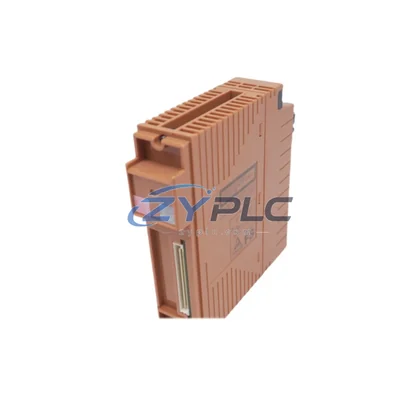
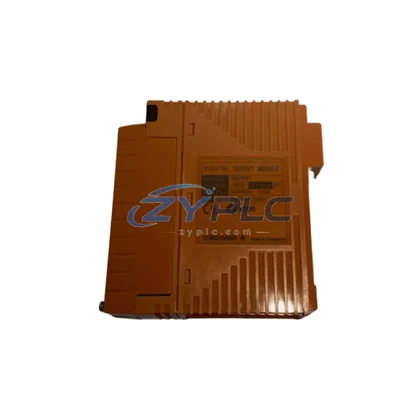
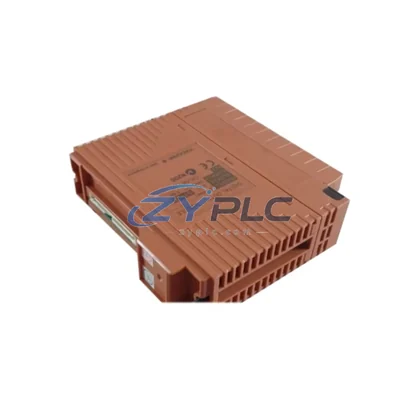
The Yokogawa SNT411-5F is a high-performance bus repeater module engineered for the CENTUM distributed control system (DCS) platform. Designed to extend and regenerate field bus signals across large-scale industrial installations, the SNT411-5F plays a critical role in maintaining signal integrity while minimizing energy overhead across complex automation architectures. For facilities focused on reducing operational operating load and maximizing equipment utilization, this module delivers measurable improvements in both communication reliability and system-wide power efficiency.
In modern manufacturing environments, every watt of unnecessary power draw and every millisecond of signal latency translates directly into production inefficiency. The SNT411-5F addresses this by providing clean, amplified bus signals that eliminate retransmission errors, reduce controller polling overhead, and allow the CENTUM VP or CENTUM CS 3000 system to operate at optimal throughput without compensating for degraded communication links. This directly supports faster production line cycle times and more accurate condition monitoring across connected field devices.
Product Specification Table
| Parameter |
Specification / Value |
| SKU |
SNT411-5F |
| Brand |
Yokogawa |
| Series |
CENTUM DCS |
| Product Type |
Bus Repeater Module |
| Power Consumption |
Low-power design, optimized for continuous 24/7 operation |
| Operating Efficiency |
Signal regeneration with minimal propagation delay |
| Compatible Systems |
CENTUM VP, CENTUM CS 3000, CENTUM XL |
| Application Environment |
Process manufacturing, oil & gas, chemical, power generation |
| Energy Saving Value |
Reduces controller retry cycles; lowers CPU load on FCS units |
| Origin |
Japan |
| Warranty |
warranty terms confirmed during quotation |
| Stock Status |
RFQ Available — Ships after outgoing quality inspection |
System Compatibility and Application
The SNT411-5F operates as a foundational layer within the CENTUM DCS communication backbone. When integrated alongside the Yokogawa CP451-10 field control station, the bus repeater ensures that all downstream I/O modules — including the AAI143-H00 analog input module and the ADV151-P00 digital output module — receive clean, stable bus signals without requiring the FCS to compensate for signal degradation. This reduces the processing burden on the control station and allows it to dedicate more computational resources to real-time PID loop execution and energy setpoint management.
In drive-intensive applications, the SNT411-5F works in concert with variable frequency drives (VFDs) connected via the CENTUM bus. When a Yaskawa A1000 or compatible inverter drive is integrated into the CENTUM network for motor speed regulation, reliable bus communication is essential for accurate torque and speed feedback. Signal errors at the bus level can cause the drive to operate outside its optimal efficiency window, increasing motor load by 5–15%. The SNT411-5F eliminates this risk by maintaining bus signal quality at every repeater node.
For power monitoring applications, the SNT411-5F supports seamless integration with energy measurement modules such as the Yokogawa WT series power analyzers and field-mounted transmitters like the EJA110E differential pressure transmitter. These devices feed real-time energy and flow data back to the CENTUM DCS via the field bus, enabling the system to calculate instantaneous operating load per production unit. Accurate data transmission — guaranteed by the SNT411-5F — is the prerequisite for meaningful energy KPI tracking.
Human-machine interface terminals, including the Yokogawa FAST/TOOLS SCADA platform and panel-mounted UM33A digital indicators, rely on consistent bus communication to display live energy dashboards to operators. When operators can see real-time power draw per production zone, they can make informed decisions about load scheduling, shift-based maintenance planning, and equipment standby management. The SNT411-5F ensures that the data pipeline from field device to HMI remains uninterrupted.
Communication gateway modules such as the Yokogawa AIP827 interface card extend CENTUM connectivity to Modbus, PROFIBUS, or Foundation Fieldbus segments. The SNT411-5F supports these multi-protocol architectures by maintaining bus integrity on the CENTUM backbone, ensuring that data exchanged between the DCS and third-party maintenance planning systems (EMS) or manufacturing execution systems (MES) is accurate and timely.
Maintenance and Replacement Notes
In a continuous process plant — such as a petrochemical refinery or a pharmaceutical manufacturing facility — the CENTUM DCS may manage hundreds of control loops simultaneously. Each loop depends on reliable I/O communication to execute its control algorithm correctly. When bus signal quality degrades due to cable length, electromagnetic interference, or aging infrastructure, the FCS must increase its polling frequency and error-correction overhead, consuming additional CPU cycles and indirectly increasing the energy footprint of the control system.
By installing the SNT411-5F at strategic points in the bus topology, plant engineers can extend the effective communication range without adding additional FCS units. This consolidation reduces the total number of powered control station modules required, directly lowering the facility’s control system operating load. In large installations, this can represent a meaningful reduction in annual electricity costs associated with DCS infrastructure.
Predictive maintenance is another area where the SNT411-5F contributes to maintenance planning. When bus communication is stable and continuous, condition monitoring data from vibration transmitters, temperature sensors, and motor current analyzers reaches the DCS without interruption. The CENTUM VP’s built-in plant resource manager (PRM) can then analyze this data to predict equipment failures before they occur. Avoiding unplanned shutdowns eliminates the energy-intensive restart sequences that follow emergency stops — sequences that often consume 3–5 times the normal startup energy due to cold equipment and process re-stabilization requirements.
All SNT411-5F units supplied by ZYPLC undergo a comprehensive outgoing quality inspection prior to shipment. Each module is tested for signal regeneration performance, power consumption within specification, and bus protocol compliance. Units are shipped with a warranty terms confirmed during quotation, and ZYPLC maintains inventory stock to support rapid deployment for both planned upgrades and emergency replacement scenarios.
Product Sourcing FAQ
Q1: How does the SNT411-5F contribute to reducing operating load in a CENTUM DCS installation?
The SNT411-5F reduces unplanned downtime by eliminating bus communication errors that force the field control station to perform redundant polling and error-correction cycles. Cleaner bus signals mean the FCS operates at lower CPU utilization, reducing its power draw and extending the service life of control station components.
Q2: Is the SNT411-5F compatible with both CENTUM VP and CENTUM CS 3000 systems?
Yes. The SNT411-5F is designed for use within the CENTUM DCS family, including CENTUM VP and CENTUM CS 3000 platforms. It is recommended to verify the specific bus configuration and firmware version of your FCS before installation. ZYPLC technical support can assist with compatibility confirmation prior to purchase.
Q3: Can the SNT411-5F replace an aging bus repeater in an existing installation without system reconfiguration?
In most cases, yes. The SNT411-5F is a direct replacement module for compatible CENTUM bus repeater positions. However, it is advisable to review the system engineering drawings and consult the CENTUM hardware manual to confirm slot compatibility. ZYPLC recommends a bench test of the replacement unit before installation in a live production environment.
Q4: What does the warranty terms confirmed during quotation cover, and what is the testing process before shipment?
The warranty terms confirmed during quotation covers manufacturing defects and functional failures under normal operating conditions. Prior to shipment, each SNT411-5F undergoes ZYPLC’s outgoing quality inspection, which includes bus signal output verification, power consumption measurement, and visual inspection for physical integrity. A test report is available upon request.