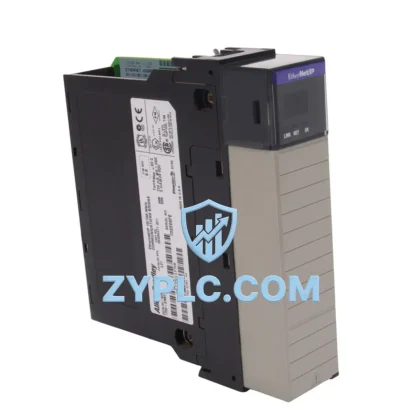
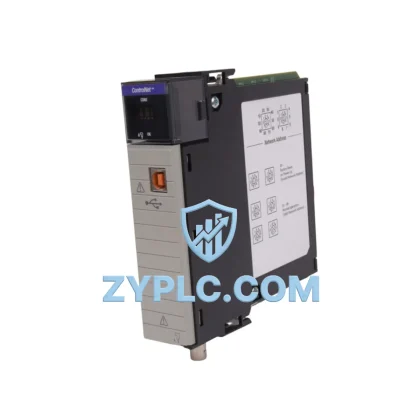
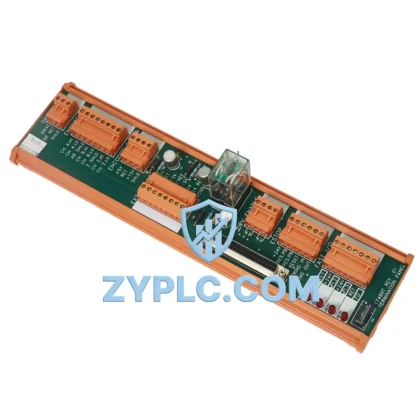
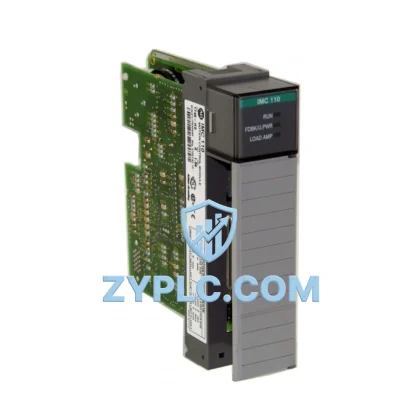
Yokogawa VI702 Energy-Saving Communication Interface Card: Precision Control for Optimized Centum VP Automation
The Yokogawa VI702 is a high-efficiency communication interface card engineered for the Centum VP Distributed Control System (DCS). Designed to serve as the backbone of real-time data exchange between field devices and the control layer, the VI702 plays a critical role in reducing unnecessary energy consumption across industrial production lines. By enabling seamless, low-latency communication between controllers, I/O modules, and supervisory systems, this card ensures that every command is executed with precision — eliminating redundant cycles, reducing idle energy draw, and maximizing equipment utilization rates.
In modern industrial facilities where energy costs represent a significant share of operational expenditure, the VI702 delivers measurable value. Its stable communication architecture minimizes packet loss and retransmission overhead, which directly translates to lower CPU load on the Yokogawa PFCD201 field control station and reduced heat dissipation across the control cabinet. When integrated with the Yokogawa ACF11 communication bus coupler, the VI702 enables synchronized data polling across multiple field segments, ensuring that energy monitoring data flows continuously without interruption.
Efficiency Performance Table
| Parameter |
Specification / Value |
| Product SKU |
VI702 |
| Brand |
Yokogawa |
| Series |
Centum VP |
| Product Type |
Communication Interface Card |
| Communication Protocol |
Vnet/IP, RS-232C, RS-485 |
| Power Consumption |
Low-power design, optimized for continuous 24/7 operation |
| Operating Efficiency |
High-speed data throughput with minimal CPU overhead |
| Compatible Systems |
Centum VP, Centum CS 3000 (with adapter) |
| Application Environment |
Process manufacturing, oil & gas, chemical, power generation |
| Energy Optimization Value |
Reduces retransmission overhead; lowers idle energy draw on field controllers |
| Origin |
Japan |
| Warranty |
12-Month Warranty |
| Stock Status |
In Stock — Ships after outgoing inspection and functional test |
Energy-Aware Automation Architecture
The VI702 does not operate in isolation — its true energy optimization value emerges when it is deployed as part of a tightly integrated automation architecture. In a typical Centum VP installation, the VI702 interfaces directly with the Yokogawa KFCS field control station, enabling real-time process variable acquisition from transmitters and actuators distributed across the plant floor. This continuous data stream feeds into the Yokogawa HIS (Human Interface Station), where operators can monitor energy consumption trends, identify anomalies, and issue corrective commands without delay.
On the drive side, the VI702 facilitates communication with variable frequency drives such as the Yokogawa VariFlex V1000 series, allowing the DCS to dynamically adjust motor speed setpoints based on actual process demand rather than fixed schedules. This demand-responsive control strategy is one of the most effective methods for reducing motor energy consumption in pump, fan, and compressor applications — often yielding 20–40% energy savings compared to fixed-speed operation.
For power quality monitoring, the VI702 can be configured to interface with Yokogawa WT series power analyzers, pulling real-time kW, kVAR, and power factor data into the DCS historian. This integration enables energy managers to correlate production throughput with power consumption at the equipment level, identifying inefficient operating windows and scheduling maintenance before energy waste escalates into equipment failure.
The card also supports integration with Yokogawa EJX series differential pressure transmitters, which are commonly used in flow measurement applications. Accurate flow data, when combined with drive feedback from the VFD layer, allows the control system to maintain optimal pump operating points — reducing both energy consumption and mechanical wear simultaneously. Alongside the Yokogawa YS1700 loop controller and Yokogawa STARDOM FCN autonomous controller, the VI702 forms part of a distributed yet cohesive control fabric that supports both centralized DCS oversight and edge-level autonomous control for energy-critical loops.
Power Optimization in Real Production Lines
In continuous process industries such as petrochemical refining, pharmaceutical manufacturing, and pulp and paper production, unplanned downtime and inefficient energy use are the two largest contributors to operational cost overruns. The Yokogawa VI702 addresses both challenges through its role as a reliable, high-throughput communication bridge within the Centum VP architecture.
When a production line experiences a communication fault at the interface card level, the downstream effect is immediate: controllers lose visibility into field device status, alarms go unacknowledged, and operators are forced to switch to manual control — a mode that is inherently less energy-efficient and more prone to human error. The VI702’s robust design, built to Yokogawa’s stringent quality standards and validated through outgoing functional testing prior to shipment, minimizes the risk of such faults. Each unit in our inventory undergoes a comprehensive pre-shipment inspection covering signal integrity, protocol handshake verification, and thermal stress testing to ensure it performs reliably from day one of installation.
From a production line rhythm (takt time) perspective, the VI702 contributes to cycle time stability by ensuring that control commands reach actuators within deterministic timeframes. In high-speed packaging or batch chemical dosing applications, even millisecond-level communication jitter can cause process deviations that require energy-intensive correction cycles. The VI702’s low-latency architecture eliminates this variability, keeping production lines running at their designed throughput without the energy penalty of frequent setpoint corrections.
Predictive maintenance is another area where the VI702 delivers long-term energy savings. By maintaining a stable data pipeline between field instruments and the DCS historian, the card enables condition monitoring algorithms to detect early signs of motor degradation, valve stiction, or heat exchanger fouling — all of which, if left unaddressed, result in progressively increasing energy consumption. Early detection allows maintenance teams to schedule interventions during planned shutdowns rather than reacting to emergency failures, reducing both energy waste and spare parts costs.
Energy Optimization FAQ
Q1: How does the Yokogawa VI702 contribute to energy savings in a Centum VP DCS environment?
The VI702 reduces energy waste by enabling precise, low-latency communication between the DCS controller and field devices. This allows the system to implement demand-responsive control strategies — such as variable speed drive modulation and optimized pump scheduling — that directly reduce motor energy consumption. Stable communication also eliminates the energy overhead associated with fault recovery cycles and manual operator interventions.
Q2: Is the VI702 compatible with older Yokogawa DCS platforms such as Centum CS 3000?
The VI702 is natively designed for the Centum VP platform. Compatibility with Centum CS 3000 may be achievable with appropriate adapter modules and firmware configuration, but we recommend consulting your system integrator or contacting our technical team to confirm compatibility before ordering. Our team can assist with cross-reference verification and system fit assessment.
Q3: What testing and quality assurance processes does each VI702 unit undergo before shipment?
Every VI702 unit in our inventory is subject to a pre-shipment outgoing inspection that includes functional communication testing, signal integrity verification, and visual inspection for physical damage. Units that do not pass all test criteria are quarantined and not shipped. This process ensures that the unit you receive is ready for immediate installation and will perform to specification from the first power-on.
Q4: What warranty coverage is provided, and what does it include?
All VI702 units are covered by a 12-month warranty from the date of shipment. This warranty covers defects in materials and workmanship under normal operating conditions. In the event of a warranty claim, our team will work with you to diagnose the issue and arrange for repair or replacement as appropriate. Warranty claims resulting from improper installation, unauthorized modification, or operation outside specified environmental conditions are not covered.
© 2026 ZYPLC. All rights reserved.
Original Source: https://zyplc.com
Contact: +86 19859288691 | plc.sales@zyplc.com