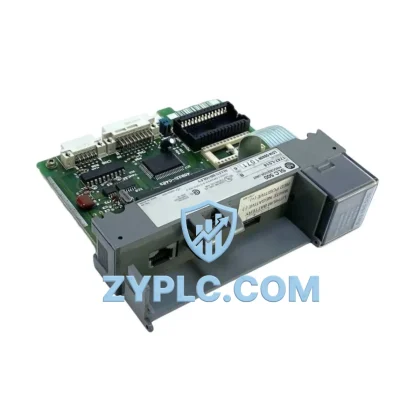
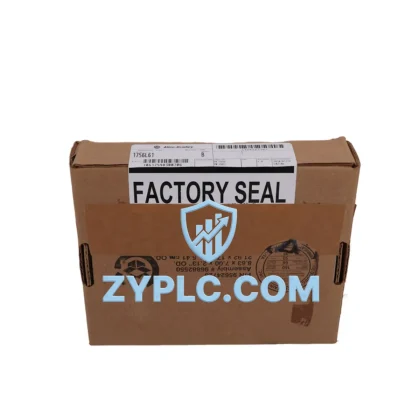
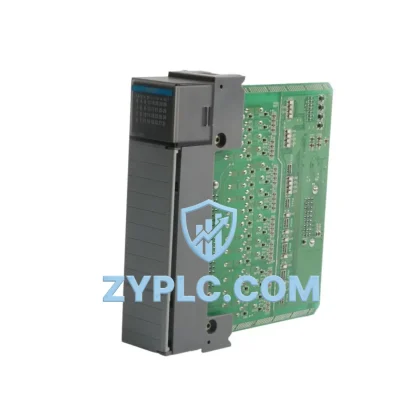
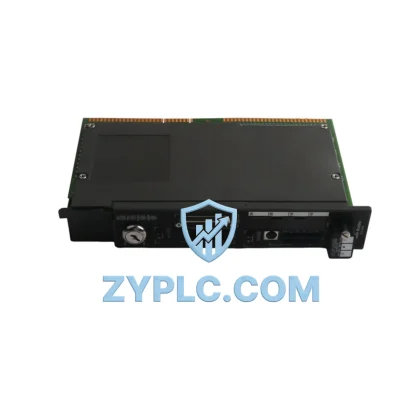
ZYPLC 140DDO84300C Energy-Saving PLC Output Module Quantum
The Schneider Electric 140DDO84300C is a 32-point sourcing DC digital output module engineered for the Modicon Quantum automation platform. In high-throughput manufacturing environments where every watt and every millisecond of cycle time matters, this module delivers the deterministic switching performance and low-leakage output characteristics that allow control engineers to tighten production line rhythm, reduce idle-state power draw, and extend the service life of downstream actuators and field devices. ZYPLC maintains verified in-stock inventory of the 140DDO84300C, with full pre-shipment functional testing and a 12-month warranty on every unit shipped.
Efficiency Performance Table
| Parameter |
Specification |
| Output Points |
32 × Sourcing DC Digital Outputs |
| Output Voltage Range |
10.2 – 30 V DC |
| Max Load Current per Point |
0.5 A |
| Max Total Module Current |
8 A |
| Leakage Current (OFF State) |
≤ 1 mA — minimises phantom load on field devices |
| Response Time (ON/OFF) |
≤ 1 ms — supports high-speed line synchronisation |
| Operating Temperature |
0 °C to 60 °C |
| Compatible Platform |
Schneider Modicon Quantum (140-series backplane) |
| Compatible CPUs |
140CPU65150, 140CPU67160, 140CPU65260 and Quantum Unity series |
| Energy Efficiency Value |
Low OFF-state leakage reduces standby consumption across 32 channels simultaneously |
| Application Environment |
Discrete manufacturing, process automation, utilities, water treatment, oil & gas |
| Warranty |
12-Month Warranty — all units pre-shipment tested by ZYPLC |
Energy-Aware Automation Architecture
The 140DDO84300C does not operate in isolation — its energy efficiency contribution is amplified when it is integrated into a well-designed Quantum automation architecture. In a typical energy-optimised cell, the module sits on a 140XBP01600 or 140XBP01000 Quantum backplane alongside a 140CPU65150 or 140CPU67160 Unity processor. The CPU executes IEC 61131-3 structured-text energy management routines that selectively de-energise output channels during machine idle windows, cutting solenoid and relay coil power consumption without sacrificing restart responsiveness.
On the input side, a 140DDI35300 32-point DC input module feeds real-time machine state signals back to the CPU, enabling the controller to make cycle-accurate decisions about which output groups to hold active and which to suppress. When variable-speed drives are part of the line — such as a Schneider ATV320 or ATV630 series variable frequency drive controlling conveyor or pump motors — the 140DDO84300C provides the discrete run/stop and speed-select command signals that allow the drive to operate at demand-matched speeds rather than fixed full-load, directly reducing motor energy consumption by 20–50 % in partial-load scenarios.
For power quality monitoring, engineers frequently pair the Quantum rack with a Schneider PowerLogic PM5350 or PM8000 power meter connected via Modbus TCP over the 140NOE77101 Ethernet communication module. This combination gives the SCADA layer granular per-circuit energy data, allowing maintenance teams to correlate output switching events logged by the 140DDO84300C with power consumption spikes captured by the meter — a foundation for ISO 50001 energy management reporting.
Where analogue process control is required alongside discrete outputs, a 140AVO02000 analogue output module can share the same backplane, providing 4–20 mA or 0–10 V signals to proportional valves and positioners. The tight backplane integration means scan-cycle latency between the digital and analogue output updates is deterministic, which is critical for coordinated motion and flow control sequences. HMI visibility is typically provided by a Schneider Magelis HMIGTO5310 or a HMISCU compact panel, giving operators a real-time view of output channel states, energy counters, and alarm conditions without requiring a separate SCADA server.
For safety-rated applications, the architecture can be extended with a 140CPS11420 Quantum power supply module that provides regulated 24 V DC backplane power with built-in diagnostics, ensuring that output module performance is not degraded by bus voltage fluctuation — a common hidden cause of increased switching losses and premature actuator wear.
Power Optimization in Real Production Lines
In automotive body-shop welding lines, the 140DDO84300C controls the enable signals for servo weld guns and pneumatic clamp solenoids. By programming the Quantum CPU to suppress non-critical output groups during robot inter-cycle dwell periods — typically 0.8 to 2.5 seconds per station — plants have documented reductions in solenoid coil heat generation of up to 30 %, extending coil MTBF and reducing unplanned downtime caused by thermal insulation breakdown.
In food and beverage filling lines, the module drives conveyor divert gates, reject actuators, and cap-press solenoids. Because the 140DDO84300C’s sourcing output architecture provides a clean, low-impedance drive signal, it eliminates the voltage drop artefacts that cause intermittent actuator mis-fires on long cable runs — a fault mode that forces operators to increase line speed margins and therefore wastes energy running conveyors faster than product flow demands.
In water and wastewater treatment facilities, the module controls pump start/stop sequences and valve actuators across large distributed racks. Paired with the 140NOE77101 Ethernet module and a SCADA energy dashboard, operators can implement time-of-use energy strategies — scheduling high-energy pump cycles to off-peak tariff windows — with the 140DDO84300C executing the switching commands with sub-millisecond repeatability that prevents water hammer and protects pipe infrastructure.
Predictive maintenance benefits are also significant. Because the module’s diagnostic registers expose per-channel overcurrent and short-circuit events to the Quantum CPU, maintenance engineers can trend actuator load signatures over time. A gradual increase in inrush current on a specific output channel — visible in the CPU’s data historian — often precedes solenoid coil failure by weeks, allowing planned replacement during scheduled downtime rather than emergency intervention. ZYPLC’s 12-month warranty and in-stock availability mean that replacement modules can be on-site within 24–48 hours, minimising mean time to repair.
Energy Optimization FAQ
Q1: How does the 140DDO84300C contribute to measurable energy savings on a production line?
The module’s ≤ 1 mA OFF-state leakage current across 32 channels means that de-energised outputs draw negligible standby power. When the Quantum CPU implements idle-mode output suppression logic, the cumulative reduction in solenoid coil and relay energisation time directly lowers kWh consumption. In lines with 200+ output points across multiple racks, this strategy typically yields 5–15 % reductions in control-system-related energy draw.
Q2: Is the 140DDO84300C compatible with both legacy Quantum racks and newer Unity-based configurations?
Yes. The 140DDO84300C is fully compatible with all standard Modicon Quantum 140-series backplanes and operates with both Concept/ProWORX legacy CPUs and Unity Pro-programmed processors such as the 140CPU65260. No firmware changes or adapters are required — the module is plug-and-play within the Quantum ecosystem.
Q3: What is ZYPLC’s testing and quality assurance process before shipment?
Every 140DDO84300C unit in ZYPLC’s inventory undergoes a full functional test that verifies all 32 output channels switch correctly under rated load, OFF-state leakage is within specification, and backplane communication registers respond correctly. Units that pass are issued a test certificate and shipped with a 12-month warranty. Units that do not pass are quarantined and not sold.
Q4: What should I consider when replacing a failed 140DDO84300C in a running plant?
Before replacement, de-energise the backplane slot using the Quantum CPU’s I/O forcing function to bring all 32 outputs to a safe OFF state. Verify the replacement unit’s firmware revision matches or exceeds the original if your application uses specific diagnostic features. After hot-swap insertion (Quantum supports powered slot replacement on most backplane configurations), confirm all channel states in Unity Pro’s I/O scanner before resuming automatic mode. ZYPLC recommends keeping one spare unit on-site for critical lines — contact our team for volume pricing on buffer stock arrangements.
© 2026 ZYPLC. All rights reserved.
Original Source: https://zyplc.com
Contact: +86 19859288691 | plc.sales@zyplc.com