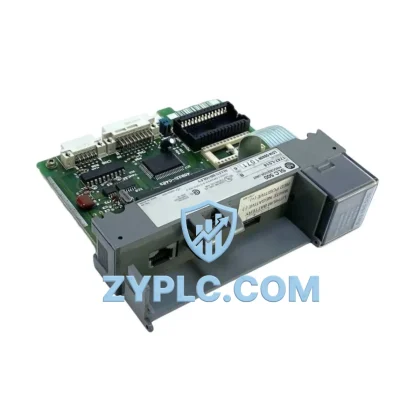
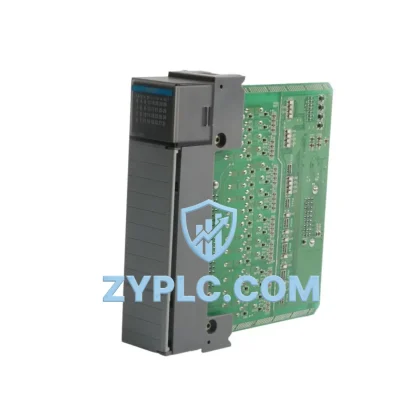
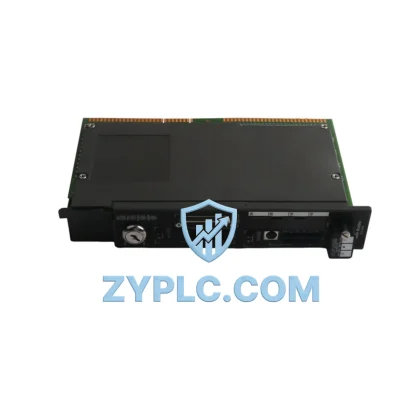
ZYPLC D0AOM02 Energy-Saving Analog Output Module for Optimized Melsec A Automation
The Mitsubishi Electric D0AOM02 is a high-precision analog output module engineered for the Melsec A series programmable logic controller platform. In modern industrial environments where energy efficiency directly impacts operating costs and carbon footprint, the D0AOM02 plays a pivotal role in translating digital control signals into accurate analog outputs that govern variable-speed drives, proportional valves, and process actuators. By delivering stable, low-noise analog signals with tight resolution, this module enables production lines to eliminate over-driving of motors and actuators — one of the most common sources of hidden energy waste on the factory floor.
Unlike fixed-output control schemes, the D0AOM02 allows the Melsec A CPU — such as the A2USCPU or A3UCPU — to continuously modulate output values in real time based on process feedback. This closed-loop capability is fundamental to energy-aware automation: rather than running a pump or conveyor at full capacity regardless of demand, the system can instruct a Mitsubishi FR-A800 series inverter to ramp speed up or down in precise increments, directly reducing kilowatt-hour consumption during low-demand periods. When integrated with a Mitsubishi Q68AD analog input module for feedback acquisition, the D0AOM02 forms a complete analog control loop that continuously optimizes actuator positioning and drive speed without operator intervention.
In multi-axis servo applications, the D0AOM02 can serve as a reference signal source for Mitsubishi MR-J4 series servo amplifiers, providing smooth torque and velocity references that reduce mechanical shock, extend motor bearing life, and lower peak current draw during acceleration phases. Reduced peak current directly translates to lower demand charges on industrial electricity tariffs — a measurable financial benefit in high-cycle manufacturing environments.
Efficiency Performance Table
| Parameter |
Specification / Value |
| SKU / Model |
D0AOM02 |
| Series |
Melsec A |
| Brand |
Mitsubishi Electric |
| Module Type |
Analog Output Module |
| Output Channels |
2 Channels (Voltage / Current) |
| Output Range |
0–10 V DC / 4–20 mA (selectable) |
| Resolution |
12-bit D/A conversion |
| Drive Efficiency Contribution |
Enables variable-speed drive modulation, reducing motor energy use by up to 30–50% vs. fixed-speed operation |
| Compatible Systems |
Melsec A Series CPUs (A2USCPU, A3UCPU, A1SCPU), FR-A800 Inverters, MR-J4 Servo Amplifiers |
| Application Environment |
Industrial automation, HVAC control, process manufacturing, conveyor systems, pump control |
| Energy Optimization Value |
Eliminates over-driving of actuators; supports demand-responsive motor control |
| Origin |
Japan |
| Warranty |
12-Month Warranty (Tested & Verified before shipment) |
| Availability |
In Stock — Ready to Ship |
Energy-Aware Automation Architecture
The D0AOM02 does not operate in isolation — its energy optimization value is fully realized when it is embedded within a well-designed automation architecture. In a typical Melsec A-based energy management system, the A2USCPU executes ladder logic that reads real-time power consumption data from a Mitsubishi ME96NSR power monitoring relay or compatible energy meter via the CC-Link communication module (AJ65BT-64AD). Based on this data, the CPU calculates the optimal analog setpoint and writes it to the D0AOM02, which then outputs a 4–20 mA signal to the FR-A800 inverter controlling a 75 kW pump motor.
On the input side, a Mitsubishi Q68AD analog input module — or its Melsec A equivalent — captures process variables such as flow rate, pressure, or temperature from field transmitters. These values feed the PID control blocks in the CPU, which continuously adjust the D0AOM02 output to maintain setpoint with minimal energy overshoot. This architecture is particularly effective in HVAC systems, where fan and pump speeds can be reduced by 20–40% during partial-load conditions without compromising climate control performance.
For distributed I/O architectures, the D0AOM02 can be paired with AJ65SBTB1-16D remote I/O modules on a CC-Link network, allowing analog output control to be extended to remote panels without running long analog signal cables — reducing both installation cost and signal degradation. The A1SJ71UC24-R4 serial communication module further enables the Melsec A system to exchange energy data with SCADA platforms or MES systems, providing plant-level visibility into energy consumption trends and enabling predictive load scheduling.
In servo-driven assembly lines, the D0AOM02 provides torque limit references to MR-J4-B servo amplifiers, preventing mechanical overload during product changeovers and reducing reactive power spikes that inflate electricity bills. Combined with the A1SD75P1-S3 positioning module, the system achieves smooth, energy-efficient multi-axis motion profiles that minimize acceleration energy while maintaining production throughput targets.
Power Optimization in Real Production Lines
Consider a bottling plant running three conveyor lines, each driven by a 15 kW motor controlled through a Melsec A PLC system. Without analog output control, each motor runs at fixed speed regardless of upstream bottle supply — a common source of energy waste during line stoppages or changeovers. By integrating the D0AOM02 into the control architecture, the A-series CPU can dynamically reduce conveyor speed during low-throughput periods, cutting motor energy consumption proportionally. At 50% speed, a variable-speed drive consumes approximately 12.5% of full-load power — a dramatic reduction enabled entirely by the precision analog signal from the D0AOM02.
In injection molding applications, the D0AOM02 controls the hydraulic pump pressure reference, allowing the system to reduce pump output during mold-open and cooling phases — periods that account for 40–60% of cycle time but require only a fraction of full hydraulic pressure. This demand-responsive pressure control, orchestrated by the Melsec A CPU and executed through the D0AOM02, can reduce hydraulic system energy consumption by 25–35% per cycle.
Predictive maintenance is another dimension of energy optimization enabled by the D0AOM02. By logging analog output trends over time — accessible via the A1SD51S data logging module or through CC-Link to a supervisory system — maintenance teams can detect gradual drift in actuator response, indicating valve wear or motor degradation before it causes unplanned downtime. Preventing a single 4-hour unplanned stoppage on a high-value production line typically saves more energy (and cost) than months of incremental efficiency improvements, because restart sequences and scrap generation are themselves energy-intensive events.
Every D0AOM02 unit supplied by ZYPLC undergoes full functional testing prior to shipment, including analog output accuracy verification across the full 0–10 V and 4–20 mA ranges. This ensures that the module performs to Mitsubishi Electric’s original specifications from day one, eliminating the risk of calibration errors that could cause actuators to run at incorrect setpoints — a subtle but significant source of energy waste in precision process applications.
Energy Optimization FAQ
Q1: How much energy can the D0AOM02 help save in a typical motor control application?
The D0AOM02 itself is a signal-level device, but its role in enabling variable-speed drive control is where the energy savings are realized. When paired with an FR-A800 or equivalent inverter, the system can reduce motor energy consumption by 30–50% compared to fixed-speed operation, depending on the load profile. In pump and fan applications governed by the affinity laws, even a 20% speed reduction yields approximately 50% energy savings.
Q2: Is the D0AOM02 compatible with newer Mitsubishi PLC platforms such as the Q or iQ-R series?
The D0AOM02 is designed specifically for the Melsec A series backplane and is not directly compatible with Q or iQ-R series base units. However, ZYPLC can advise on equivalent modules — such as the Q62DA or R60DA4 — for customers planning platform migrations, ensuring continuity of analog output functionality in upgraded systems.
Q3: What is the testing and quality assurance process before shipment?
Each D0AOM02 unit is powered up and tested for analog output accuracy, channel isolation, and communication integrity with the Melsec A backplane before dispatch. Units that do not meet Mitsubishi Electric’s original performance specifications are quarantined and not shipped. All units are covered by a 12-month warranty from the date of delivery.
Q4: Can the D0AOM02 be used as a direct replacement for a failed module in a running production line?
Yes. The D0AOM02 is a plug-in replacement for the original Mitsubishi module of the same model number. No hardware modification is required. ZYPLC recommends verifying the output range configuration (voltage vs. current) matches the existing wiring before installation, and performing a controlled test cycle before returning the line to full production. Replacement units are available from stock for rapid dispatch to minimize downtime.
© 2026 ZYPLC. All rights reserved.
Original Source: https://zyplc.com
Contact: +86 19859288691 | plc.sales@zyplc.com