ABB 1SAP212200R0001 Energy-Saving I/O Terminal for AC500 Automation
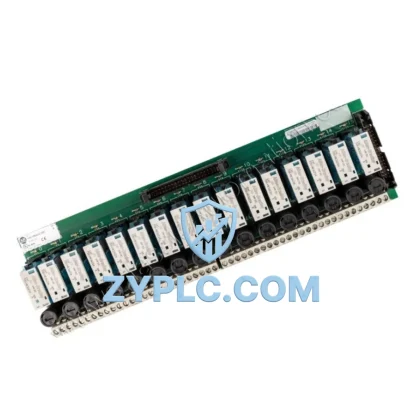
The ABB 1SAP212200R0001 (TU515) is a high-performance I/O Terminal Unit engineered for the ABB AC500 PLC platform, purpose-built to support energy-conscious industrial automation architectures. In modern manufacturing environments where every watt of consumed power translates directly into operational cost, the TU515 serves as a critical interface node between field-level sensors, actuators, and the central control logic — enabling precise, low-latency signal routing that eliminates redundant switching cycles and reduces idle-state energy draw across the entire control loop.
Unlike generic terminal blocks, the 1SAP212200R0001 is designed to integrate seamlessly with ABB’s AC500 ecosystem, including the PM573-ETH CPU module and PM591 compact CPU, ensuring deterministic scan times that keep production line rhythm tightly synchronized. When paired with the DC532 digital I/O module and AI531 analog input module, the TU515 enables granular monitoring of motor load curves, conveyor torque feedback, and pneumatic valve actuation cycles — data streams that feed directly into energy optimization routines running on the PLC.
In drive-intensive applications, the TU515 works in concert with ABB ACS580 variable frequency drives to regulate motor speed based on real-time process demand rather than fixed setpoints. This demand-responsive control strategy alone can reduce motor energy consumption by 20–40% in pump, fan, and compressor applications. The I/O terminal unit’s fast signal propagation ensures that speed reference updates from the PLC reach the drive without perceptible delay, maintaining production line cadence while avoiding energy-wasting overshoot cycles.
For facilities deploying power monitoring infrastructure, the 1SAP212200R0001 integrates with ABB M2M energy meters and B23 power analyzers via the AC500’s communication backplane, enabling closed-loop energy feedback. Real-time kWh data from individual machine cells can be mapped to PLC data blocks, allowing the control program to dynamically adjust output schedules, stagger motor starts to reduce peak demand charges, and flag anomalous consumption patterns before they escalate into unplanned downtime.
The TU515 terminal unit also supports structured wiring for ABB CP600 HMI panels, where operators can visualize energy KPIs, equipment utilization rates, and shift-level consumption trends without requiring additional gateway hardware. This direct integration reduces system complexity, lowers BOM cost, and eliminates potential communication bottlenecks that could introduce latency into time-critical control sequences.
From a predictive maintenance perspective, the 1SAP212200R0001 enables continuous signal integrity monitoring across connected field devices. Abnormal signal drift on analog channels — often an early indicator of sensor degradation, loose wiring, or actuator wear — can be detected and logged by the AC500 CPU, triggering maintenance alerts before equipment failure disrupts production. This proactive approach reduces unplanned downtime, extends mean time between failures (MTBF), and lowers the total cost of ownership across the automation system.
Every unit shipped by ZYPLC undergoes full functional testing under simulated load conditions, verifying terminal contact resistance, signal isolation integrity, and backplane communication handshake with the AC500 CPU. Stock is maintained in our warehouse for immediate dispatch, supporting urgent MRO procurement needs and minimizing production line downtime during replacement cycles. All units are covered by a 12-month warranty, with pre-shipment test reports available upon request.
Efficiency Performance Table
| Parameter |
Specification |
| SKU / Part Number |
TU515 / 1SAP212200R0001 |
| Brand |
ABB |
| Series |
AC500 |
| Product Type |
I/O Terminal Unit |
| Compatible CPU Modules |
PM573-ETH, PM591, PM595 (AC500 Series) |
| Signal Channels |
Up to 16 I/O channels per terminal unit |
| Operating Voltage |
24 V DC |
| Power Consumption |
≤ 2.5 W (typical operating load) |
| Operating Temperature |
-25°C to +70°C |
| Protection Rating |
IP20 |
| Compatible I/O Modules |
DC532, AI531, AO523, DC522 (AC500 I/O range) |
| Application Environment |
Industrial automation, energy management, process control |
| Energy Optimization Value |
Enables demand-responsive motor control; reduces idle-state switching losses |
| Warranty |
12 Months (ZYPLC) |
| Stock Status |
In Stock — Ready to Ship |
Energy-Aware Automation Architecture
A well-designed energy-aware automation cell built around the ABB AC500 platform relies on tight integration between control, drive, monitoring, and communication layers. The 1SAP212200R0001 TU515 sits at the heart of this architecture as the physical interface between the field and the controller.
At the control layer, the ABB PM573-ETH CPU executes the energy management program, processing I/O data from the TU515 at deterministic scan intervals. Paired with the DC532 digital I/O module, the system can monitor equipment run/stop states, door interlocks, and safety relay feedback — all inputs that inform the CPU’s energy scheduling logic. The AI531 analog input module captures 4–20 mA signals from current transformers and pressure transducers, feeding real-time load data into the control program.
At the drive layer, ABB ACS580 variable frequency drives receive speed reference signals from the AC500 CPU via the TU515’s analog output channels or through PROFIBUS DP / Modbus RTU fieldbus connections. This allows the PLC to implement energy-saving speed profiles — ramping motors down during low-demand periods and accelerating only when process conditions require it. The ACS355 compact drive is commonly deployed alongside the TU515 in smaller machine cells where space is constrained but energy efficiency remains a priority.
At the monitoring layer, ABB B23 power analyzers and M2M energy meters provide per-circuit kWh metering, with data aggregated by the AC500 CPU for shift-level energy reporting. Operators interact with this data through ABB CP635 HMI touch panels, which display live energy dashboards, alarm histories, and production efficiency metrics without requiring a separate SCADA server.
Communication between system components is handled via the AC500’s integrated PROFINET and Modbus TCP interfaces, ensuring that energy data, drive status, and I/O diagnostics are available to plant-level MES systems in real time. The TU515’s role in this architecture is foundational: without reliable, low-resistance terminal connections, signal integrity degrades, control loops become unstable, and energy waste accumulates through unnecessary actuator cycling.
Power Optimization in Real Production Lines
In automotive body shop applications, the 1SAP212200R0001 has been deployed to manage welding robot I/O interfaces, where precise timing of weld gun actuation — controlled through the AC500 CPU and TU515 terminal unit — reduces inter-cycle idle current draw by ensuring guns are energized only during the active weld window. This approach, combined with ACS580 drive-controlled servo pump systems, has demonstrated measurable reductions in standby power consumption during model changeover periods.
In food and beverage processing lines, the TU515 interfaces with conveyor motor starters and pneumatic valve banks, allowing the AC500 CPU to implement zone-based energy management: sections of the line not actively processing product are placed in a low-power standby state, with I/O signals from the TU515 triggering wake-up sequences only when upstream product flow is detected. This eliminates the continuous-run energy waste common in older relay-logic-controlled lines.
In HVAC and building automation applications within industrial facilities, the 1SAP212200R0001 connects temperature sensors, damper actuators, and fan motor feedback signals to the AC500 control system. The PLC uses this data to implement demand-controlled ventilation strategies, reducing fan motor runtime during low-occupancy periods and cutting annual HVAC energy costs without compromising air quality or thermal comfort standards.
Across all these applications, the common thread is the TU515’s ability to deliver reliable, low-noise signal transmission that keeps the control system’s picture of the physical process accurate. Inaccurate I/O data leads to control decisions based on stale or corrupted information — a root cause of both energy waste and unplanned downtime. By maintaining signal integrity at the terminal level, the 1SAP212200R0001 protects the efficiency of the entire automation investment.
Energy Optimization FAQ
Q1: How does the ABB 1SAP212200R0001 contribute to measurable energy savings in a production environment?
The TU515 enables the AC500 PLC to receive accurate, real-time field signals from sensors and actuators, which is the prerequisite for any demand-responsive energy control strategy. By ensuring that the CPU has a precise picture of equipment states — motor running/stopped, valve open/closed, conveyor loaded/empty — the control program can implement energy-saving logic such as speed reduction during low-demand periods, staggered motor starts to reduce peak demand, and automatic standby modes during production gaps. Without reliable I/O terminal performance, these strategies produce inconsistent results.
Q2: Is the 1SAP212200R0001 compatible with existing AC500 installations, and can it replace older terminal unit variants?
Yes. The TU515 is designed for backward compatibility within the AC500 I/O system and can replace earlier terminal unit variants in most installations without requiring CPU program changes. It is compatible with the full range of AC500 I/O modules including DC532, AI531, AO523, and DC522. For installations using older S500 I/O modules, compatibility should be verified against the AC500 system manual. ZYPLC’s technical team can assist with compatibility assessment prior to order placement.
Q3: What testing does ZYPLC perform before shipping the 1SAP212200R0001, and what warranty is provided?
Every 1SAP212200R0001 unit undergoes pre-shipment functional testing that includes terminal contact resistance measurement, signal isolation verification, and backplane communication testing with an AC500 CPU module. Units that do not meet ABB’s original performance specifications are quarantined and not shipped. All units sold by ZYPLC carry a 12-month warranty covering manufacturing defects and functional failures under normal operating conditions. Test reports are available upon request for quality-critical procurement processes.
Q4: What is the recommended replacement strategy for TU515 units in high-availability production lines?
For lines where unplanned downtime carries significant cost, ZYPLC recommends maintaining at least one spare TU515 unit on-site as part of a critical spares inventory strategy. Given the TU515’s role as the interface between field devices and the AC500 CPU, a failed terminal unit can take an entire I/O segment offline. ZYPLC maintains stock for immediate dispatch, typically supporting same-day or next-day shipment for urgent MRO requirements. Bulk procurement pricing is available for customers establishing strategic spare parts inventories.
© 2026 ZYPLC. All rights reserved.
Original Source: https://zyplc.com
Contact: +86 19859288691 | plc.sales@zyplc.com