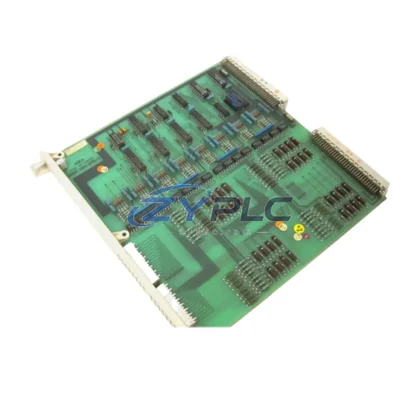
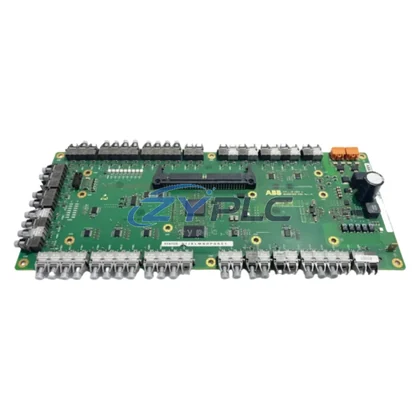
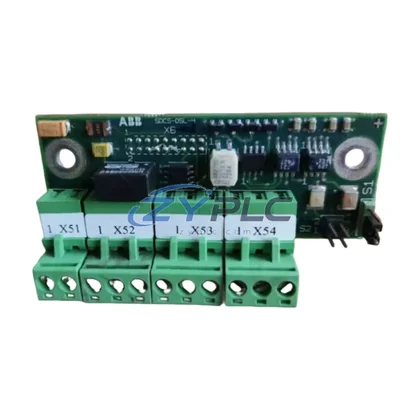
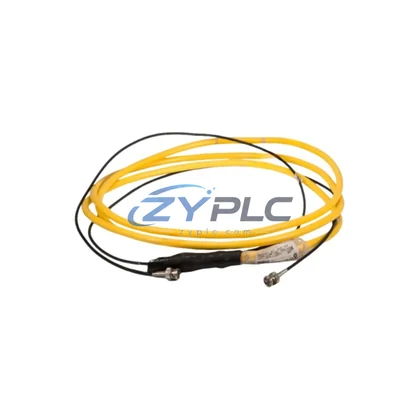
ABB 1TGE102009R1001 Industrial Network Interface for Symphony Plus Systems: Enabling Fault-Tolerant Data Links Across the Smart Factory
The ABB 1TGE102009R1001 is a redundant communication module engineered for the Symphony Plus Distributed Control System (DCS) platform. Designed to sustain uninterrupted data exchange between field devices, PLC controllers, remote I/O stations, HMI panels, SCADA servers, and upper-level MES or ERP systems, this module forms the backbone of a resilient industrial network architecture. In environments where a single point of communication failure can halt an entire production line, the 1TGE102009R1001 delivers the fault-tolerant connectivity that modern smart factories demand.
From signal acquisition at the sensor level to real-time data visualization on SCADA dashboards, the 1TGE102009R1001 manages every layer of the industrial data chain. Its redundant communication path ensures that even during a primary link failure, the secondary channel takes over seamlessly — maintaining process continuity, alarm integrity, and remote diagnostic capability without operator intervention.
Compatibility & Integration Notes
| Parameter |
Specification |
| SKU / Part Number |
1TGE102009R1001 |
| Brand |
ABB |
| Series |
Symphony Plus |
| Product Type |
Redundant Communication Module |
| Communication Protocol |
Redundant Ethernet / Proprietary Symphony Plus Bus |
| Interface Type |
Dual-port Ethernet, Backplane Bus Interface |
| Transmission Capability |
High-speed real-time data transfer with redundancy switchover |
| Network Compatibility |
Symphony Plus DCS, PROFIBUS, Modbus TCP (via gateway), OPC UA |
| System Application |
DCS Controller Communication, SCADA Integration, Remote I/O Linking, HMI Data Feed |
| Origin |
Germany |
| Warranty |
warranty terms confirmed during quotation — Tested Before Shipment |
Connected Automation Data Flow
In a typical Symphony Plus deployment, the 1TGE102009R1001 sits at the heart of the communication hierarchy. Field-level sensors — including temperature transmitters, pressure transducers, and flow meters — feed raw process data into remote I/O modules such as the ABB S900 I/O series. These I/O nodes forward structured data packets through the Symphony Plus fieldbus to the 1TGE102009R1001, which aggregates and routes the information to the Symphony Plus AC 800M controller cluster.
At the controller level, the AC 800M processes real-time control logic and passes status data upward through the 1TGE102009R1001’s redundant Ethernet ports to the SCADA layer — typically running ABB System 800xA or a third-party SCADA platform via OPC UA or Modbus TCP gateway adapters. Operators monitoring the ABB Ability™ HMI consoles receive live process values, alarm states, and trend data with sub-second latency, enabling rapid response to process deviations.
For drive integration, the 1TGE102009R1001 supports communication with ABB ACS880 variable frequency drives through PROFIBUS DP or Ethernet/IP gateway modules, allowing speed references and fault diagnostics to flow bidirectionally between the DCS and the drive layer. Similarly, ABB COMMANDER 650 series controllers and third-party PLCs can be integrated into the Symphony Plus network via protocol conversion gateways, eliminating data silos between legacy and modern control platforms.
Edge computing nodes — such as ABB Ability™ Edge gateways — can tap into the 1TGE102009R1001’s data stream to perform local analytics, predictive maintenance calculations, and anomaly detection before forwarding aggregated insights to cloud-based MES or ERP systems. This architecture supports full plant transparency: from the field instrument to the boardroom dashboard, every data point travels through a verified, redundant communication path managed by the 1TGE102009R1001.
Industrial power supplies from the ABB CP-E series ensure stable 24 VDC supply to the communication module and adjacent I/O racks, while ABB managed industrial Ethernet switches (such as the EKS series) provide the network switching infrastructure that connects all nodes within the Symphony Plus communication ring.
Solving Data Isolation in Industrial Sites
Many industrial facilities operate with a patchwork of legacy PLCs, proprietary fieldbus networks, and modern Ethernet-based systems that cannot natively exchange data. The result is data isolation — critical process information trapped within individual subsystems, invisible to operators, SCADA platforms, and management systems alike.
The ABB 1TGE102009R1001 addresses this challenge directly. Its redundant communication architecture eliminates single points of failure that previously caused data blackouts during network maintenance or hardware faults. By supporting protocol bridging between the Symphony Plus proprietary bus and standard industrial protocols such as Modbus TCP and OPC UA, the module enables legacy field devices to participate in modern data ecosystems without requiring full system replacement.
Remote monitoring and diagnostics become practical with the 1TGE102009R1001 in place. Maintenance engineers can access real-time module health status, communication error logs, and network traffic statistics from the SCADA workstation or a remote engineering terminal — reducing the need for on-site troubleshooting and shortening mean time to repair (MTTR). Alarm data from field devices reaches the control room with deterministic latency, ensuring that process upsets are flagged and acted upon before they escalate into production losses.
For facilities planning system expansion, the 1TGE102009R1001 provides a scalable communication foundation. Additional I/O racks, new controller nodes, or third-party subsystems can be integrated into the existing Symphony Plus network without disrupting live production — a critical requirement for continuous-process industries such as oil and gas, power generation, chemicals, and water treatment.
Every unit of the ABB 1TGE102009R1001 supplied by ZYPLC undergoes functional communication testing prior to shipment, verifying redundancy switchover performance, protocol handshake integrity, and network stability under load. Stock is maintained for shipment arranged after confirmation, and all units are covered by a warranty terms confirmed during quotation.
Industrial Connectivity FAQ
Q1: What is the communication latency of the ABB 1TGE102009R1001 in a Symphony Plus DCS network?
The 1TGE102009R1001 is designed for deterministic, low-latency communication within the Symphony Plus architecture. Typical cycle times for controller-to-I/O data exchange are in the millisecond range, supporting real-time process control requirements. Actual latency depends on network topology, number of nodes, and data payload size.
Q2: Is the 1TGE102009R1001 compatible with third-party SCADA systems and OPC UA clients?
Yes. When paired with an appropriate protocol gateway or the Symphony Plus OPC UA server interface, the 1TGE102009R1001 can expose process data to third-party SCADA platforms, historian servers, and MES systems that support OPC UA or Modbus TCP. This enables cross-platform data integration without replacing the existing DCS infrastructure.
Q3: How does the redundancy mechanism work, and what happens during a communication path failure?
The 1TGE102009R1001 maintains two independent communication paths simultaneously. If the primary path experiences a fault — due to cable damage, switch failure, or electromagnetic interference — the module automatically switches to the secondary path within milliseconds, with no data loss or controller interruption. The switchover event is logged and flagged in the SCADA alarm system for maintenance follow-up.
Q4: What testing and warranty coverage does ZYPLC provide for the ABB 1TGE102009R1001?
All units are functionally tested before shipment to verify communication integrity, redundancy performance, and hardware health. ZYPLC provides a warranty terms confirmed during quotation covering manufacturing defects and communication failures under normal operating conditions. Expedited shipping and technical pre-sales support are available for urgent project requirements.