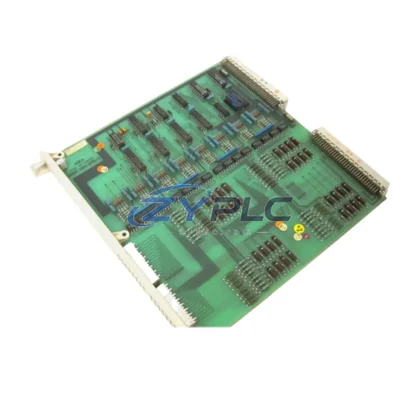
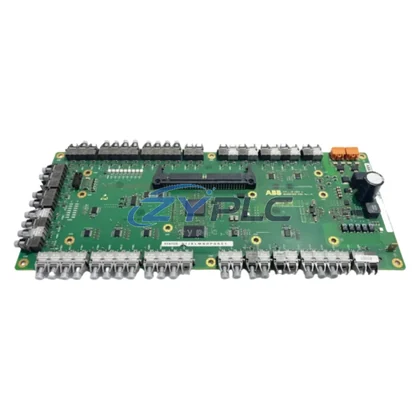
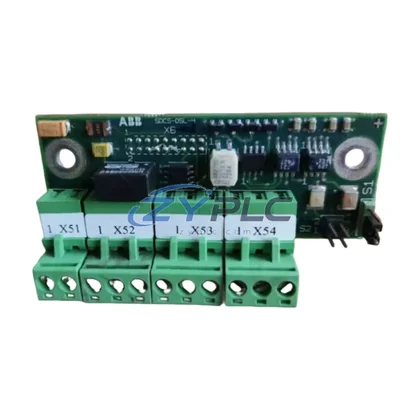
ABB 3BHE012276R0102 Industrial Network Interface for UNS Symphony Plus Systems
The ABB 3BHE012276R0102 is a high-performance industrial network communication module engineered for the UNS series within ABB’s Symphony Plus distributed control platform. This interface board serves as a critical data bridge between field-level instrumentation and upper-level supervisory systems, enabling seamless protocol conversion, real-time data exchange, and deterministic communication across complex industrial networks. Designed for deployment in power generation, process control, and large-scale manufacturing environments, the 3BHE012276R0102 ensures that every node in your automation architecture communicates with precision, reliability, and minimal latency.
In modern smart factory deployments, the challenge of integrating legacy fieldbus protocols with contemporary Industrial Ethernet standards demands a communication module that can handle multi-protocol translation without introducing bottlenecks. The ABB 3BHE012276R0102 addresses this requirement by supporting transparent data routing between controllers, remote I/O stations, human-machine interfaces, and SCADA platforms. Whether your facility relies on Profibus DP, Modbus TCP, or ABB’s proprietary AF100 protocol, this module provides the gateway functionality necessary to unify disparate network segments into a cohesive, monitorable data infrastructure.
Signal acquisition begins at the sensor and transmitter level, where analog and digital inputs are conditioned and digitized by remote I/O modules such as the ABB AI830A analog input unit. These raw process values travel upstream through the network backbone, passing through the 3BHE012276R0102 communication interface where protocol encapsulation and frame conversion occur in real time. The processed data packets are then routed to the primary controller—often an ABB AC800M or PM864A processor module—where control logic executes and output commands are generated. This bidirectional data flow ensures that actuators, variable frequency drives like the ABB ACS880 series, and safety interlock systems receive updated setpoints within deterministic cycle times.
Compatibility & Integration Notes
| Parameter |
Specification |
| Supported Protocols |
AF100, Profibus DP, Modbus TCP/RTU, Industrial Ethernet |
| Interface Type |
RJ45 Ethernet, RS-485, Fiber Optic (optional) |
| Transmission Speed |
Up to 100 Mbps (Ethernet), 12 Mbps (Profibus) |
| Network Topology |
Star, Ring, Redundant Ring |
| System Compatibility |
Symphony Plus, AC800M, Freelance |
| Operating Temperature |
-20°C to +60°C |
| Redundancy Support |
Hot-standby, Media Redundancy Protocol |
| Warranty |
warranty terms confirmed during quotation with Full Testing |
Connected Automation Data Flow
Within a typical Symphony Plus architecture, the 3BHE012276R0102 occupies a pivotal position in the communication hierarchy. At the field level, temperature transmitters, pressure sensors, and flow meters feed data into ABB’s TU810V1 terminal unit, which aggregates discrete and analog signals before forwarding them to the network layer. The communication module then packages these signals according to the destination protocol requirements, whether the target is a local HMI panel running ABB Panel 800 software or a centralized SCADA server executing ABB Ability Symphony Plus Operations.
For facilities requiring high-availability architectures, the 3BHE012276R0102 supports redundant communication paths. Paired with the ABB CI854AK01 Profibus interface or the CI867AK01 Modbus TCP module, engineers can establish parallel data channels that automatically failover in the event of cable damage or switch failure. This redundancy extends to the controller level, where dual PM891 processor modules maintain synchronized process images, ensuring zero data loss during switchover events.
The integration extends beyond traditional DCS boundaries. Edge computing gateways connected downstream of the 3BHE012276R0102 can extract process historian data and push it to cloud-based analytics platforms, enabling predictive maintenance algorithms to identify bearing wear patterns in turbine generators or detect heat exchanger fouling trends months before scheduled shutdowns. The ABB CI873AK01 Ethernet communication interface often works in tandem with the 3BHE012276R0102 to provide this north-south data connectivity between operational technology networks and enterprise IT systems.
Solving Data Isolation in Industrial Sites
One of the most persistent challenges in brownfield industrial installations is the existence of data silos—isolated network segments that cannot share information due to incompatible protocols, proprietary communication stacks, or physical layer mismatches. The ABB 3BHE012276R0102 directly addresses this problem by functioning as a multi-protocol gateway that normalizes data formats across network boundaries.
Consider a power plant where the boiler control system operates on legacy AF100 while the turbine protection system uses Profibus DP and the balance-of-plant controls have migrated to Modbus TCP. Without a unifying communication layer, operators must monitor three separate HMI stations, maintenance teams cannot correlate cross-system alarms, and production optimization algorithms lack the holistic dataset needed for efficiency calculations. By deploying the 3BHE012276R0102 at each network junction, all process data becomes accessible through a single unified namespace, enabling plant-wide visibility from a consolidated operator workstation.
Remote diagnostic capabilities further enhance the value proposition. Field service engineers can securely access controller diagnostics, communication statistics, and network health indicators through encrypted VPN tunnels terminating at the communication module. This eliminates the need for costly on-site visits for routine troubleshooting and enables rapid fault isolation when communication anomalies occur. The module’s built-in diagnostic counters track packet loss rates, retransmission events, and bus utilization percentages, providing actionable intelligence for proactive network maintenance.
System expansion is equally straightforward. As production lines grow or new process units come online, additional 3BHE012276R0102 modules can be installed to extend the communication backbone without disrupting existing operations. The module’s plug-and-play configuration through ABB’s engineering workstation minimizes commissioning time, while standardized mounting dimensions ensure compatibility with existing DIN rail or rack-mount installations.
Every unit shipped from our facility undergoes comprehensive functional testing, including protocol handshake verification, stress testing under maximum bus load conditions, and thermal cycling to validate performance across the full operating temperature range. We maintain ready stock of the 3BHE012276R0102 to support urgent replacement requirements, minimizing plant downtime associated with communication failures.
Industrial Connectivity FAQ
What communication latency can I expect with the 3BHE012276R0102?
The module achieves sub-millisecond latency for Ethernet-based protocols and typical cycle times of 2–5 ms for Profibus DP communications, ensuring deterministic data delivery suitable for closed-loop control applications.
Is the 3BHE012276R0102 compatible with non-ABB controllers?
Yes. Through its Modbus TCP/RTU and Profibus DP interfaces, the module can communicate with third-party PLCs, RTUs, and SCADA systems that support these open industrial protocols, making it suitable for heterogeneous automation environments.
How does the module handle network failures?
The 3BHE012276R0102 supports media redundancy protocols including hot-standby failover and ring topology recovery. In the event of a primary path failure, communication switches to the backup path within 20 ms, maintaining process continuity.
What warranty and testing coverage is provided?
Each module includes a warranty terms confirmed during quotation backed by full functional testing prior to shipment. Our quality assurance process includes protocol conformance testing, environmental stress screening, and communication integrity verification under simulated industrial conditions.