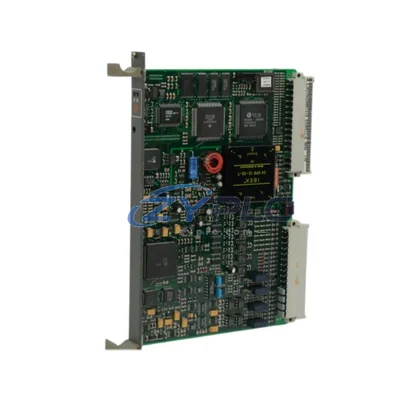
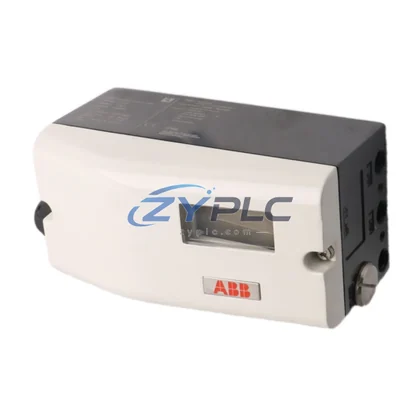
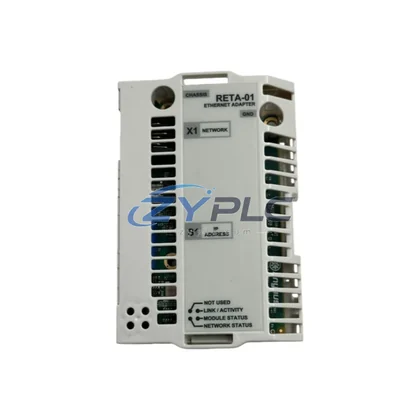
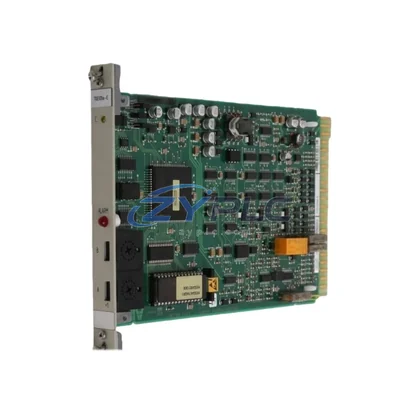
ABB 3HAC062622-003 AC Motor for IRB 6700: Precision Motor Control for Optimized Automation
The ABB 3HAC062622-003 is a industrial-grade AC motor module engineered specifically for the ABB IRB 6700 robot series — one of ABB’s most widely deployed heavy-duty industrial robot platforms. Designed to deliver consistent torque output with minimal energy loss, this motor module plays a central role in reducing per-cycle energy consumption across high-throughput production lines. Whether integrated into automotive body welding cells, heavy material handling systems, or precision assembly stations, the 3HAC062622-003 enables factories to achieve measurable improvements in equipment utilization, drive efficiency, and overall line throughput.
At ZYPLC, every unit of the ABB 3HAC062622-003 is sourced from verified supply channels, subjected to full functional testing prior to shipment, and Warranty terms are confirmed during quotation. Our inventory is maintained Availability confirmed by RFQ to support rapid deployment and minimize downtime for your production operations.
Product Specification Table
| Parameter |
Specification / Value |
| Part Number |
3HAC062622-003 |
| Compatible Robot Series |
ABB IRB 6700 |
| Motor Type |
AC Servo Motor Module |
| Operational Efficiency |
industrial-grade class; optimized for low heat dissipation and reduced reactive power draw |
| Power Consumption Profile |
Matched to IRB 6700 axis load requirements; minimizes idle-state energy draw |
| Compatible Drive System |
ABB IRC5 Controller with integrated drive units (DSQC series) |
| Compatible Control Platform |
ABB IRC5 / IRC5 Compact; RobotWare 6.x and above |
| Application Environment |
Automotive, heavy manufacturing, logistics, metal fabrication, palletizing |
| Maintenance Value |
Reduces per-axis energy loss; supports regenerative braking energy recovery via IRC5 drive |
| Origin |
Sweden (ABB Robotics) |
| Warranty |
12 Months — Full functional coverage from date of shipment |
| Pre-Shipment Testing |
Yes — 100% functional test performed before dispatch |
| Availability |
Confirmed via RFQ before quotation |
System Compatibility and Application
The ABB 3HAC062622-003 AC motor module does not operate in isolation — its energy efficiency is realized through tight integration with the broader ABB IRB 6700 automation architecture. Understanding this system context is essential for engineers seeking to optimize energy consumption at the axis level.
At the control layer, the ABB IRC5 controller manages motion trajectories and axis coordination for the IRB 6700. The IRC5’s integrated drive units — including the DSQC1018 drive module and associated DSQC663 axis computer — regulate current delivery to the 3HAC062622-003 motor with high precision, ensuring that torque is applied only when and where required. This demand-responsive control strategy is one of the primary mechanisms through which unnecessary energy draw is eliminated during low-load or idle phases of the robot cycle.
The ABB SafeMove2 safety module, typically paired with the IRC5 in high-duty-cycle environments, enables speed and position monitoring that allows the robot to operate at optimized velocities without sacrificing safety margins — directly contributing to reduced motor stress and lower thermal losses in the 3HAC062622-003 winding assembly.
On the power supply side, the ABB DSQC609 power supply unit conditions incoming AC mains power and distributes regulated DC bus voltage to the drive modules. A stable, clean DC bus reduces harmonic distortion and switching losses in the motor drive chain, which in turn improves the effective efficiency of the 3HAC062622-003 under variable load conditions.
For facilities running multiple IRB 6700 units in coordinated cells, the ABB IRC5 MultiMove configuration allows synchronized motion planning across robots, reducing peak power demand spikes that would otherwise stress both the motor modules and upstream power infrastructure. This is particularly relevant in automotive press-tending and spot-welding applications where simultaneous axis movements are common.
At the I/O and communication layer, the ABB DSQC652 digital I/O module and DSQC688 fieldbus adapter (supporting PROFINET or EtherNet/IP) enable real-time feedback from sensors and peripheral devices. This data flow allows the IRC5 to make dynamic adjustments to motor speed profiles — a capability that directly reduces unplanned downtime during transitional motion phases. Integration with plant-level SCADA or MES systems via the ABB Ability™ Connected Services platform further enables energy consumption logging and trend analysis at the individual axis level.
For facilities that also operate ABB’s collaborative or smaller articulated robots alongside the IRB 6700, the ABB OmniCore controller platform offers a next-generation maintenance planning framework that can be benchmarked against IRC5-based systems to identify cross-fleet optimization opportunities.
Maintenance and Replacement Notes
In real-world production environments, the energy impact of a single motor module like the ABB 3HAC062622-003 compounds significantly when multiplied across a multi-robot cell operating two or three shifts per day. Consider a typical automotive body shop running six IRB 6700 units in a spot-welding cell: each robot performs hundreds of weld cycles per shift, with each cycle involving rapid acceleration, sustained hold, and controlled deceleration across multiple axes. A motor module that exhibits even marginal inefficiency in torque-to-current conversion will generate excess heat, increase cooling system load, and draw measurably more energy per cycle than a properly specified, well-maintained unit.
The 3HAC062622-003, when operating within its rated parameters and paired with a correctly tuned IRC5 drive configuration, maintains consistent back-EMF characteristics that allow the drive’s regenerative braking function to recover kinetic energy during deceleration phases. This recovered energy is fed back into the DC bus and redistributed to other axes still under acceleration load — a process that can reduce net energy consumption per robot cycle by a meaningful margin in high-inertia applications.
From a maintenance and uptime perspective, a degraded or out-of-specification motor module is one of the leading causes of unplanned robot downtime in heavy manufacturing. Symptoms such as increased current draw, elevated motor temperature, and axis position errors are early indicators of motor winding degradation. Replacing a failing unit with a tested, in-specification ABB 3HAC062622-003 restores the robot to its designed efficiency envelope, eliminates the energy penalty of operating a degraded motor, and prevents the cascading failures — drive overloads, thermal shutdowns, mechanical wear — that result from continued operation with a compromised motor module.
Line throughput optimization is another dimension where the 3HAC062622-003 delivers value. A robot operating with a healthy, correctly matched motor module can execute programmed motion paths at full rated speed and acceleration, maintaining the cycle time targets that production planners depend on. When motor performance degrades, engineers often compensate by reducing programmed speeds — a workaround that directly reduces line throughput and increases energy consumption per part produced. Maintaining motor module integrity is therefore not just a maintenance issue; it is a production efficiency and energy intensity issue.
ZYPLC maintains RFQ-based sourcing support of the ABB 3HAC062622-003 to support rapid replacement scenarios. All units are tested prior to shipment and covered by a warranty and support terms confirmed before quote, giving maintenance teams the confidence to plan replacements proactively rather than reactively.
Product Sourcing FAQ
Q1: How does the ABB 3HAC062622-003 contribute to operational stability in an IRB 6700 robot cell?
The 3HAC062622-003 is designed to operate within the IRB 6700’s optimized torque-speed envelope, minimizing resistive losses in the motor winding and enabling the IRC5 drive’s regenerative braking function to recover deceleration energy. In multi-robot cells, this per-axis efficiency improvement aggregates into measurable reductions in total cell energy consumption over a production shift.
Q2: Is the 3HAC062622-003 compatible with all IRC5 controller variants and RobotWare versions?
The 3HAC062622-003 is engineered for the ABB IRB 6700 series and is compatible with the standard IRC5 controller platform, including IRC5 Compact configurations. It is designed to operate with RobotWare 6.x and later versions. For specific axis assignments and drive parameter configurations, refer to the IRB 6700 product manual or consult your ABB service documentation. ZYPLC’s technical team can assist with compatibility verification prior to purchase.
Q3: What is the recommended replacement process, and how do I minimize downtime during a motor module swap?
For planned replacements, ZYPLC recommends ordering the 3HAC062622-003 in advance and scheduling the swap during a planned maintenance window. The replacement process involves de-energizing the robot, following ABB’s lockout/tagout procedure, removing the axis cover, disconnecting the motor connectors, and installing the new module per the IRB 6700 maintenance manual. Post-installation, a calibration routine should be performed using the IRC5 FlexPendant to restore axis accuracy. All ZYPLC units are pre-tested, reducing the risk of commissioning delays.
Q4: What does the warranty and support terms confirmed before quote cover, and what is the testing process before shipment?
Every ABB 3HAC062622-003 shipped by ZYPLC undergoes a full functional test that verifies winding resistance, insulation integrity, encoder signal quality, and mechanical rotation smoothness. The warranty and support terms confirmed before quote covers defects in materials and workmanship under normal operating conditions. In the event of a warranty claim, ZYPLC provides replacement or repair support. Contact our team at plc.sales@zyplc.com or +86 19859288691 to initiate a warranty inquiry.