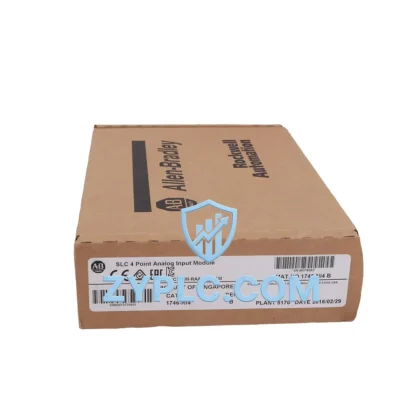
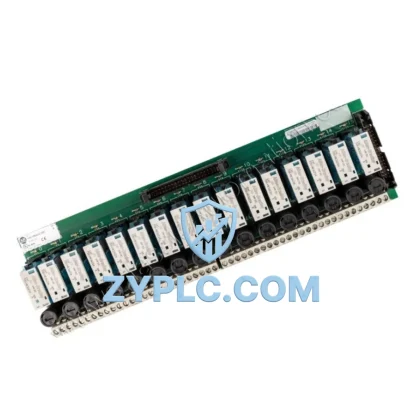
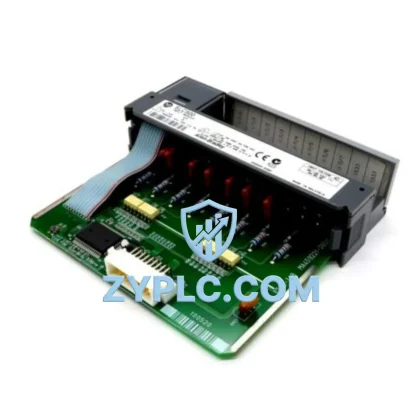
ABB DC551-CS31 Energy-Saving Digital I/O Module for AC500 Automation
The ABB DC551-CS31 (SKU: DC551-CS31 1SAP220500R0001) is a high-performance digital I/O expansion module designed for the ABB AC500 PLC series, engineered to deliver precise signal acquisition and output control while minimizing unnecessary power draw across distributed automation architectures. In modern industrial environments where energy accountability is no longer optional, the DC551-CS31 plays a critical role in closing the loop between field-level sensing and centralized control — enabling factories to reduce idle energy consumption, sharpen production line rhythm, and extend equipment service intervals.
Unlike generic I/O modules that simply pass signals, the DC551-CS31 integrates seamlessly into the AC500 ecosystem via the CS31 serial bus, allowing deterministic, low-latency communication between the central processing unit and distributed field devices. This architecture eliminates the need for redundant wiring runs and reduces signal interference — both of which contribute to measurable reductions in electrical overhead and maintenance labor.
Efficiency Performance Table
| Parameter |
Specification |
| SKU |
DC551-CS31 / 1SAP220500R0001 |
| Brand |
ABB |
| Series |
AC500 |
| Module Type |
Digital I/O Expansion Module (CS31 Bus) |
| Digital Inputs |
16 DI (24 VDC) |
| Digital Outputs |
16 DO (24 VDC, transistor) |
| Bus Interface |
CS31 Serial Bus |
| Power Consumption |
≤ 4.5 W (typical operating load) |
| Operating Efficiency |
Optimized for low-standby, high-cycle duty |
| Compatible Systems |
ABB AC500 PM5xx / PM5x3 / PM5x4 CPU series |
| Application Environment |
Industrial automation, motor control panels, conveyor systems, energy monitoring stations |
| Energy Saving Value |
Reduces wiring overhead, supports distributed load balancing, enables selective I/O activation |
| Origin |
Germany |
| Warranty |
12-Month Warranty |
| Stock Status |
In Stock — Ships within 1–3 business days |
Energy-Aware Automation Architecture
The DC551-CS31 is most effective when deployed as part of a coordinated, energy-aware control architecture. In a typical AC500-based system, the ABB PM554-T-ETH or PM564-T-ETH CPU acts as the central controller, managing process logic and communicating with field devices through the CS31 bus. The DC551-CS31 connects directly to this bus, expanding the system’s I/O capacity without requiring additional power supplies or communication gateways — a design choice that directly reduces panel energy overhead.
On the drive side, the DC551-CS31 frequently works in tandem with ABB ACS580 or ACS880 variable frequency drives (VFDs). Digital output signals from the DC551-CS31 trigger start/stop commands, speed reference switching, and fault reset sequences on these drives — enabling precise motor speed regulation that eliminates the energy waste associated with fixed-speed operation. When a conveyor or pump runs at 60% of rated speed rather than 100%, the energy savings follow the cube law: a 40% speed reduction can yield up to 78% reduction in power consumption.
For energy monitoring, the DC551-CS31 integrates with ABB M2M Ethernet gateways and energy measurement modules such as the ABB B23 or B24 energy meters, which feed real-time kWh data back to the AC500 CPU. This closed-loop feedback allows the PLC program to dynamically adjust output states — for example, disabling non-critical I/O channels during low-production windows or night-shift periods, reducing phantom loads across the panel.
In servo-driven applications, the DC551-CS31 provides the digital handshake signals required by ABB MicroFlex e190 or third-party servo drives, coordinating axis enable, home position confirmation, and fault interlock sequences. This tight integration ensures that servo axes are only energized when mechanically required, avoiding the continuous holding current that inflates energy bills in poorly sequenced systems.
HMI visibility is equally important. When paired with an ABB CP600 series HMI panel, operators gain real-time visibility into I/O channel states, cycle counts, and fault histories — data that maintenance teams use to identify energy-wasting fault loops (e.g., a sensor that repeatedly triggers an output due to misalignment, causing unnecessary actuator cycling). The ABB Automation Builder software environment ties all of these components together, providing a unified programming and diagnostic platform that supports energy profiling at the task-cycle level.
Communication flexibility is another energy-efficiency enabler. The DC551-CS31’s CS31 bus topology supports daisy-chain wiring across multiple modules — including DC532 and DC505-FBP variants — reducing total cable length and associated resistive losses compared to star-wired I/O architectures. For facilities integrating with SCADA or MES platforms via PROFIBUS DP or Modbus TCP, the AC500 system’s communication modules (such as the CM572-DP) relay I/O status data upstream, enabling plant-level energy dashboards that identify consumption anomalies before they become costly.
Power Optimization in Real Production Lines
Consider a mid-scale packaging line running three-shift operations. Before integrating the DC551-CS31 into the AC500 control architecture, the line’s pneumatic actuators, conveyor drives, and reject mechanisms operated on fixed-cycle timers — running continuously regardless of upstream product flow. After deploying the DC551-CS31 with properly configured digital output logic, the AC500 CPU can now gate actuator activation based on real-time sensor feedback from the DC551-CS31’s input channels. The result: actuators fire only when product is present, reducing compressed air consumption by an estimated 20–35% and cutting solenoid valve wear cycles by half.
In motor control applications, the DC551-CS31’s fast output response time (typically <1 ms for transistor outputs) ensures that VFD enable signals arrive within the drive’s minimum command window — preventing the micro-delays that cause drives to re-initialize unnecessarily, consuming inrush current on every false start. Over a 24-hour production cycle with dozens of start/stop events, eliminating these inrush spikes can reduce peak demand charges on the facility’s electricity bill.
Predictive maintenance is another dimension of energy optimization. By logging the cumulative on-time of each digital output channel through the AC500 CPU’s data logging functions, maintenance engineers can establish baseline actuator cycle counts and flag deviations that indicate mechanical wear — a sticking valve, a slipping clutch, or a misaligned sensor. Addressing these issues proactively prevents the energy-wasting condition where a faulty actuator draws current without completing its mechanical task.
All units supplied by ZYPLC undergo pre-shipment functional testing, verifying input channel response, output switching integrity, and CS31 bus communication handshake before dispatch. Each DC551-CS31 is backed by a 12-month warranty, with in-stock availability ensuring rapid deployment for both new installations and emergency replacements. Our inventory is maintained to support urgent industrial procurement needs, with typical lead times of 1–3 business days for standard orders.
Energy Optimization FAQ
Q1: How does the DC551-CS31 contribute to measurable energy savings on a production line?
The DC551-CS31 enables conditional I/O activation — outputs are triggered only when process conditions are met, rather than running on fixed timers. This eliminates idle actuator cycling, reduces compressed air and hydraulic consumption, and allows the AC500 CPU to implement demand-based motor control sequences through connected VFDs such as the ACS580 series.
Q2: Is the DC551-CS31 compatible with existing AC500 installations using older PM5xx CPUs?
Yes. The DC551-CS31 is designed for backward compatibility across the AC500 PM5xx family, including PM554, PM564, PM573, and PM583 variants. It communicates via the standardized CS31 serial bus protocol, which has remained consistent across AC500 generations. No firmware upgrades are required for basic I/O expansion use cases.
Q3: What is the recommended replacement or upgrade path if the DC551-CS31 is discontinued or unavailable?
The DC532-CS31 offers a functionally equivalent digital I/O profile with the same CS31 bus interface and is the most direct replacement. For applications requiring higher channel density, the DC505-FBP with a PROFIBUS DP adapter provides an expanded I/O footprint within the same AC500 ecosystem. ZYPLC maintains stock of both alternatives and can advise on configuration compatibility.
Q4: What does the 12-month warranty cover, and what is the testing process before shipment?
Every DC551-CS31 unit shipped by ZYPLC is tested for digital input channel response accuracy, transistor output switching integrity, CS31 bus enumeration, and power supply rail stability. The 12-month warranty covers manufacturing defects and functional failures under normal operating conditions. Units that fail post-installation within the warranty period are eligible for replacement or repair, subject to standard RMA procedures. Contact our technical team at plc.sales@zyplc.com for warranty claims.
—
© 2026 ZYPLC. All rights reserved.
Original Source: https://zyplc.com
Contact: +86 19859288691 | plc.sales@zyplc.com