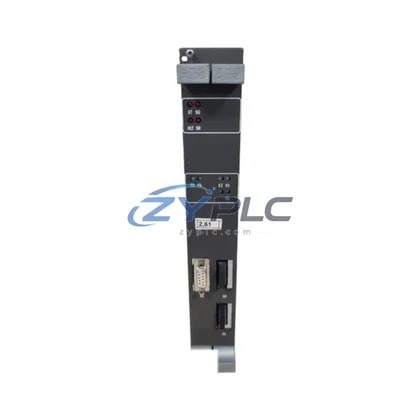
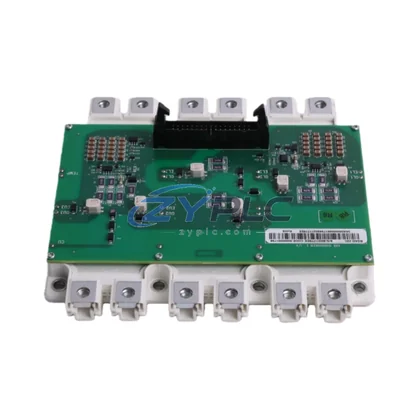
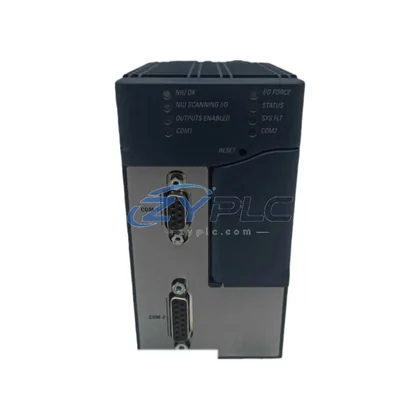
ABB GJR2332300R0100 88FV01E Control Board for Advant OCS
The ABB GJR2332300R0100 88FV01E is a system-compatible control board engineered for deployment within the ABB Advant OCS (Open Control System) distributed control architecture. Rather than functioning as a standalone component, this board occupies a defined role within a layered automation hierarchy — coordinating signal processing, inter-module communication, and real-time control execution across the control layer, I/O layer, and network layer of a complete industrial automation system. Its design reflects ABB’s commitment to modular scalability, long-term field reliability, and seamless integration within multi-tier process control environments spanning manufacturing, power generation, petrochemical processing, and water treatment infrastructure.
In a fully configured Advant OCS system, the GJR2332300R0100 88FV01E operates in close coordination with processor modules such as the PM511 and PM510 series, which handle high-level program execution and inter-station communication. The control board interfaces with I/O modules including the AI810 analog input module and DO810 digital output module, ensuring accurate signal acquisition from field instruments and reliable command delivery to actuators and drives. This tight coupling between the control board and the I/O layer eliminates signal latency and reduces the risk of data inconsistency during high-frequency scan cycles — a critical requirement in continuous process control applications.
At the network layer, the GJR2332300R0100 88FV01E supports integration with ABB’s MasterBus 300 and PROFIBUS DP communication infrastructure, enabling deterministic data exchange between the control station and supervisory systems. When paired with communication interface modules such as the CI522A or CI532V, the board participates in a structured network topology that supports both peer-to-peer controller communication and upward data reporting to SCADA or DCS historian platforms. This network-layer coherence is essential for maintaining system-wide data integrity in large-scale installations with multiple control stations.
From a power architecture perspective, the GJR2332300R0100 88FV01E is designed to operate within the standard Advant OCS rack and backplane assembly, receiving regulated DC power from dedicated power supply modules such as the SD821 or SD822. The backplane distributes both logic power and field power across installed modules, and the control board’s low power consumption profile contributes to overall cabinet thermal management — an important consideration in enclosed control panel environments operating under continuous duty cycles.
For human-machine interface integration, the board’s data outputs are structured to support real-time visualization on ABB Operate IT or legacy Advant Station HMI platforms. Operators can monitor control board status, I/O channel diagnostics, and communication health through the HMI layer without interrupting live process execution. This transparency between the control layer and the HMI layer accelerates fault identification and reduces mean time to repair during unplanned process interruptions.
At the execution layer, the GJR2332300R0100 88FV01E coordinates output signals to variable frequency drives, solenoid valve banks, and relay output modules such as the RB520, ensuring that actuator commands are delivered with the timing precision required by closed-loop control strategies. In redundant system configurations, the board can be paired with a standby control module to support bumpless transfer — maintaining process continuity in the event of a primary module fault without operator intervention.
Product Specification Table
| Parameter |
Specification |
| System Role |
Control Board — Advant OCS Control Layer |
| Full Part Number |
GJR2332300R0100 88FV01E |
| Manufacturer |
ABB (ASEA Brown Boveri) |
| Compatible Series |
Advant OCS / Advant Controller 450 / AC450 |
| Mounting |
Advant OCS Standard Rack / Backplane |
| Operating Voltage |
24 VDC (via backplane power distribution) |
| Communication Support |
MasterBus 300, PROFIBUS DP (via interface modules) |
| Operating Temperature |
0°C to +55°C |
| Storage Temperature |
-40°C to +70°C |
| Humidity |
5% to 95% RH, non-condensing |
| Country of Origin |
Germany |
| Product Type |
Control Board |
| Warranty |
warranty terms confirmed during quotation — covers manufacturing defects and functional failure under normal operating conditions |
System Compatibility Notes
The GJR2332300R0100 88FV01E achieves its full operational value when integrated within a coordinated Advant OCS system architecture. A typical deployment begins with the AC450 controller station, where the control board is installed alongside the PM511 processor module to form the core of the control layer. The PM511 executes the application program — including PID loops, sequence logic, and interlock functions — while the GJR2332300R0100 88FV01E manages board-level signal conditioning and module coordination within the rack.
Analog process variables from field transmitters are acquired through the AI810 analog input module, which converts 4–20 mA signals into digital values for processing by the control layer. Digital status signals from limit switches, motor contactors, and protective relays are routed through the DI810 digital input module. On the output side, the DO810 digital output module drives solenoid valves and motor starters, while the AO810 analog output module provides setpoint signals to variable frequency drives and control valves. The RB520 relay output module extends the system’s ability to interface with high-voltage field devices that require galvanic isolation from the control circuit.
System communication is managed through the CI522A communication interface module, which connects the Advant OCS station to the MasterBus 300 plant network. This network backbone links multiple controller stations, enabling coordinated multi-loop control strategies that span geographically distributed process units. The SD822 power supply module provides the regulated 24 VDC required by all rack-mounted modules, with built-in redundancy support to eliminate single-point power failure risk. Together, these components form a tightly integrated control architecture in which the GJR2332300R0100 88FV01E serves as a foundational element of system consistency and operational reliability.
Industrial Application Notes
The GJR2332300R0100 88FV01E is suited for deployment across a broad range of industrial automation sectors where the Advant OCS platform has established a long operational history. In power generation facilities — including thermal, hydroelectric, and combined-cycle plants — the board supports turbine control, boiler management, and auxiliary system automation within the plant DCS architecture. Its compatibility with the Advant OCS communication infrastructure allows it to exchange real-time data with maintenance planning systems and plant historians without requiring protocol conversion hardware.
In petrochemical and refinery environments, the control board participates in continuous process control loops governing reactor temperature, pressure regulation, and flow balancing. The deterministic scan cycle of the Advant OCS platform ensures that control actions are executed within defined time windows, supporting the tight process tolerances required by catalytic and distillation processes. Water treatment and municipal utility operators rely on Advant OCS systems for pump station automation, chemical dosing control, and SCADA integration — applications where the GJR2332300R0100 88FV01E provides the control layer stability needed for unattended remote operation.
In mining and metallurgical processing, the board supports conveyor sequencing, crusher control, and flotation cell automation within distributed control architectures that must tolerate harsh electromagnetic environments and wide ambient temperature ranges. Packaging and discrete manufacturing lines benefit from the board’s integration within multi-station Advant OCS configurations, where coordinated motion control and product tracking require consistent inter-module communication across the full production line.
Product Compatibility FAQ
Q1: Is the GJR2332300R0100 88FV01E compatible with both the Advant Controller 450 and earlier Advant OCS rack configurations?
A: The GJR2332300R0100 88FV01E is designed for the Advant OCS platform, which encompasses the AC450 controller family and associated rack and backplane assemblies. Compatibility with specific rack generations should be verified against the installed backplane revision and power supply module specifications. ZYPLC’s technical team can assist with cross-referencing the board’s hardware revision against your existing system configuration prior to installation.
Q2: Can this control board be used in a redundant controller configuration, and what additional modules are required?
A: Redundant controller configurations within the Advant OCS architecture typically require a matched pair of processor and control board assemblies, along with a redundancy synchronization module and appropriate backplane support. The GJR2332300R0100 88FV01E can participate in such configurations when paired with compatible redundancy hardware. Bumpless transfer capability depends on the application program structure and the redundancy module’s synchronization cycle. ZYPLC supplies both primary and standby board assemblies to support full redundancy deployments.
Q3: What does the warranty terms confirmed during quotation cover, and what is the process for warranty claims?
A: The warranty terms confirmed during quotation provided by ZYPLC covers manufacturing defects and functional failures occurring under normal operating conditions from the date of shipment. Warranty claims are initiated by contacting ZYPLC’s technical support team with the order reference, board serial number, and a description of the observed fault. Boards confirmed defective under warranty terms are repaired or replaced at no additional cost. The warranty does not cover damage resulting from incorrect installation, overvoltage events, or unauthorized modification of the board assembly.