ABB ICSO08R1 Energy-Saving Output Module CS31: Precision Control for Optimized Automation Lines
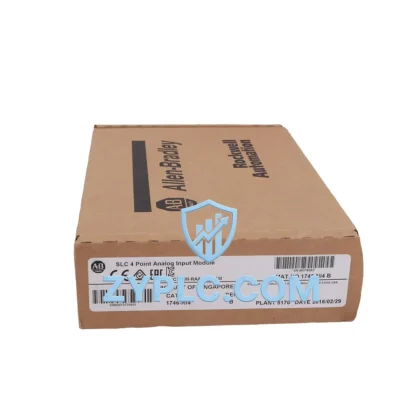
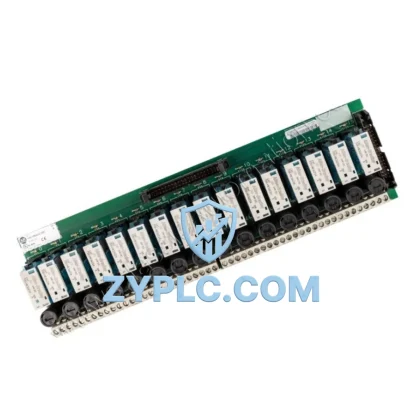
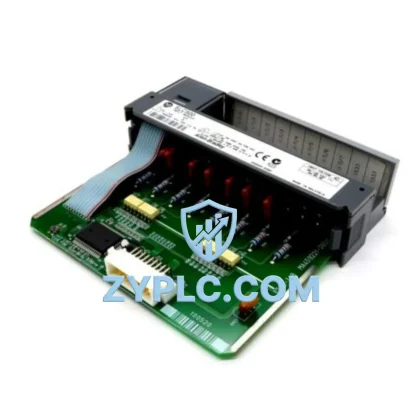
The ABB ICSO08R1 (FPR3312101R0024) is an 8-channel binary output module engineered for the ABB CS31 distributed I/O system. In industrial environments where every watt and every millisecond of downtime carries a cost, this module delivers deterministic output switching that directly supports energy-efficient motor control, actuator management, and process sequencing. By integrating tightly with the CS31 bus architecture, the ICSO08R1 eliminates unnecessary relay stages, reduces wiring complexity, and enables faster scan cycles — all of which translate into measurable reductions in idle energy consumption and improved production line throughput.
At ZYPLC, every ICSO08R1 unit is sourced from verified supply channels, subjected to full functional output testing prior to shipment, and backed by a 12-month warranty. Stock is maintained on-hand for immediate dispatch, supporting both urgent replacement scenarios and planned system expansions.
Efficiency Performance Table
| Parameter |
Specification / Value |
| SKU / Part Number |
ICSO08R1 / FPR3312101R0024 |
| Brand |
ABB |
| Series |
CS31 Distributed I/O |
| Output Channels |
8 × Binary (Relay) Outputs |
| Output Type |
Relay contact, potential-free |
| Rated Load Voltage |
24 VDC / 24–230 VAC |
| Max Switching Current |
2 A per channel |
| Bus Interface |
CS31 serial bus (ABB proprietary) |
| Cycle Time Contribution |
Deterministic, <1 ms output latency on CS31 bus |
| Operating Temperature |
0 °C to +55 °C |
| Power Consumption (module) |
Low standby draw; outputs only energized on command |
| Compatible Systems |
ABB AC31 / CS31 PLC platforms (e.g., 07KT98, 07KT97) |
| Application Environments |
Discrete manufacturing, conveyor control, pump/fan switching, HVAC actuation |
| Energy Saving Value |
Eliminates intermediate relay panels; reduces panel heat load and auxiliary power draw |
| Warranty |
12-Month Warranty (ZYPLC) |
| Condition |
New / Refurbished — fully tested before shipment |
| Origin |
Germany (ABB) |
Energy-Aware Automation Architecture
The ICSO08R1 does not operate in isolation — its energy efficiency contribution is amplified when deployed within a well-structured CS31 automation architecture. In a typical energy-optimized production cell, the module works alongside the ABB 07KT98 AC31 CPU, which handles the central control logic and coordinates bus communication across all I/O nodes. The CPU’s fast scan cycle ensures that output commands reach the ICSO08R1 with minimal latency, preventing actuators from remaining energized longer than necessary — a common source of hidden energy waste in older relay-ladder systems.
On the drive side, pairing the ICSO08R1’s switching outputs with ABB ACS550 or ACS310 variable frequency drives (VFDs) creates a highly responsive motor control loop. The binary outputs from the ICSO08R1 can trigger start/stop sequences, speed-change commands, or bypass switching on the VFD, enabling the drive to operate motors at demand-matched speeds rather than fixed full-load RPM. This alone can reduce motor energy consumption by 20–50% in variable-torque applications such as pumps, fans, and compressors.
For analog process feedback and closed-loop energy regulation, the ABB ICSK20F1 analog input module complements the ICSO08R1 by feeding real-time current, voltage, or temperature signals back to the AC31 CPU. This feedback loop allows the controller to dynamically adjust output switching patterns based on actual process conditions, avoiding over-actuation and unnecessary energy expenditure. Similarly, the ABB ICSI08D1 binary input module captures field-level status signals — limit switches, proximity sensors, flow indicators — that inform the CPU when outputs should be de-energized, further tightening the energy control envelope.
Power quality and consumption visibility are addressed through integration with ABB M2M energy meters or compatible third-party power monitoring devices connected via the ABB CI840A PROFIBUS DP communication interface. This communication module bridges the CS31 local bus to plant-wide PROFIBUS DP networks, enabling energy data from individual production cells to be aggregated at the SCADA or MES level. Operators gain visibility into per-zone energy consumption, making it possible to identify inefficient switching patterns and optimize output scheduling during low-demand periods.
In panel design, the ICSO08R1 replaces banks of discrete relay modules, reducing the number of components, the associated wiring harness, and the thermal load inside the control cabinet. Fewer heat-generating components mean lower cabinet cooling requirements — a secondary but meaningful energy saving in climate-controlled facilities. The ABB ICSO16E1 extended binary output module can be added to the same CS31 node string when higher channel counts are required, maintaining the same low-overhead bus architecture without introducing additional power supply stages.
For human-machine interaction and real-time energy dashboarding, the system integrates naturally with ABB CP600 series HMI panels, which can display live output states, cycle counts, and energy consumption trends pulled from the AC31 CPU’s data registers. Maintenance teams can use this visibility to schedule predictive maintenance interventions before relay wear causes unplanned downtime — a key factor in maintaining high equipment utilization rates and avoiding the energy spikes associated with emergency restarts and production catch-up cycles.
Power Optimization in Real Production Lines
In discrete manufacturing environments — automotive assembly, food processing, packaging, and material handling — the ICSO08R1 contributes to energy optimization at multiple levels of the production hierarchy.
Reducing idle energy consumption: In many legacy systems, actuators and motors remain energized during micro-stoppages because the control system lacks the output resolution to implement fine-grained de-energization logic. The ICSO08R1’s 8 independent relay channels, each individually addressable by the CS31 CPU, allow engineers to implement zone-based shutdown sequences that de-energize non-critical outputs during planned pauses, shift changes, or low-throughput periods. This granular control directly reduces standby power draw across the production line.
Optimizing production line throughput (takt time): Because the ICSO08R1 operates on the deterministic CS31 bus with sub-millisecond output response, it supports tighter takt time programming. Actuators fire precisely when commanded, without the timing jitter introduced by intermediate relay stages or software polling delays. Consistent takt time means fewer buffer stocks, less inter-station waiting, and a smoother energy demand profile — avoiding the current spikes that occur when multiple motors restart simultaneously after a line stoppage.
Lowering maintenance costs and unplanned downtime: Each relay output on the ICSO08R1 is designed for industrial duty cycles. When integrated with the AC31 CPU’s diagnostic registers, the system can log output switching frequency and flag channels approaching end-of-life thresholds. Maintenance teams receive advance warning, enabling planned replacement during scheduled downtime windows rather than reactive repairs during production hours. Unplanned downtime is one of the largest hidden energy costs in manufacturing — restarting cold equipment, running catch-up production at full load, and operating HVAC systems in unoccupied facilities all consume disproportionate energy relative to steady-state operation.
Supporting predictive maintenance programs: When combined with current monitoring on the VFD outputs and temperature sensing via analog input modules, the ICSO08R1’s switching data becomes part of a broader predictive maintenance dataset. Anomalous switching patterns — unexpected output cycling, extended energization times, or failure to de-energize — can indicate upstream process faults before they escalate into equipment damage. Early detection preserves both equipment life and the energy efficiency of well-tuned production processes.
Energy Optimization FAQ
Q1: How does the ICSO08R1 contribute to measurable energy savings on a production line?
The ICSO08R1 enables precise, individually addressable control of 8 output channels via the CS31 bus. This allows engineers to implement zone-based de-energization during idle periods, eliminate always-on relay panels, and synchronize actuator switching with VFD speed commands — all of which reduce unnecessary energy consumption. When combined with power monitoring at the drive level, the savings are quantifiable through before/after energy metering.
Q2: Is the ICSO08R1 compatible with current ABB PLC platforms, or only legacy CS31 systems?
The ICSO08R1 is designed for the ABB CS31 bus, which is supported by the AC31 family of controllers including the 07KT98 and 07KT97 CPUs. While CS31 is a mature platform, it remains widely deployed in industrial facilities with long equipment lifecycles. For facilities migrating to newer ABB platforms such as the AC500 series, the ICSO08R1 can continue to serve in hybrid architectures via gateway communication modules during the transition period.
Q3: What is the recommended replacement or upgrade path if a channel fails?
If an individual relay channel shows signs of wear or failure, the recommended approach is module-level replacement rather than channel-level repair, as relay contacts are not field-serviceable. ZYPLC maintains stock of the ICSO08R1 for immediate dispatch. For applications requiring higher channel density or solid-state outputs, the ABB ICSO16E1 or ICSO08D1 variants may be evaluated as functional alternatives within the same CS31 node string.
Q4: What does the 12-month warranty cover, and what is the testing process before shipment?
Every ICSO08R1 unit shipped by ZYPLC undergoes functional output testing across all 8 channels, bus communication verification on a live CS31 test bench, and visual inspection for component integrity. The 12-month warranty covers functional failures under normal operating conditions. Units are shipped with test documentation available on request. For time-critical replacement needs, expedited shipping options are available — contact ZYPLC directly to confirm lead times and stock availability.
© 2026 ZYPLC. All rights reserved.
Original Source: https://zyplc.com
Contact: +86 19859288691 | plc.sales@zyplc.com