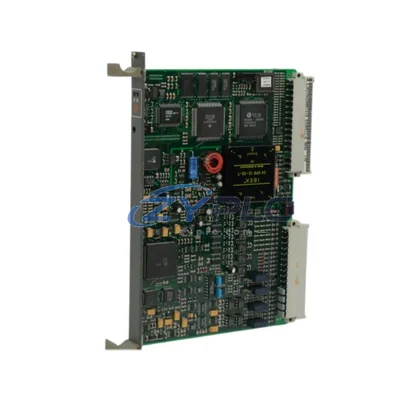
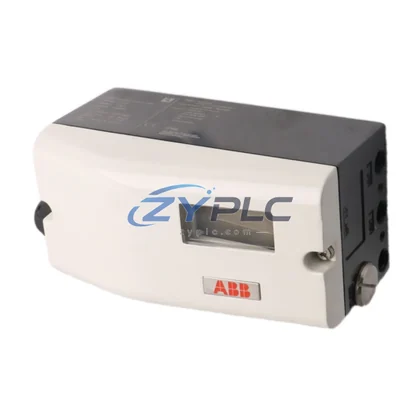
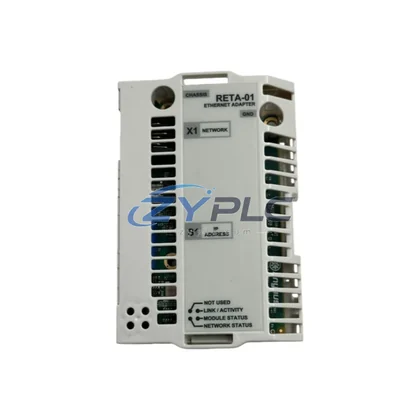
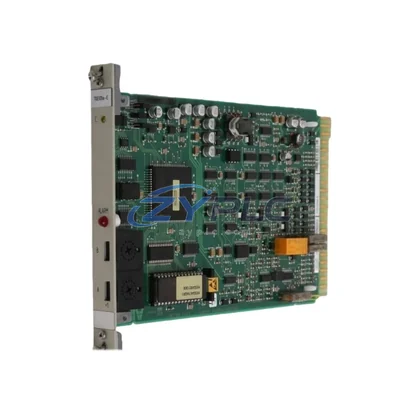
ABB LD-MTR-01 Motor Control for LD Series
The ABB LD-MTR-01 is a dedicated motor control module engineered for seamless integration within the ABB LD Series programmable automation controller architecture. Rather than functioning as a standalone device, the LD-MTR-01 is designed to operate as a coordinated node within a layered control system — interfacing directly with the LD Series CPU backplane, receiving command signals from the central processing unit, and delivering precise motor drive outputs to field-level actuators and variable frequency drives. In modern industrial automation environments, where system consistency, scalability, and long-term maintainability are paramount, the LD-MTR-01 represents a purpose-built solution that aligns motor control capability with the broader demands of distributed control architecture.
Within a complete LD Series control system, the LD-MTR-01 occupies the motor control layer — positioned between the digital and analog I/O modules that aggregate field signals and the execution layer where motors, pumps, compressors, and conveyors respond to control commands. The module communicates with the LD Series CPU module via the high-speed internal backplane bus, ensuring deterministic signal timing and eliminating the latency risks associated with external communication bridges. This tight architectural coupling allows the LD-MTR-01 to participate in coordinated multi-axis sequencing, interlocked start/stop logic, and fault-propagation schemes that span the entire control hierarchy.
System engineers integrating the LD-MTR-01 into a new or existing LD Series panel will find that the module’s electrical and mechanical form factor is fully compatible with the LD Series rack and backplane assembly. It slots directly into the standard LD Series chassis alongside power supply modules, CPU modules, digital I/O expansion modules, and communication gateway modules, maintaining a unified cabinet footprint and simplifying cable management. The module’s terminal block layout follows ABB’s standardized wiring convention, reducing commissioning time and minimizing the risk of field wiring errors during installation or maintenance cycles.
From a redundancy and system resilience perspective, the LD-MTR-01 supports hot-standby configurations when paired with a redundant LD Series CPU and the appropriate redundancy synchronization module. In critical process applications — such as cooling water pump control in power generation facilities or feed pump management in chemical processing plants — the ability to maintain motor control continuity during a CPU switchover event is essential. The LD-MTR-01’s internal state retention capability ensures that motor run/stop status, speed references, and fault acknowledgment states are preserved across redundancy transitions, preventing unplanned process interruptions.
Communication stability is another defining characteristic of the LD-MTR-01’s role in the LD Series architecture. The module supports PROFIBUS DP and PROFINET IO communication protocols, enabling it to exchange motor status data, energy consumption metrics, and diagnostic information with supervisory SCADA systems, historian servers, and HMI panels such as the ABB CP600 series operator panels. This bidirectional data flow supports real-time process visualization, predictive maintenance scheduling, and maintenance planning initiatives — all of which are increasingly important in Industry 4.0-aligned manufacturing environments.
For system architects designing automation solutions for manufacturing, power distribution, petrochemical processing, water treatment, mining, metallurgy, packaging lines, or continuous process control, the LD-MTR-01 provides a reliable, scalable, and maintainable motor control foundation. Its compatibility with the broader ABB LD Series ecosystem — including the LD Series analog input modules, thermocouple input modules, relay output modules, and fieldbus communication modules — means that system expansion can be accomplished by adding modules to the existing rack without redesigning the control architecture or rewriting the application program.
All ABB LD-MTR-01 units supplied by ZYPLC are covered by a warranty terms confirmed during quotation, ensuring that your control system investment is protected against manufacturing defects and premature component failure. Our technical team provides pre-sales architecture consultation, commissioning support, and post-sales troubleshooting assistance to ensure that the LD-MTR-01 is correctly integrated into your specific system configuration.
Product Specification Table
| Parameter |
Specification |
| System Role |
Motor Control Module — LD Series Control Architecture |
| Compatible Platform |
ABB LD Series PLC / PAC Backplane |
| Communication Protocols |
PROFIBUS DP, PROFINET IO, Internal Backplane Bus |
| Control Outputs |
Motor Run/Stop, Speed Reference, Direction Control |
| Input Signal Range |
Compatible with LD Series analog and digital I/O modules |
| Supply Voltage |
24 VDC (via LD Series power supply module) |
| Operating Temperature |
0°C to +55°C (IEC 60068-2-1/2) |
| Protection Rating |
IP20 (panel-mount installation) |
| Mounting |
LD Series standard rack / DIN rail chassis |
| Redundancy Support |
Hot-standby compatible with LD Series redundancy module |
| Certifications |
CE, UL, cUL (ABB standard industrial certifications) |
| Warranty |
warranty terms confirmed during quotation — supplied by ZYPLC |
System Compatibility Notes
The LD-MTR-01 achieves its full performance potential when deployed as part of a coordinated LD Series control system. A typical system architecture built around the LD-MTR-01 includes the following coordinated components:
The ABB LD Series CPU module serves as the central processing node, executing the application program and issuing motor control commands to the LD-MTR-01 via the backplane bus. The ABB LD Series power supply module provides regulated 24 VDC to all rack-mounted modules, including the LD-MTR-01, ensuring stable electrical operation across the full load range. ABB LD Series digital input modules collect field-level signals — motor run feedback, thermal overload contacts, and emergency stop inputs — and relay them to the CPU for interlocking logic. ABB LD Series analog output modules provide speed reference signals to variable frequency drives (VFDs) connected to the motor circuit, working in parallel with the LD-MTR-01’s direct control outputs.
For network connectivity, the ABB LD Series PROFINET communication gateway module bridges the backplane bus to the plant-level Ethernet network, enabling the LD-MTR-01’s motor status data to be accessed by SCADA systems and MES platforms. The ABB CP600 HMI panel provides the operator interface layer, displaying real-time motor status, speed feedback, and fault diagnostics sourced from the LD-MTR-01 via the PROFINET network. ABB LD Series relay output modules handle auxiliary motor circuit functions — contactor coil energization, brake release signals, and alarm annunciation — complementing the LD-MTR-01’s primary control outputs. The ABB LD Series redundancy synchronization module ensures that motor control state data is continuously mirrored between the primary and standby CPU modules, supporting seamless failover without motor trip events. Finally, ABB LD Series terminal block modules and marshalling panels provide the structured field wiring interface that connects the LD-MTR-01’s outputs to motor control centers, VFD panels, and field junction boxes.
Industrial Application Notes
The ABB LD-MTR-01 is deployed across a wide range of industrial sectors where reliable, architecturally integrated motor control is a system requirement rather than an optional feature.
In manufacturing and assembly line automation, the LD-MTR-01 controls conveyor drive motors, rotary indexing tables, and robotic axis drives within multi-zone production lines. Its deterministic backplane communication ensures that motor sequencing commands are executed within the cycle time constraints of high-speed assembly processes. In power generation and electrical distribution facilities, the LD-MTR-01 manages cooling water pump motors, fuel feed pump drives, and auxiliary fan motors — applications where motor control continuity during CPU redundancy switchover events is a safety-critical requirement. The module’s hot-standby compatibility makes it a preferred choice for power plant auxiliary systems.
In petrochemical and refinery process control, the LD-MTR-01 integrates with the LD Series architecture to control process pump motors, compressor drives, and agitator motors in hazardous area applications. Its PROFIBUS DP communication capability allows it to interface with intrinsically safe field devices and explosion-proof motor starters in Zone 1 and Zone 2 classified areas. Water and wastewater treatment plants rely on the LD-MTR-01 for pump station motor control, where the module’s ability to report motor run hours, start counts, and fault history via PROFINET supports predictive maintenance programs that reduce unplanned downtime. In mining and mineral processing operations, the LD-MTR-01 controls crusher drive motors, conveyor belt drives, and slurry pump motors — applications characterized by high inertia loads, frequent start/stop cycles, and demanding environmental conditions. The module’s wide operating temperature range and robust electrical design ensure reliable performance in these challenging environments. Metallurgical and steel mill applications use the LD-MTR-01 to control rolling mill drive motors, furnace fan drives, and cooling bed conveyor motors, where precise speed control and fast fault response are essential for product quality and equipment protection. In packaging and filling line automation, the LD-MTR-01 coordinates multiple motor axes — infeed conveyors, filling station drives, capping machine motors, and labeling unit drives — within a synchronized multi-axis control architecture managed by the LD Series CPU.
Product Compatibility FAQ
Q1: Is the ABB LD-MTR-01 compatible with existing LD Series racks, and can it be added to a running system without a full shutdown?
The LD-MTR-01 is designed for direct installation into any standard LD Series rack chassis. In systems where the LD Series CPU and backplane support hot-insertion (module insertion without full system power-down), the LD-MTR-01 can be added to an available rack slot during a planned maintenance window with minimal process disruption. However, the specific hot-insertion capability depends on the firmware version of the LD Series CPU module in use. ZYPLC recommends confirming the CPU firmware revision with our technical team before planning a live-system module addition. All supplied units are tested for backplane compatibility prior to shipment.
Q2: How does the LD-MTR-01 behave during a CPU redundancy switchover, and will connected motors trip during the transition?
The LD-MTR-01 is designed to maintain its last commanded output state during a CPU redundancy switchover event when paired with the ABB LD Series redundancy synchronization module. Motor run/stop commands, speed references, and direction signals are preserved in the module’s internal state registers and are not interrupted during the switchover transition. The switchover time for the LD Series redundancy architecture is typically less than one CPU scan cycle, which is below the response threshold of most motor protection relays and VFD fault timers. This ensures that connected motors continue to run without tripping during planned or unplanned CPU failover events.
Q3: What does the warranty terms confirmed during quotation cover, and what support does ZYPLC provide during the warranty period?
The warranty terms confirmed during quotation provided by ZYPLC covers manufacturing defects, component failures, and functional non-conformance with ABB’s published specifications for the LD-MTR-01. The warranty period begins from the date of shipment. During the warranty period, ZYPLC provides replacement unit dispatch, technical troubleshooting support via phone and email, and commissioning assistance for warranty-related issues. Warranty claims are processed through ZYPLC’s technical support team at plc.sales@zyplc.com or by calling +86 19859288691. Units damaged by incorrect installation, overvoltage events, or unauthorized modification are not covered under the standard warranty terms. Extended warranty options are available upon request.