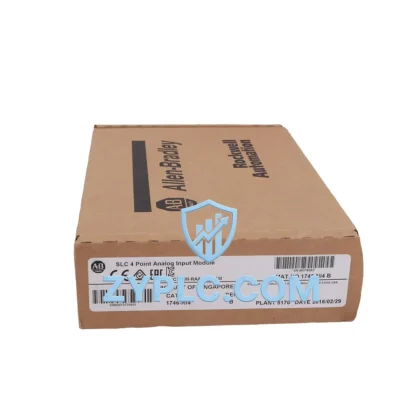
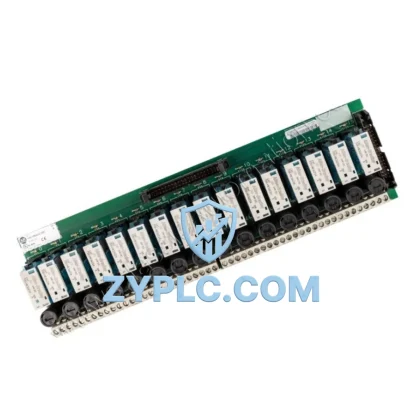
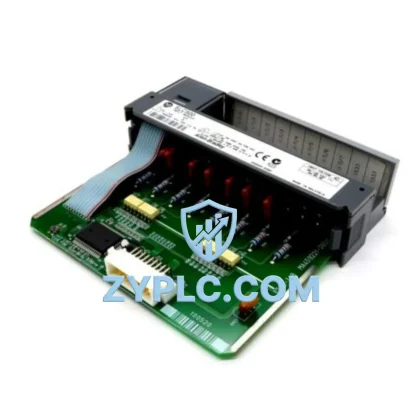
ABB PCD232A 3BHE022293R0101 System-Ready Comm I/O for Advant Architecture
The ABB PCD232A (part number 3BHE022293R0101) is a high-performance Communications I/O Module purpose-built for deployment within ABB’s Advant and Symphony Plus distributed control system (DCS) architectures. Rather than functioning as a standalone component, the PCD232A is engineered to serve as a critical node within a layered automation hierarchy — bridging the control layer, I/O layer, and communication network layer to deliver seamless signal routing, protocol translation, and real-time data exchange across the entire control system.
In modern industrial automation environments — spanning power generation, petrochemical processing, water treatment, metallurgy, mining, and advanced manufacturing — the integrity of the communication backbone is as important as the logic executed by the CPU itself. The PCD232A addresses this requirement by providing deterministic, low-latency communication pathways that ensure every field signal, process variable, and control command is transmitted with precision and reliability. Its design philosophy centers on system consistency: every module installed in the rack contributes to a unified control architecture that is easier to commission, maintain, and expand over its operational lifetime.
Backed by a 12-Month Warranty and full Contextual Integration support, the PCD232A is available through ZYPLC with verified provenance, pre-shipment functional testing, and expert technical assistance for system architects and maintenance engineers alike.
Architecture Specification Table
| Parameter |
Specification |
| Part Number |
3BHE022293R0101 |
| Model |
PCD232A |
| Brand |
ABB |
| Compatible Platform |
Advant Controller / Symphony Plus DCS |
| Module Function |
Communications I/O — Protocol Bridge & Signal Routing |
| System Role |
Communication Layer Node (Control ↔ Field I/O ↔ Network) |
| Communication Capability |
PROFIBUS, INSUM, MasterBus 300, or platform-native protocol (series-dependent) |
| Installation Environment |
Standard DIN-rail / Advant rack backplane mounting |
| Operating Temperature |
0°C to +55°C (standard industrial range) |
| Power Supply Compatibility |
24 VDC via backplane (rack-integrated power distribution) |
| Country of Origin |
Germany |
| Warranty |
12-Month Warranty (ZYPLC) |
| Contextual Integration |
Supported — full system architecture advisory available |
Coordinated Control System Design
The PCD232A does not operate in isolation. Its value is realized only when it is correctly positioned within a complete, coordinated control system architecture. In a typical Advant or Symphony Plus installation, the PCD232A occupies the communication layer — acting as the intermediary between the CPU module (such as the ABB PM866 or PM864A processor unit) and the distributed I/O subsystems that interface directly with field instrumentation.
At the control layer, the ABB PM866AK01 or PM864A CPU modules execute the application logic and rely on the PCD232A to maintain real-time communication with remote I/O stations. The PCD232A ensures that scan cycle integrity is preserved even as the system scales across multiple racks or remote cabinets. This is particularly important in large-scale process plants where the control network may span hundreds of meters and dozens of I/O nodes.
At the I/O layer, the PCD232A coordinates with analog input modules such as the ABB AI810 and AI820, digital output modules including the DO810 and DO820, and specialty modules like the AO810V2 for analog output. These modules are mounted on the same backplane or connected via the S800 I/O remote I/O bus, with the PCD232A managing the communication protocol that governs data transfer between the CPU and each I/O node.
At the network layer, the PCD232A interfaces with communication gateways and fieldbus bridges — including ABB CI854A PROFIBUS DP master modules and CI801 fieldbus communication interfaces — enabling the Advant system to communicate with third-party field devices, variable frequency drives, motor control centers, and intelligent electronic devices (IEDs) using standardized industrial protocols.
The power layer is served by dedicated ABB SD821 or SD822 power supply units, which provide stable 24 VDC to the backplane. The PCD232A draws its operating power from this backplane supply, and its low power consumption profile ensures that the overall rack power budget remains within safe operating margins even in fully populated configurations.
At the human-machine interface layer, operator workstations running ABB 800xA or Symphony Plus Control Builder software communicate with the PCD232A-equipped controllers to display real-time process data, alarm states, and trend histories. The communication module’s role in maintaining a stable, high-throughput data path between the controller and the HMI layer is essential for operator situational awareness and rapid fault response.
Finally, at the execution layer, the PCD232A supports the coordination of actuators, positioners, and drive systems — including ABB ACS880 series variable speed drives — by ensuring that control commands issued by the CPU are delivered to field devices with minimal latency and maximum reliability.
Application in Layered Automation Systems
The PCD232A finds application across a broad spectrum of industrial sectors where layered automation architectures are standard practice:
Power Generation & Utilities: In thermal, hydro, and combined-cycle power plants, the PCD232A supports turbine control systems, boiler management, and grid synchronization applications. Its deterministic communication behavior is critical in environments where millisecond-level response times directly affect plant safety and efficiency.
Petrochemical & Refining: Process plants operating continuous distillation columns, reactor systems, and heat exchanger networks rely on the PCD232A to maintain uninterrupted communication between the DCS controller and the hundreds of field transmitters and control valves that govern process conditions. The module’s compatibility with redundant communication architectures ensures that no single point of failure can disrupt production.
Water & Wastewater Treatment: Municipal and industrial water treatment facilities use Advant-based control systems to manage pumping stations, chemical dosing systems, and filtration processes. The PCD232A enables centralized SCADA integration while maintaining local control loop integrity at each treatment stage.
Mining & Metallurgy: In ore processing, smelting, and materials handling applications, the PCD232A supports the communication infrastructure that links conveyor control systems, crusher automation, and furnace management into a unified operational picture. Its robust industrial design tolerates the vibration, dust, and temperature extremes common in mining environments.
Packaging & Discrete Manufacturing: High-speed packaging lines and assembly systems benefit from the PCD232A’s ability to synchronize motion control signals, vision system outputs, and reject actuator commands across a shared communication backbone — ensuring that production throughput targets are met without sacrificing quality control.
Architecture Engineering FAQ
Q1: Is the PCD232A 3BHE022293R0101 compatible with both Advant Controller and Symphony Plus platforms?
The PCD232A is designed for ABB’s Advant Controller family and is also compatible with Symphony Plus systems that maintain backward compatibility with Advant hardware. Before installation, engineers should verify the firmware revision of the target CPU module (e.g., PM866 or PM864A) and confirm that the communication protocol configuration in the application software matches the PCD232A’s supported protocol set. ZYPLC’s technical team can assist with compatibility verification prior to shipment.
Q2: Can the PCD232A be used in a redundant communication architecture, and what companion modules are required?
Yes. The PCD232A supports redundant communication configurations when paired with appropriate redundancy modules and a dual-channel backplane arrangement. In a typical redundant setup, two PCD232A modules are installed in parallel, with the system automatically switching to the standby module in the event of a primary module fault. This configuration requires compatible redundancy coordination hardware — such as the ABB CI854AK01 or equivalent — and must be configured in the application software to enable automatic failover. ZYPLC can supply matched pairs of PCD232A modules with verified firmware consistency to support redundant deployments.
Q3: What does the 12-Month Warranty cover, and what support is available for installation and commissioning?
The 12-Month Warranty provided by ZYPLC covers manufacturing defects, functional failures under normal operating conditions, and firmware-related issues identified during the warranty period. Warranty claims are processed with a rapid replacement or repair turnaround to minimize system downtime. In addition to warranty coverage, ZYPLC offers pre-shipment functional testing, detailed installation documentation, and remote technical support for commissioning engineers. For complex system integration projects, our engineering team can provide architecture review services to ensure that the PCD232A is correctly configured within the broader control system context.
© 2026 ZYPLC. All rights reserved.
Original Source: https://zyplc.com
Contact: +86 19859288691 | [email protected]