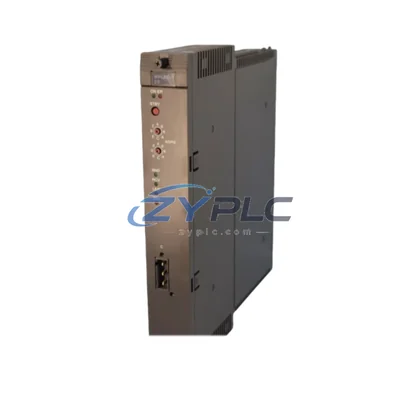
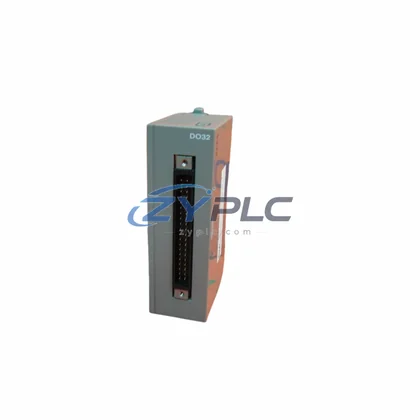
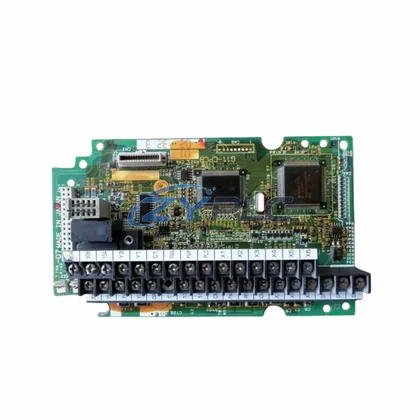
The Allen-Bradley 1738-IB16DM12 is a 16-point, 12V DC digital input module engineered for deployment within the ArmorPoint distributed I/O platform — a field-hardened, DIN-rail-mounted I/O system designed for harsh industrial environments where panel-free installation is essential. Within a layered automation architecture, this module occupies a critical position at the I/O layer, serving as the primary signal acquisition interface between field-level sensors and the control layer above. Its role is not simply to collect discrete signals — it is to ensure that every input state is accurately, reliably, and rapidly communicated to the controlling CPU, enabling deterministic process response across the entire control hierarchy.
In modern industrial control system design, the 1738-IB16DM12 is rarely deployed in isolation. It functions as a coordinated component within a broader ArmorPoint node assembly, where it shares a common backplane with output modules, analog modules, and communication adapters. This modular co-location approach reduces wiring complexity, shortens signal paths, and improves overall system diagnostics — all of which contribute to reduced commissioning time and lower long-term maintenance overhead. The module’s 12V DC input rating makes it particularly well-suited for sensor-dense applications where low-voltage field devices such as proximity switches, photoelectric sensors, and limit switches are the primary signal sources.
From a system architecture perspective, the 1738-IB16DM12 supports system integration — meaning its input data is not processed in isolation but is interpreted within the broader context of the control program running on the upstream CPU. This enables advanced interlocking logic, coordinated multi-axis sequencing, and condition-based maintenance triggers that span multiple I/O nodes and control layers simultaneously.
Product Specification Table
| Parameter |
Specification |
| System Role |
Distributed I/O — Digital Input Module (ArmorPoint Node) |
| Input Points |
16 Points, Discrete Digital Input |
| Input Voltage |
12V DC (Nominal) |
| Input Current |
Typically 4–8 mA per point |
| Communication Protocol |
DeviceNet (via ArmorPoint Adapter) |
| Backplane Interface |
ArmorPoint 1738 Series Backplane |
| Mounting |
DIN Rail (Panel-Free, IP67-rated enclosure) |
| Operating Temperature |
-20°C to +60°C |
| Protection Rating |
IP67 (Dust-tight and Water-resistant) |
| Indicators |
Per-point LED status indicators |
| Power Consumption |
Low — sourced from ArmorPoint power bus |
| Series Compatibility |
Allen-Bradley ArmorPoint 1738 Series |
| Platform Compatibility |
Rockwell Automation ControlLogix, CompactLogix, MicroLogix (via DeviceNet) |
| Warranty |
warranty terms confirmed during quotation (ZYPLC Supply Guarantee) |
System Compatibility Notes
The 1738-IB16DM12 achieves its full operational value when integrated into a complete ArmorPoint node alongside complementary modules and system components. A typical ArmorPoint node serving a machine control application might include the 1738-ADNX ArmorPoint DeviceNet Adapter as the communication gateway, which bridges the I/O node to the DeviceNet network and ultimately to the controlling CPU — commonly a 1756-L75 ControlLogix CPU or a 1769-L33ER CompactLogix Controller running the primary control program. The DeviceNet network itself may be managed through a 1756-DNB DeviceNet Bridge Module seated in the ControlLogix chassis, providing the network master function that polls all connected I/O nodes including the ArmorPoint assembly.
On the output side of the same ArmorPoint node, a 1738-OB16DM12 ArmorPoint 16-Point 12V DC Output Module may be paired with the 1738-IB16DM12 to provide a balanced input/output capability within a single field node — enabling local actuator control based on sensor feedback without routing signals back to a central panel. For applications requiring analog signal acquisition alongside discrete inputs, the 1738-IE4CM12 ArmorPoint 4-Channel Analog Input Module can be added to the same backplane, expanding the node’s sensing capability to include pressure transducers, temperature transmitters, and flow sensors.
Power distribution within the ArmorPoint node is managed through the 1738-EP24DC ArmorPoint Power Supply Module, which provides regulated 24V DC power to the backplane and connected I/O modules. In redundancy-critical applications, a secondary power feed can be configured to ensure continuous I/O availability even during primary power supply maintenance. At the human-machine interface layer, operator visualization is typically provided by a 2711P PanelView Plus 7 HMI Terminal, which displays real-time input states, alarm conditions, and process trends sourced from the same DeviceNet network that the 1738-IB16DM12 communicates through.
For applications requiring relay-isolated output switching in the same control cabinet, the 700-HLT1Z24 Allen-Bradley Relay Module may be used in conjunction with the ArmorPoint output modules to drive higher-current loads. Terminal connectivity between the ArmorPoint node and field wiring is typically managed through 1492-CABLE series pre-wired interface cables, which reduce field wiring errors and accelerate commissioning. Together, these components form a tightly integrated, architecturally consistent control node that maximizes system reliability, simplifies diagnostics, and supports long-term maintainability.
Industrial Application Notes
The 1738-IB16DM12 is deployed across a wide range of industrial sectors where distributed I/O, environmental ruggedness, and DeviceNet communication are required. In automotive manufacturing and general assembly line automation, the module is used to monitor part-present sensors, fixture clamps, safety interlocks, and conveyor position switches — all of which must be read reliably at high scan rates to maintain production throughput. The IP67 rating of the ArmorPoint platform makes it particularly suitable for wash-down zones and areas exposed to coolant mist or hydraulic fluid.
In water and wastewater treatment facilities, the 1738-IB16DM12 is used to monitor pump run/stop status, valve position feedback, level switch states, and flow switch signals distributed across large treatment basins and pump stations. The ability to mount ArmorPoint nodes directly in the field — without requiring a sealed enclosure — significantly reduces installation costs in these geographically distributed applications. In oil and gas processing and petrochemical plants, the module supports discrete input monitoring for emergency shutdown systems, pressure relief valve position feedback, and compressor status monitoring, where signal integrity and deterministic communication are non-negotiable requirements.
In mining and minerals processing, the 1738-IB16DM12 is used on conveyor systems, crusher control panels, and ore handling equipment, where vibration, dust, and temperature extremes demand a ruggedized I/O solution. For packaging and material handling applications, the module’s 16-point density allows a single ArmorPoint node to monitor an entire section of a packaging line — including product detection, reject confirmation, and accumulation zone status — reducing the number of nodes required and simplifying network topology. In power generation and distribution substations, the module supports breaker status monitoring, protection relay feedback, and auxiliary contact state acquisition within DeviceNet-based SCADA architectures.
Product Compatibility FAQ
Q1: Is the 1738-IB16DM12 compatible with both ControlLogix and CompactLogix platforms, and what is required for integration?
Yes. The 1738-IB16DM12 communicates via DeviceNet through an ArmorPoint adapter such as the 1738-ADNX. On the controller side, a DeviceNet scanner module — such as the 1756-DNB for ControlLogix or an equivalent CompactLogix DeviceNet interface — is required to establish the network connection. The module’s I/O data is then mapped into the controller’s I/O tree and accessed directly in the control program. No special firmware is required on the CPU side beyond standard DeviceNet configuration, which is performed using Rockwell Automation’s RSNetWorx for DeviceNet software.
Q2: Can the 1738-IB16DM12 be used in a redundant I/O architecture, and how is system availability maintained during module replacement?
The ArmorPoint platform supports hot-swap module replacement, meaning the 1738-IB16DM12 can be removed and replaced without powering down the entire node or disconnecting the DeviceNet network. In redundancy-critical applications, system designers typically implement dual-node architectures where critical input signals are wired to two separate ArmorPoint nodes on independent DeviceNet segments, with the control program performing cross-comparison of input states. This approach ensures that a single node failure does not result in loss of critical process visibility. The warranty terms confirmed during quotation provided by ZYPLC covers the replacement module, ensuring that spare inventory costs are predictable over the warranty period.
Q3: What commissioning steps are required when adding the 1738-IB16DM12 to an existing DeviceNet network, and how is long-term maintenance managed?
Commissioning the 1738-IB16DM12 involves assigning a unique DeviceNet node address (MAC ID) to the ArmorPoint adapter serving the node, configuring the I/O connection parameters in RSNetWorx for DeviceNet, and verifying that the module’s input data appears correctly in the controller’s I/O tree during online testing. LED indicators on each input point provide immediate visual confirmation of signal state during commissioning. For long-term maintenance, ZYPLC recommends maintaining at least one spare 1738-IB16DM12 module per production line to minimize unplanned downtime. All modules supplied by ZYPLC include a warranty terms confirmed during quotation and are sourced from verified supply channels, ensuring authenticity and long-term parts availability for ongoing maintenance programs.