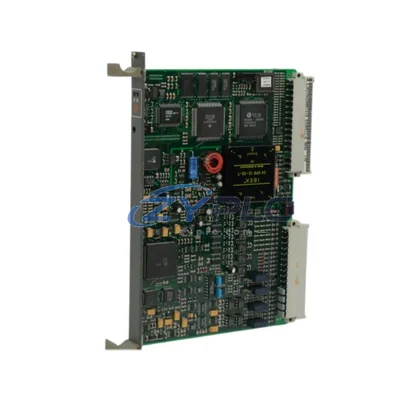
Allen-Bradley 1747-DCM Industrial Network Interface for SLC 500 Systems: Bridging the Industrial Data Link
In modern smart factory environments, seamless data flow between field devices and supervisory systems is no longer optional — it is the foundation of operational efficiency. The Allen-Bradley 1747-DCM Direct Communication Module is engineered to serve as a critical industrial network interface within the SLC 500 control platform, enabling reliable, high-integrity communication across the Data Highway Plus (DH+) network. Whether your facility relies on distributed PLC architectures, remote I/O expansion, or centralized SCADA oversight, the 1747-DCM delivers the connectivity backbone that keeps your production data moving in real time.
The 1747-DCM integrates directly into the SLC 500 chassis, providing a dedicated DH+ communication port that connects the SLC 500 processor to other Allen-Bradley controllers, programming terminals, HMI panels, and upstream SCADA systems without consuming the processor’s native communication resources. This architecture ensures that time-critical ladder logic execution is never compromised by network traffic demands — a fundamental requirement in high-throughput manufacturing, process control, and discrete automation applications.
Compatibility & Integration Notes
| Specification |
Details |
| Primary Protocol |
Data Highway Plus (DH+) |
| Interface Type |
Direct Communication Module (DCM), SLC 500 Chassis-Mount |
| Transmission Rate |
57.6 Kbps / 115.2 Kbps (DH+ selectable) |
| Network Compatibility |
DH+, DH-485, Remote I/O (via gateway configuration) |
| System Application |
SLC 500 Series, PLC-5 Interconnect, RSLinx, RSLogix 500, FactoryTalk View |
| SCADA / HMI Integration |
Compatible with FactoryTalk View SE/ME, Wonderware, Ignition SCADA |
| Topology Support |
Multi-drop DH+ trunk, up to 64 nodes per network segment |
| Warranty |
Warranty and support terms confirmed before quote — All units ship tested and verified |
Connected Automation Data Flow
The value of the 1747-DCM becomes most apparent when you trace the complete data path from field sensor to enterprise dashboard. At the field level, analog and digital sensors — including proximity switches, pressure transmitters, and flow meters — feed signal data into remote I/O adapters such as the Allen-Bradley 1747-ASB Remote I/O Adapter, which aggregates discrete and analog inputs before transmitting structured data packets upstream via the Remote I/O link. The SLC 500 processor, housed in a 1746-A13 or 1746-A7 chassis, processes this incoming data and executes the control logic that governs actuators, motor starters, and variable frequency drives on the plant floor.
Once the SLC 500 processor has processed field data, the 1747-DCM takes over as the network communication engine, placing that data onto the DH+ trunk for consumption by peer controllers and supervisory systems. In multi-controller architectures, a PLC-5/40 or PLC-5/60 acting as a network master can poll multiple SLC 500 nodes simultaneously, coordinating production sequences across assembly lines, packaging stations, and material handling systems. The DH+ network’s deterministic token-passing protocol ensures that message delivery is predictable and collision-free — a critical requirement in safety-sensitive and time-synchronized production environments.
At the HMI layer, operator panels such as the Allen-Bradley PanelView Plus 700 or PanelView Plus 1000 connect to the DH+ network to display real-time process variables, alarm states, and production counts. Operators can acknowledge alarms, adjust setpoints, and initiate recipe changes directly from the HMI, with all commands routed through the DH+ link to the SLC 500 processor via the 1747-DCM. This bidirectional data flow eliminates the need for manual data entry and reduces the risk of operator error in high-speed production environments.
For facilities that require integration between legacy DH+ networks and modern Ethernet-based SCADA infrastructure, the 1761-NET-ENI Ethernet Network Interface or a 1784-PKTX DH+/ControlNet communication card can serve as a protocol bridge, translating DH+ messages into EtherNet/IP packets for consumption by FactoryTalk View SE servers, Ignition SCADA gateways, or MES platforms. This hybrid architecture allows manufacturers to preserve their existing SLC 500 and DH+ investments while progressively migrating supervisory systems to modern IP-based infrastructure — a cost-effective path to Industry 4.0 connectivity without a full system replacement.
Variable frequency drives, such as the Allen-Bradley PowerFlex 40 or PowerFlex 70, can be integrated into the same control network through DeviceNet or hardwired I/O connections back to the SLC 500 chassis, with drive status, speed references, and fault codes all visible through the SCADA layer via the 1747-DCM’s DH+ link. This end-to-end visibility — from drive fault to SCADA alarm to maintenance work order — is the operational intelligence that smart factories depend on to minimize downtime.
Solving Data Isolation in Industrial Sites
One of the most persistent challenges in legacy industrial environments is data isolation — the condition where valuable process data is trapped inside individual controllers, unable to reach the supervisory systems that need it for production optimization, predictive maintenance, and regulatory compliance. The Allen-Bradley 1747-DCM directly addresses this challenge by providing a dedicated, high-reliability DH+ communication channel that connects the SLC 500 to the broader plant network without disrupting the processor’s scan cycle.
In facilities where multiple SLC 500 controllers manage different production zones — such as mixing, filling, capping, and labeling in a food and beverage plant — the 1747-DCM enables peer-to-peer messaging between controllers, allowing production data to flow laterally across the plant floor without routing through a central server. This distributed communication model reduces network latency, eliminates single points of failure, and ensures that production continues even if the SCADA server experiences a temporary outage.
For remote monitoring applications, the DH+ network supported by the 1747-DCM can be extended through serial gateways and modem interfaces, enabling maintenance engineers to connect remotely via RSLinx Classic or RSLogix 500 for online diagnostics, program uploads, and fault analysis — without requiring physical access to the control panel. This remote diagnostic capability is particularly valuable in geographically distributed facilities such as water treatment plants, oil and gas pump stations, and power substations, where on-site visits are costly and time-consuming.
Production line transparency is another key benefit. By connecting all SLC 500 nodes to a common DH+ trunk via 1747-DCM modules, plant managers gain a unified view of OEE metrics, cycle times, reject rates, and energy consumption across all production zones — data that was previously siloed in individual controllers and accessible only through local HMI panels. This transparency enables data-driven decisions about maintenance scheduling, production sequencing, and capacity planning.
System expansion is straightforward with the 1747-DCM architecture. As production requirements grow, additional SLC 500 nodes can be added to the DH+ network without disrupting existing communication. The DH+ protocol supports up to 64 nodes per segment, providing ample headroom for future expansion. And because the 1747-DCM occupies a standard SLC 500 chassis slot, it can be installed in any 1746-A4, 1746-A7, or 1746-A13 chassis without hardware modification.
Industrial Connectivity FAQ
Q: What is the communication latency of the 1747-DCM on a DH+ network?
A: The 1747-DCM operates on the DH+ token-passing protocol, which provides deterministic, low-latency communication. At 57.6 Kbps, typical message round-trip times are under 10 milliseconds for small data packets on a lightly loaded network. At 115.2 Kbps, latency is further reduced, making the 1747-DCM suitable for time-sensitive data exchange between SLC 500 controllers and HMI/SCADA systems.
Q: Is the 1747-DCM compatible with modern SCADA platforms like Ignition or FactoryTalk View SE?
A: Yes. The 1747-DCM connects the SLC 500 to the DH+ network, which is accessible from modern SCADA platforms via RSLinx Classic or RSLinx Enterprise acting as an OPC server. Ignition SCADA, FactoryTalk View SE, and Wonderware System Platform all support OPC DA/UA connections to RSLinx, enabling full read/write access to SLC 500 data tags through the 1747-DCM communication link.
Q: How does the 1747-DCM handle network stability in electrically noisy industrial environments?
A: The DH+ physical layer uses a shielded twisted-pair cable with differential signaling, providing strong immunity to electromagnetic interference (EMI) common in industrial environments with variable frequency drives, welding equipment, and high-current motor starters. The 1747-DCM’s hardware design meets Allen-Bradley’s industrial environmental specifications, including operating temperature ranges of 0–60°C and vibration resistance suitable for panel-mount installations near rotating machinery.
Q: What warranty and testing standards apply to the 1747-DCM units supplied by ZYPLC?
A: All 1747-DCM units supplied by ZYPLC are covered by a warranty and support terms confirmed before quote from the date of shipment. Each unit undergoes pre-shipment functional testing to verify communication port integrity, DH+ network participation, and chassis interface compatibility. Units are sourced from verified supply channels and inspected for authenticity and condition prior to dispatch. RFQ-confirmed units are available for same-week shipment globally.