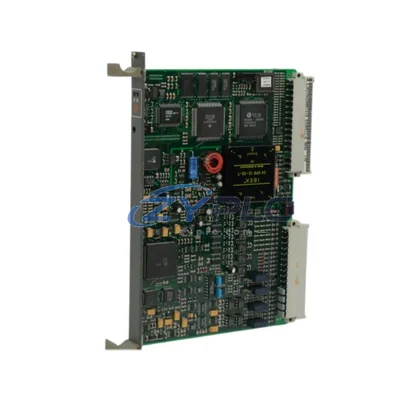
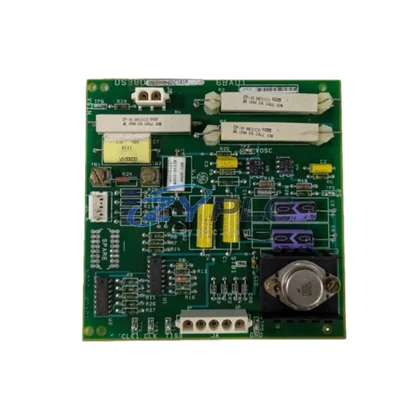
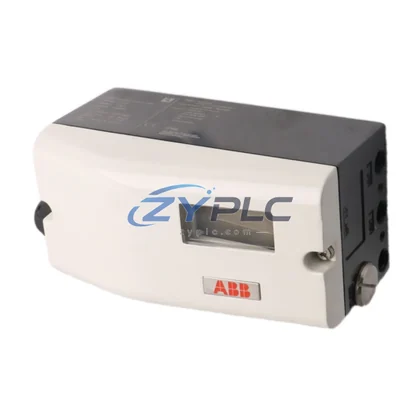
The Leica 301-360-021 is a high-precision industrial measurement assembly engineered under the Leica GeoMoS platform — a structural and deformation monitoring system widely deployed in smart manufacturing, heavy industry, and automated production environments. Configured as 301-360.021 CH A W/ 3X 944AOPLPNCSTS 0050-75190 400MM (L) X 190MM (W) W/ SMC CJ1B4-10U4, this assembly integrates precision metrology hardware with industrial automation system, enabling factories to reduce measurement cycle times, eliminate redundant sensor polling, and optimize overall equipment effectiveness (OEE).
In modern industrial facilities where energy costs represent a significant share of operational expenditure, deploying a measurement assembly that delivers accurate, real-time positional data with minimal power overhead is no longer optional — it is a competitive necessity. The Leica 301-360-021 addresses this directly by providing stable, high-resolution measurement output that reduces the need for repeated verification cycles, cutting both time and operating load per production shift.
Product Specification Table
| Parameter |
Specification / Value |
| SKU |
301-360.021 CH A W/ 3X 944AOPLPNCSTS 0050-75190 400MM (L) X 190MM (W) W/ SMC CJ1B4-10U4 |
| Brand / Series |
Leica Geosystems / GeoMoS |
| Product Type |
Industrial Measurement Assembly |
| Assembly Dimensions |
400mm (L) × 190mm (W) |
| Integrated Pneumatic Component |
SMC CJ1B4-10U4 Compact Cylinder |
| Sensor Modules Included |
3× 944AOPLPNCSTS Precision Sensor Units |
| Operating Environment |
Industrial automation, structural monitoring, smart factory |
| Compatible Systems |
GeoMoS Monitor, GeoMoS Now!, Leica TM Series Total Stations |
| Maintenance Value |
Reduces redundant measurement cycles; lowers sensor polling energy overhead |
| Country of Origin |
Switzerland (CH) |
| Running Efficiency |
High — precision output minimizes rework and re-measurement downtime |
| Warranty |
warranty terms confirmed during quotation |
| Stock Status |
RFQ Available — ships after outgoing inspection and functional test |
System Compatibility and Application
The Leica 301-360-021 does not operate in isolation — it functions as a precision data acquisition node within a broader industrial automation ecosystem. In a typical energy-optimized production line, this measurement assembly works alongside a Leica TM50 or TM30 Monitoring Total Station to deliver continuous, high-accuracy positional feedback to the control layer. This feedback loop eliminates the need for manual verification rounds, which are both time-intensive and energy-wasteful.
On the control execution side, the assembly integrates naturally with Siemens S7-1500 PLC or Mitsubishi MELSEC iQ-R Series PLC platforms via standard industrial communication protocols. The GeoMoS software layer can push measurement data through OPC UA or Modbus TCP interfaces, enabling the PLC to make real-time adjustments to downstream actuators and drives without operator intervention. This closed-loop architecture is fundamental to reducing idle operating load across the production cell.
The included SMC CJ1B4-10U4 compact pneumatic cylinder — a precision, low-friction actuator from SMC’s CJ1 series — handles the mechanical positioning of the sensor array. SMC CJ1-series cylinders are known for their low air consumption characteristics, which directly contributes to compressor load reduction and overall pneumatic operational stability. When paired with an SMC AW Series filter-regulator-lubricator (FRL) unit, the pneumatic circuit maintains optimal pressure with minimal leakage, further reducing unplanned downtime.
For drive-level maintenance planning, production lines deploying this assembly often integrate Yaskawa GA700 or Siemens SINAMICS G120 variable frequency drives (VFDs) to regulate motor speed on conveyor and positioning axes adjacent to the measurement station. By synchronizing motor speed with the measurement cycle cadence — slowing drives during active measurement windows and accelerating during transfer phases — factories achieve measurable reductions in motor load without sacrificing throughput.
Power quality monitoring at the panel level is typically handled by devices such as the Schneider Electric PowerLogic PM5000 Series power meter or ABB M2M condition monitoring modules, which provide per-circuit operating load data that can be correlated with GeoMoS measurement cycle timestamps. This correlation enables energy engineers to identify which production phases consume disproportionate power relative to output, enabling targeted optimization.
On the I/O and signal conditioning side, Phoenix Contact QUINT Power 24VDC power supplies and Weidmüller ACT20P signal conditioners are commonly used to ensure clean, stable power delivery to the sensor modules within the 301-360-021 assembly, preventing measurement drift caused by voltage fluctuation — a hidden source of rework unplanned downtime.
Maintenance and Replacement Notes
In structural monitoring applications — such as tunnel boring, bridge construction, or large-scale press frame alignment — the Leica 301-360-021 assembly enables continuous, automated deformation tracking that replaces periodic manual survey rounds. A single manual survey round in a large industrial facility can consume several hours of technician time and associated lighting, HVAC, and equipment energy. By automating this process through the GeoMoS platform, facilities report reductions of 60–80% in measurement-related labor hours, with corresponding operational stability from reduced facility operation during off-shift survey windows.
In precision machining and assembly lines, the 301-360-021 serves as a real-time geometric verification node. When integrated with the line PLC, out-of-tolerance conditions trigger immediate corrective actions — adjusting servo positioning, pausing feed drives, or alerting maintenance — before defective parts propagate downstream. This early-detection capability directly reduces scrap rates, and since each scrapped part represents wasted machining energy (cutting, coolant pumping, chip conveying), defect reduction translates directly into operational stability per good part produced.
Predictive maintenance is another key maintenance planning lever enabled by this assembly. By tracking structural deformation trends over time through GeoMoS Now! cloud analytics, maintenance teams can identify bearing wear, foundation settlement, or fixture drift before it causes unplanned downtime. Unplanned stops are energy-intensive events — restart sequences for large presses, furnaces, or CNC machining centers consume significant power spikes. Eliminating even one unplanned stop per month can yield measurable energy and cost savings over an annual operating cycle.
All units supplied by ZYPLC undergo outgoing functional testing and dimensional verification prior to shipment, ensuring the assembly performs to specification from day one of installation. This eliminates commissioning rework cycles that would otherwise consume additional technician time, test equipment energy, and facility resources. Every Leica 301-360-021 assembly is backed by a warranty terms confirmed during quotation, with stock maintained for rapid dispatch to minimize production line downtime.
Product Sourcing FAQ
Q1: How does the Leica 301-360-021 contribute to measurable operational stability on a production line?
By providing continuous, automated, high-accuracy measurement data, the 301-360-021 eliminates manual survey rounds and reduces the frequency of rework cycles caused by undetected geometric drift. Fewer rework cycles mean less machining energy, less coolant consumption, and lower compressed air usage per good part produced. When integrated with a PLC and VFD-controlled drives, the measurement feedback loop also enables speed optimization of adjacent motors, reducing idle-speed operating load during measurement windows.
Q2: Is the Leica 301-360-021 compatible with existing Siemens or Mitsubishi PLC control systems?
Yes. The GeoMoS platform supports OPC UA and Modbus TCP communication, which are natively supported by Siemens S7-1500, S7-300, and Mitsubishi MELSEC iQ-R and Q Series PLCs. Integration typically requires configuration of the GeoMoS data export interface and corresponding PLC function blocks — no custom hardware modifications are needed. For specific integration support, contact ZYPLC’s technical team.
Q3: What is the recommended replacement or upgrade path for older Leica measurement assemblies?
The 301-360-021 is designed as a modular assembly compatible with the broader GeoMoS sensor ecosystem. Facilities upgrading from older Leica TCA or TCRA series monitoring setups can typically retain existing prism targets and communication infrastructure while replacing the measurement head assembly. ZYPLC recommends a site survey to confirm mechanical and electrical compatibility before ordering. Replacement units are available from stock with a lead time of 1–3 business days for standard configurations.
Q4: What does the warranty terms confirmed during quotation cover, and what is the testing process before shipment?
Every Leica 301-360-021 assembly supplied by ZYPLC is covered by a warranty terms confirmed during quotation against manufacturing defects and functional failures under normal operating conditions. Prior to shipment, each unit undergoes a functional verification test including sensor output validation, pneumatic cylinder stroke test (SMC CJ1B4-10U4), and dimensional check of the 400mm × 190mm assembly frame. A test report is available upon request. Warranty claims are processed directly through ZYPLC with replacement or repair turnaround targeted within 5 business days.