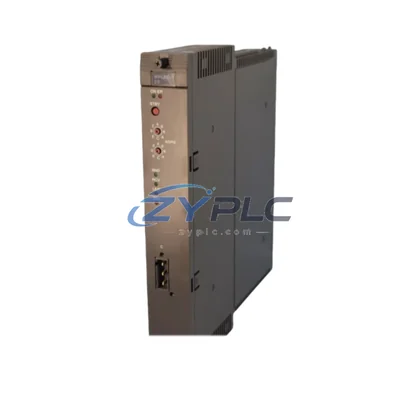
Allen-Bradley 1756-BA1: Industrial Power Backbone for ControlLogix Data Link Integrity
In a modern smart factory, uninterrupted data flow between field devices, PLC controllers, remote I/O modules, HMI panels, SCADA systems, and upper-level MES platforms is the foundation of operational continuity. The Allen-Bradley 1756-BA1 ControlLogix Battery Module plays a critical — yet often underestimated — role in this industrial data chain. By maintaining the memory retention of the ControlLogix 1756 chassis during power interruptions, the 1756-BA1 ensures that ladder logic programs, communication configurations, tag databases, and network parameters remain intact, preventing costly re-initialization cycles and downtime across the entire automation network.
Compatibility & Integration Notes
| Attribute |
Specification |
| Compatible Platform |
Allen-Bradley ControlLogix 1756 Series |
| Supported Protocols |
EtherNet/IP, ControlNet, DeviceNet, DH+, Remote I/O |
| Interface Type |
Direct chassis-mount battery module |
| Memory Retention |
Maintains SRAM program and data memory during power loss |
| Network Compatibility |
Compatible with 1756-L6x, 1756-L7x, 1756-L8x processor families |
| System Application |
PLC memory backup, SCADA gateway protection, HMI tag retention |
| Typical Backup Duration |
Up to 1.5 years (varies by processor and environment) |
| Warranty |
Warranty and support terms confirmed before quote — Tested before shipment |
Connected Automation Data Flow
The 1756-BA1 sits at the heart of the ControlLogix chassis, directly supporting the processor modules — such as the 1756-L73 and 1756-L74 — that orchestrate data exchange across the entire plant floor. When a ControlLogix processor loses main power, the 1756-BA1 immediately takes over to preserve the active program, including all EtherNet/IP communication configurations that link the PLC to upstream SCADA servers and downstream field devices.
Consider a typical smart factory data flow: sensors and actuators on the production line communicate through 1756-IB16 digital input modules and 1756-OB16E digital output modules, feeding real-time signals into the ControlLogix backplane. The processor aggregates this data and transmits it via EtherNet/IP to FactoryTalk View SE HMI stations and SCADA platforms for operator visualization and alarm management. Simultaneously, 1756-EN2T EtherNet/IP communication modules bridge the ControlLogix rack to the plant-wide Ethernet backbone, enabling remote diagnostics and OPC-UA data publishing to edge gateways and MES systems.
In multi-rack architectures, 1756-CN2 ControlNet bridge modules extend the data network across physical distances, connecting remote I/O racks — often populated with 1794-AENT FLEX I/O adapters — back to the main processor. Variable frequency drives such as the PowerFlex 755 receive speed and torque commands over DeviceNet or EtherNet/IP, with drive status and fault data flowing back to the SCADA layer for predictive maintenance analysis. Throughout all of these communication pathways, the 1756-BA1 battery module acts as the silent guardian: if a power event occurs at any point in this chain, the processor’s memory — including all network node addresses, I/O mapping tables, and communication parameters — is preserved without interruption, allowing the system to resume full operation the moment power is restored.
For facilities running FactoryTalk Historian or third-party SCADA platforms, the integrity of the ControlLogix tag database is paramount. A corrupted or lost program caused by battery failure can mean hours of re-commissioning time, reconfiguration of EtherNet/IP scanner lists, and re-mapping of remote I/O modules — all of which translate directly into production losses. The 1756-BA1 eliminates this risk, making it an essential component in any ControlLogix-based industrial network.
Solving Data Isolation in Industrial Sites
One of the most persistent challenges in industrial automation is data isolation — the condition where field devices, PLCs, and upper-level systems operate in silos due to protocol incompatibility, network instability, or hardware failure. The 1756-BA1 addresses a foundational layer of this problem by ensuring that the ControlLogix processor — the central node in the EtherNet/IP, ControlNet, and DeviceNet communication hierarchy — never loses its configuration state.
When battery modules fail or are neglected, the consequences cascade through the entire data architecture. Protocol gateway configurations stored in the processor memory are lost, severing the bridge between legacy serial devices and modern Ethernet networks. Remote I/O modules go offline as their scanner configurations disappear. HMI tag bindings break, leaving operators without real-time visibility into production status. SCADA alarm thresholds and historian connection parameters must be manually re-entered, delaying recovery and increasing the risk of human error.
By maintaining a proactive battery replacement schedule using the 1756-BA1, industrial sites can ensure continuous protocol translation, stable network transmission, real-time data availability, and uninterrupted remote monitoring — all of which are prerequisites for achieving true production line transparency and system scalability. Whether expanding the ControlLogix network to accommodate new production cells, integrating additional remote I/O drops, or connecting new edge computing nodes for AI-driven analytics, a reliable battery backup strategy is the first step toward a resilient, future-ready smart factory architecture.
Industrial Connectivity FAQ
Q1: Will a failing 1756-BA1 battery affect EtherNet/IP communication performance?
A: A failing battery does not directly degrade real-time EtherNet/IP throughput during normal operation. However, upon power loss, a depleted 1756-BA1 will cause the processor to lose its program and all communication configurations — including EtherNet/IP scanner lists, node addresses, and I/O mapping tables — resulting in a full system restart and extended recovery time. Proactive replacement prevents this scenario entirely.
Q2: Is the 1756-BA1 compatible with all ControlLogix processor generations?
A: The 1756-BA1 is compatible with a wide range of ControlLogix processors, including the 1756-L6x, 1756-L7x, and select 1756-L8x series. Always verify compatibility against the specific processor catalog number and firmware revision before installation. Our technical team can assist with compatibility confirmation prior to shipment.
Q3: How do I know when the 1756-BA1 battery needs replacement?
A: The ControlLogix processor continuously monitors battery status and will generate a low-battery warning in the FactoryTalk Diagnostics log and on the processor’s status LED. SCADA systems integrated via EtherNet/IP can also be configured to receive this alarm tag, enabling remote notification before battery failure occurs. We recommend replacing the battery every 1–2 years as part of a scheduled preventive maintenance program.
Q4: What quality assurance does ZYPLC provide for the 1756-BA1?
A: Every 1756-BA1 unit supplied by ZYPLC undergoes pre-shipment functional testing to verify battery voltage, capacity, and connector integrity. Warranty terms are confirmed during quotation. We maintain RFQ-based sourcing support for fast global delivery, with full traceability documentation available upon request.