Allen-Bradley 1756-DMA31 Industrial Network Interface for ControlLogix Systems: Bridging the Industrial Data Link in Smart Factory Environments
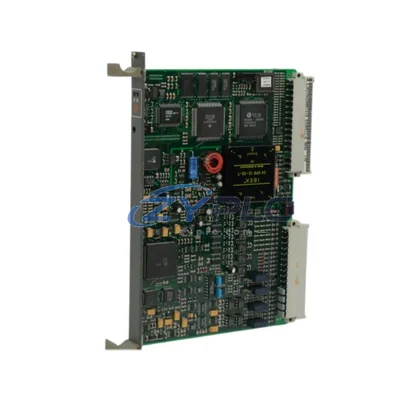
The Allen-Bradley 1756-DMA31 SynchLink Drive Interface Module is a high-performance industrial communication gateway engineered for seamless integration within Rockwell Automation’s ControlLogix platform. Designed to serve as the critical data bridge between drive systems and upper-level control networks, the 1756-DMA31 enables synchronized, real-time data exchange across complex automation architectures — from field-level sensors and variable frequency drives to SCADA systems, HMI panels, and enterprise MES platforms.
In modern smart factory deployments, data isolation between drive systems and control networks remains one of the most persistent challenges. The 1756-DMA31 directly addresses this by leveraging the SynchLink high-speed fiber-optic communication protocol, delivering deterministic, low-latency data transfer between ControlLogix backplane modules and connected PowerFlex drive systems. This ensures that motion control commands, drive status feedback, fault diagnostics, and energy consumption data flow continuously and reliably across the production network — without bottlenecks or protocol mismatches.
Compatibility & Integration Notes
| Specification |
Details |
| Primary Protocol |
SynchLink (High-Speed Fiber-Optic) |
| Interface Type |
ControlLogix Backplane Module (1756 Chassis) |
| Communication Speed |
High-speed deterministic synchronous data transfer |
| Network Compatibility |
ControlLogix, CompactLogix (via gateway), EtherNet/IP upstream |
| Drive Compatibility |
PowerFlex 700S, PowerFlex 700H, PowerFlex 755 (SynchLink-enabled) |
| System Application |
Motion Control, Drive Synchronization, SCADA Integration, Remote Diagnostics |
| Mounting |
1756 ControlLogix Chassis Slot |
| Warranty |
Warranty and support terms confirmed before quote | Pre-shipment functional testing included |
Connected Automation Data Flow
The 1756-DMA31 sits at the heart of a layered industrial communication architecture. At the field level, PowerFlex 700S and PowerFlex 755 variable frequency drives connect to the module via SynchLink fiber-optic cabling, transmitting real-time torque references, speed feedback, and fault status at deterministic cycle rates. This eliminates the analog signal degradation and timing jitter that plague traditional hardwired drive control systems.
Within the ControlLogix chassis, the 1756-DMA31 operates alongside the 1756-L85E ControlLogix 5580 controller, sharing backplane bandwidth with EtherNet/IP communication modules such as the 1756-EN2T. This architecture allows the PLC controller to simultaneously manage drive synchronization via SynchLink while publishing process data upstream to Rockwell’s FactoryTalk View SE SCADA/HMI platform over EtherNet/IP — creating a unified, transparent data pipeline from motor shaft to control room dashboard.
For remote I/O expansion, the 1756-DMA31 system integrates naturally with 1734 POINT I/O modules distributed across the production line, feeding discrete and analog signals — from proximity sensors, pressure transmitters, and temperature sensors — into the same ControlLogix data table. This consolidated data environment enables FactoryTalk Historian to log drive performance trends, energy consumption, and process variables simultaneously, supporting predictive maintenance and OEE analysis without additional middleware.
At the network edge, Stratix 5700 managed industrial Ethernet switches provide the backbone connectivity between ControlLogix controllers, remote I/O drops, and plant-level servers. When integration with third-party systems is required — such as Siemens SIMATIC S7 PLCs or Modbus RTU legacy devices — a 1756-MVI56E communication module or a dedicated protocol gateway can be deployed alongside the 1756-DMA31 in the same chassis, enabling seamless cross-protocol data bridging without disrupting the SynchLink drive network.
For facilities running Wonderware System Platform or Ignition SCADA, the EtherNet/IP data published by the ControlLogix system is natively consumable, allowing operators to visualize drive speed, current draw, fault codes, and synchronization status on HMI panels in real time. Alarm management, trend logging, and remote diagnostic access are all supported through this integrated data chain — reducing mean time to repair (MTTR) and enabling proactive maintenance scheduling.
Solving Data Isolation in Industrial Sites
Many industrial facilities operating multi-drive production lines face a common set of challenges: drives that speak proprietary protocols, control systems that cannot natively interpret drive-level data, and SCADA platforms that receive only high-level status signals rather than granular performance metrics. The result is data isolation — islands of operational intelligence that cannot be correlated, analyzed, or acted upon in real time.
The 1756-DMA31 resolves this by providing a native, high-speed communication path between PowerFlex drive systems and the ControlLogix control plane. Because SynchLink operates at the backplane level with deterministic timing, drive synchronization commands and feedback data are exchanged within microseconds — far faster than any fieldbus or industrial Ethernet polling cycle. This is critical for applications such as coordinated multi-drive winding lines, extruder systems, and high-speed packaging machinery where drive-to-drive timing accuracy directly impacts product quality.
Beyond synchronization, the 1756-DMA31 enables full drive parameter visibility within the ControlLogix tag database. Maintenance engineers can access output frequency, DC bus voltage, motor current, drive temperature, and fault history directly from the PLC — without requiring a separate drive configuration tool or physical access to the drive cabinet. This data can be forwarded to FactoryTalk AssetCentre for audit logging, or to a cloud-connected edge gateway for remote monitoring from any location.
For facilities undergoing digital transformation, the 1756-DMA31 provides a scalable foundation. Additional SynchLink nodes can be added to the fiber ring as production lines expand, and the ControlLogix platform’s modular chassis design allows communication modules to be added or reconfigured without system downtime. This makes the 1756-DMA31 a long-term investment in industrial connectivity infrastructure — not just a point solution for today’s drive network.
Every 1756-DMA31 unit supplied by ZYPLC undergoes pre-shipment functional testing to verify communication integrity, backplane compatibility, and SynchLink link establishment. Units are shipped with a warranty and support terms confirmed before quote covering hardware defects and communication failures, with technical support available for integration assistance and fault diagnosis.
Industrial Connectivity FAQ
Q1: What communication latency can be expected with the 1756-DMA31 SynchLink interface?
The SynchLink protocol used by the 1756-DMA31 is a deterministic, synchronous fiber-optic communication system designed for microsecond-level cycle times. Unlike EtherNet/IP or DeviceNet, which are subject to network load variability, SynchLink provides consistent, jitter-free data transfer — making it suitable for high-speed coordinated drive applications where timing accuracy is critical.
Q2: Is the 1756-DMA31 compatible with all PowerFlex drive models?
The 1756-DMA31 is specifically designed for SynchLink-capable PowerFlex drives, including the PowerFlex 700S, PowerFlex 700H, and SynchLink-enabled variants of the PowerFlex 755 series. Compatibility with other drive models requires verification of SynchLink port availability on the target drive. For integration with non-SynchLink drives, alternative communication modules such as the 1756-MVI56E or a dedicated EtherNet/IP adapter may be required.
Q3: Can the 1756-DMA31 be integrated into an existing EtherNet/IP-based SCADA or HMI system?
Yes. The 1756-DMA31 operates within the ControlLogix backplane and publishes drive data to the PLC’s tag database. This data is then accessible to any EtherNet/IP-connected SCADA or HMI system — including FactoryTalk View SE, Wonderware, and Ignition — via the 1756-EN2T or similar EtherNet/IP bridge module in the same chassis. No additional protocol conversion is required for EtherNet/IP-based upper systems.
Q4: What does the warranty and support terms confirmed before quote cover, and is pre-shipment testing performed?
Every 1756-DMA31 unit supplied by ZYPLC is subject to pre-shipment functional testing, including backplane communication verification, SynchLink port integrity check, and firmware version confirmation. The warranty and support terms confirmed before quote covers hardware defects, communication failures attributable to module malfunction, and component failures under normal operating conditions. Technical support for installation, configuration, and fault diagnosis is available throughout the warranty period.