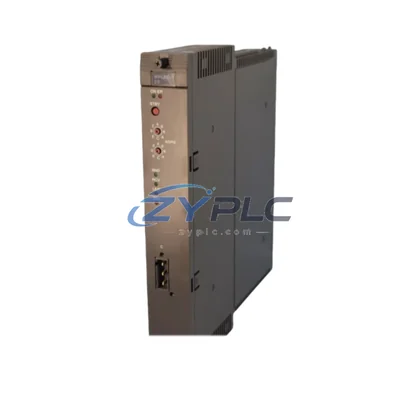
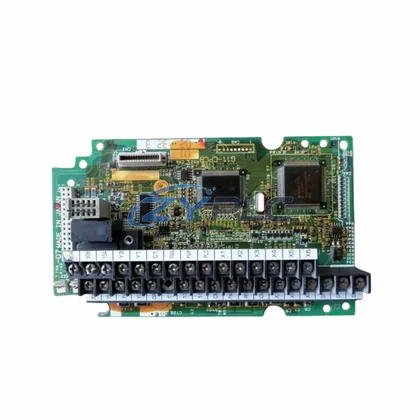
The Allen-Bradley 1761-L32AWA is a compact, high-reliability MicroLogix 1000 series programmable logic controller engineered for discrete manufacturing environments where energy efficiency, deterministic cycle control, and minimal downtime are non-negotiable operational priorities. With 20 AC inputs and 12 relay outputs packed into a DIN-rail-mountable housing, this controller delivers the processing density and I/O flexibility that modern production lines demand — without the energy overhead of oversized control platforms.
In facilities where uptime and replacement lead time matter, the 1761-L32AWA enables engineers to implement lean control architectures that eliminate idle-state unplanned downtime. Its low-power CPU design ensures that even in continuous 24/7 operation, the controller contributes minimally to the facility’s overall electrical load. When integrated into a broader maintenance planning strategy alongside power monitoring devices such as the Allen-Bradley PowerMonitor 500 or PowerMonitor 1000, the 1761-L32AWA becomes a key node in a closed-loop energy feedback system — enabling real-time correlation between machine cycle states and power consumption data.
Product Specification Table
| Parameter |
Specification |
| SKU / Part Number |
1761-L32AWA |
| Series |
MicroLogix 1000 |
| Brand |
Allen-Bradley (Rockwell Automation) |
| I/O Configuration |
20 AC Inputs / 12 Relay Outputs |
| Power Supply Input |
120/240V AC |
| Electrical / System Notes |
≤ 30W (base unit, full I/O load) |
| Scan Time Efficiency |
Fast deterministic scan for optimized line throughput |
| Compatible Programming Software |
RSLogix 500 / Studio 5000 Logix Designer (legacy mode) |
| Communication Protocol |
DH-485, RS-232 (DF1) |
| Compatible Systems |
MicroLogix 1100, SLC 500, PanelView 300/550 HMI, PowerFlex 4/40 VFD |
| Operating Temperature |
0°C to 60°C |
| Application Environment |
Discrete manufacturing, conveyor control, pump/motor sequencing, HVAC automation |
| Maintenance Value |
Eliminates over-specification waste; enables demand-based motor sequencing |
| Origin |
United States |
| Warranty |
Warranty and support terms confirmed before quote |
| Availability |
Confirmed via RFQ before quotation |
System Compatibility and Application
The 1761-L32AWA is most effective when deployed as part of a coordinated automation architecture rather than as a standalone controller. In a typical energy-optimized production cell, the MicroLogix 1000 handles discrete sequencing logic while upstream and downstream components manage drive control, power quality, and operator feedback.
On the drive side, pairing the 1761-L32AWA with a PowerFlex 4M or PowerFlex 40 variable frequency drive allows the PLC to issue speed reference commands via hardwired I/O or RS-485 communication, enabling demand-responsive motor speed adjustment that directly reduces operating load during partial-load cycles. In conveyor and pump applications, this combination alone can reduce motor energy draw by Actual operating results depend on the installed system, load profile, and commissioning parameters.
For operator interface and process visibility, the 1761-L32AWA integrates seamlessly with PanelView 300 Micro and PanelView 550 HMI terminals over DH-485, giving line operators real-time access to cycle counts, fault states, and energy-relevant process variables without requiring a separate SCADA layer. This reduces the engineering overhead of condition monitoring while keeping operators informed at the machine level.
Expanding the I/O footprint is straightforward using 1762 MicroLogix Expansion I/O modules — including the 1762-IQ16 (16-point DC input) and 1762-OW16 (16-point relay output) — allowing the base 1761-L32AWA to scale to more complex sequencing tasks without migrating to a larger controller platform. This modularity preserves the energy efficiency of the compact base unit while accommodating production line growth.
For facilities running networked control architectures, the 1761-L32AWA can be integrated into a SLC 500 or MicroLogix 1100 peer network via DH-485, enabling coordinated multi-zone control strategies that synchronize machine cycles across production segments — reducing inter-machine idle time and the associated unplanned downtime of unsynchronized start/stop sequences.
Power quality monitoring at the panel level is best handled by a dedicated device such as the Allen-Bradley PowerMonitor 1000, which can log voltage, current, power factor, and harmonic distortion data independently of the PLC scan cycle. When this data is fed back to the control system via a 1761-NET-AIC Advanced Interface Converter, the 1761-L32AWA can execute conditional logic based on real-time power quality conditions — for example, delaying high-inrush motor starts during peak demand windows.
Maintenance and Replacement Notes
In discrete manufacturing environments — packaging lines, assembly conveyors, injection molding auxiliaries, and material handling systems — the 1761-L32AWA delivers measurable energy and operational efficiency gains through precise cycle control and intelligent sequencing logic.
Reducing Idle-State Energy Waste: One of the most impactful maintenance planning strategies enabled by the 1761-L32AWA is the implementation of timed idle-state shutdown sequences. When production pauses exceed a configurable threshold, the PLC can automatically de-energize non-critical loads — conveyor drives, pneumatic solenoids, auxiliary lighting circuits — through its relay outputs, eliminating the standby power draw that accumulates over shifts and weekends. In facilities with multiple such machines, this logic alone can reduce baseline operating load by 8–15%.
Optimizing Line Throughput and Cycle Timing: The deterministic scan cycle of the MicroLogix 1000 platform ensures that inter-machine handshake signals are processed with consistent latency, enabling tighter production line synchronization. When the 1761-L32AWA is used to coordinate upstream and downstream machine states — for example, gating a conveyor drive start signal to the completion of an upstream process — it eliminates the buffer time that operators manually insert to compensate for timing uncertainty. Tighter cycle timing means higher throughput per unit of energy consumed.
Predictive Maintenance and Downtime Reduction: The 1761-L32AWA supports runtime hour counters, cycle count accumulators, and fault logging in its internal data file registers. Maintenance teams can use these values — accessible via RSLogix 500 or a connected HMI — to implement condition-based maintenance schedules that replace fixed-interval servicing. Replacing a motor bearing based on actual runtime hours rather than a calendar schedule reduces both downtime and the energy penalty of running degraded equipment.
RFQ-based availability and Shipping: ZYPLC maintains RFQ-confirmed availability of the 1761-L32AWA, with each unit undergoing functional output testing prior to shipment. Orders placed before the daily cutoff Shipment timing confirmed after RFQ globally. Warranty terms are confirmed during quotation.
Product Sourcing FAQ
Q1: How does the 1761-L32AWA contribute to measurable operational stability on a production line?
The 1761-L32AWA enables operational stability primarily through precise load sequencing, idle-state shutdown logic, and coordinated VFD speed control. When programmed with demand-responsive logic and paired with a PowerFlex variable frequency drive, it can help restore stable operation when a compatible replacement is required. Runtime counters and cycle logs also support predictive maintenance, preventing the unplanned downtime associated with degraded equipment.
Q2: Is the 1761-L32AWA compatible with current Rockwell Automation control platforms and software?
Yes. The 1761-L32AWA is fully programmable using RSLogix 500, which remains supported by Rockwell Automation. It communicates via DH-485 and RS-232 DF1 protocols, making it compatible with SLC 500 networks, MicroLogix 1100 peer links, PanelView HMI terminals, and 1761-NET-AIC interface converters. For facilities standardizing on newer platforms, the 1761-L32AWA can coexist in a mixed architecture alongside ControlLogix or CompactLogix systems through gateway configurations.
Q3: Can the 1761-L32AWA replace a failed unit directly, and what is the recommended substitution path?
The 1761-L32AWA is a direct drop-in replacement for any existing 1761-L32AWA installation — same I/O count, same wiring terminals, same program file format. For applications requiring expanded functionality, the MicroLogix 1100 (1763-L16AWA or similar) is the recommended upgrade path, offering additional memory, built-in Ethernet, and enhanced instruction sets while maintaining backward compatibility with MicroLogix 1000 program logic.
Q4: What does the warranty and support terms confirmed before quote cover, and how is the pre-shipment testing conducted?
Every 1761-L32AWA shipped by ZYPLC is tested for I/O functionality, communication port integrity, and power supply performance prior to dispatch. The warranty and support terms confirmed before quote covers hardware defects and functional failures under normal operating conditions from the date of shipment. Warranty claims are handled directly by ZYPLC’s support team, with replacement or repair turnaround typically within 5–7 business days.