Product identification and sourcing context
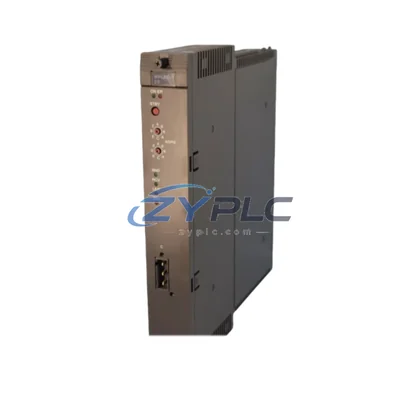
Allen-Bradley 1771-OB PLC Output Module for PLC-5 Systems is handled as a quote-based PLC-5 / 1771 legacy automation spare for industrial maintenance, replacement, and installed-base support. ZYPLC checks the complete catalog number, suffix, series context, required condition, quantity, and destination country before quotation.
| Brand |
Allen-Bradley |
| Model / SKU |
1771-OB |
| Series context |
PLC-5 |
| Part type |
PLC Systems |
| RFQ basis |
Availability, condition, lead time, and export shipment options are confirmed before quote. |
Where this part is typically used
This item is requested for legacy PLC rack support, I/O replacement, and ControlNet/Ethernet bridge planning. Allen-Bradley and Rockwell installed-base systems often require exact catalog-number matching; similar modules may differ by series letter, firmware, voltage, network protocol, or chassis compatibility.
RFQ information for maintenance teams
- Exact catalog number, series letter, and firmware or revision if available.
- Quantity, urgency, required condition, and destination country.
- Photos of front label, side label, terminal area, or existing spare packaging.
- Installed platform context such as ControlLogix, CompactLogix, PLC-5, SLC 500, FLEX I/O, PanelView, PowerFlex, or Kinetix where applicable.
Browse related Allen-Bradley spare parts, review the PLC-5 series, or compare similar PLC Systems records. If the exact revision is not shown, send the model and photos so the RFQ can be checked manually.
Request quote for this model
Allen-Bradley 1771-OB Industrial Data Link: Driving Smart Factory Output Control in PLC-5 Systems
The Allen-Bradley 1771-OB is a 24 VDC digital output module engineered for the PLC-5 programmable controller platform — one of Rockwell Automation’s most enduring and widely deployed industrial control architectures. In smart factory environments where deterministic signal delivery, real-time process control, and seamless integration across multi-layer automation networks are non-negotiable, the 1771-OB serves as a critical last-mile output node in the data chain that connects supervisory systems to physical field devices.
Designed to slot directly into the 1771 I/O chassis, the 1771-OB interfaces with the PLC-5 processor backplane to receive discrete output commands generated by ladder logic or structured text programs. These commands originate from upstream data flows — from SCADA platforms such as Rockwell’s FactoryTalk View SE, from HMI terminals running on PanelView Plus 6 or PanelView 800 series, or from DCS-level orchestration systems communicating over Data Highway Plus (DH+) or ControlNet. The module translates these digital instructions into 24 VDC switching signals that actuate solenoids, motor starters, indicator lamps, relay coils, and other field-level actuators with the precision and speed that industrial process control demands.
Compatibility & Integration Notes
| Parameter |
Specification |
| Module Type |
Digital DC Output Module |
| Output Voltage |
24 VDC |
| Communication Protocol |
PLC-5 Backplane (1771 I/O Bus) |
| Network Compatibility |
Data Highway Plus (DH+), ControlNet, Remote I/O (RIO) |
| Interface Type |
1771 I/O Chassis Slot |
| System Application |
PLC-5 Discrete Output Control, SCADA Integration, HMI Command Execution |
| Compatible Processors |
PLC-5/10, PLC-5/15, PLC-5/20, PLC-5/30, PLC-5/40, PLC-5/60, PLC-5/80 |
| Output Points |
16 Points (typical) |
| Signal Type |
Discrete (On/Off) DC Switching |
| Warranty |
Warranty and support terms confirmed before quote |
| Origin |
United States |
| Availability |
Availability confirmed by RFQ — shipment arranged after confirmation |
Connected Automation Data Flow
In a fully integrated PLC-5 automation architecture, the 1771-OB does not operate in isolation — it is one node in a layered data flow that spans from field sensors to enterprise-level MES and ERP systems. Understanding this data chain is essential for engineers designing or maintaining legacy and hybrid automation networks.
At the field level, discrete input signals are captured by companion modules such as the 1771-IB (24 VDC DC Input Module) or the 1771-IA (120 VAC Input Module), which feed real-time process state data back to the PLC-5 processor. The processor — for example a PLC-5/40 or PLC-5/60 — executes the control program and issues output commands to the 1771-OB, which then drives actuators on the plant floor. This tight input-process-output loop forms the backbone of deterministic process control.
For distributed I/O architectures, the PLC-5 communicates with remote chassis over the Remote I/O (RIO) network, allowing 1771-OB modules installed in remote racks — potentially hundreds of meters from the main processor — to receive output commands with minimal latency. This is particularly valuable in large-footprint facilities such as automotive assembly lines, water treatment plants, and petrochemical processing units where field devices are geographically dispersed.
At the supervisory layer, the PLC-5 connects to SCADA and HMI systems via Data Highway Plus (DH+) — a token-passing network that enables reliable peer-to-peer and host-to-PLC communication. Operators monitoring production via FactoryTalk View SE SCADA workstations or PanelView Plus 7 HMI terminals can issue manual output commands, acknowledge alarms, and view real-time output status — all of which are ultimately executed by the 1771-OB at the field level. For higher-bandwidth applications or integration with newer ControlLogix-based systems, the 1785-KA5 communication adapter bridges DH+ and ControlNet, enabling the PLC-5 to participate in broader plant-wide Ethernet/IP networks.
In drive control applications, the 1771-OB provides start/stop and direction commands to variable frequency drives (VFDs) such as the PowerFlex 40 or PowerFlex 400 series, while analog output modules like the 1771-OFE handle speed reference signals. This combination gives engineers precise control over motor-driven equipment — conveyors, pumps, fans, and compressors — from a single PLC-5 platform. For safety-critical applications, the output chain may also interface with safety relays and emergency stop circuits monitored by GuardLogix or standalone safety PLCs, ensuring that the 1771-OB’s switching actions are always within validated safe operating parameters.
Edge connectivity is increasingly important in modernized PLC-5 environments. Industrial gateways such as the 1783-ETAP EtherNet/IP tap or third-party protocol converters can bridge legacy DH+ and RIO networks to modern OPC-UA or MQTT data pipelines, enabling the 1771-OB’s output state data to be published to cloud-based analytics platforms and digital twin systems without replacing the existing PLC-5 infrastructure.
Solving Data Isolation in Industrial Sites
One of the most persistent challenges in facilities running PLC-5-based automation is data isolation — the inability to surface real-time output state, alarm history, and diagnostic data from legacy I/O modules to modern supervisory and analytics systems. The 1771-OB, while a discrete output device, sits at the center of this challenge because its switching state directly reflects the operational status of critical field equipment.
When output modules like the 1771-OB are not properly integrated into the plant’s data architecture, maintenance teams lose visibility into output fault conditions, welded contacts, and wiring failures until a process stoppage occurs. By ensuring the PLC-5 processor’s output image table — which mirrors the 1771-OB’s channel states — is accessible via DH+ or ControlNet to SCADA historians and alarm management systems, engineers can implement predictive maintenance workflows that flag anomalous output cycling patterns before they escalate into unplanned downtime.
Protocol unification is another key benefit of a well-architected PLC-5 system. Facilities that operate mixed fleets of Allen-Bradley PLC-5, SLC 500, and newer ControlLogix controllers can use ControlNet or EtherNet/IP bridging to create a unified data namespace, allowing the 1771-OB’s output states to be visible alongside data from newer I/O platforms in a single SCADA or MES dashboard. This eliminates the need for parallel monitoring systems and reduces the risk of operator error caused by fragmented process visibility.
Remote diagnostics capability is significantly enhanced when the 1771-OB is part of a connected PLC-5 system. Remote access solutions — including Rockwell’s FactoryTalk Remote Access or VPN-based connections to the DH+ network — allow automation engineers to interrogate output module status, force output states for testing, and download program changes without being physically present on the plant floor. This is particularly valuable for multi-site operations and facilities in remote geographic locations where on-site engineering support is limited.
System scalability is preserved by the modular nature of the 1771 I/O platform. Additional 1771-OB modules can be added to existing chassis slots as production lines expand, and remote chassis can be added to the RIO network without disrupting existing control logic. This incremental expansion model protects capital investment in the PLC-5 platform while accommodating growing automation requirements.
Every 1771-OB unit supplied by ZYPLC undergoes pre-shipment functional testing to verify output switching integrity, channel isolation, and backplane communication compliance. Units are shipped with full documentation and are Warranty terms are confirmed during quotation.
Industrial Connectivity FAQ
Q: What communication protocols does the Allen-Bradley 1771-OB support for SCADA and HMI integration?
A: The 1771-OB communicates via the PLC-5 backplane (1771 I/O bus) and is accessible to SCADA and HMI systems through the PLC-5 processor’s network ports, which support Data Highway Plus (DH+), ControlNet, and Remote I/O (RIO). For EtherNet/IP integration, a communication bridge module is required to connect the legacy DH+ network to modern Ethernet infrastructure.
Q: Is the 1771-OB compatible with both new and legacy PLC-5 processor variants?
A: Yes. The 1771-OB is compatible with the full range of PLC-5 processors including PLC-5/10, PLC-5/15, PLC-5/20, PLC-5/30, PLC-5/40, PLC-5/60, and PLC-5/80, as well as enhanced PLC-5E variants with built-in EtherNet/IP ports. It installs into any standard 1771 I/O chassis without hardware modification.
Q: How does ZYPLC ensure the 1771-OB is functional before shipment?
A: Each unit undergoes pre-shipment functional testing covering output channel switching, backplane communication integrity, and channel isolation verification. Units are inspected, tested, and packaged to IPC standards. All 1771-OB modules are covered by a warranty and support terms confirmed before quote from the date of shipment, with technical support available throughout the warranty period.
Q: Can the 1771-OB be used in a system that is being migrated from PLC-5 to ControlLogix?
A: Yes. During phased migration projects, the 1771-OB can continue to operate in the existing PLC-5 chassis while new ControlLogix I/O is deployed in parallel. Rockwell Automation’s migration tools and 1771-to-1756 I/O conversion guides support a staged transition that preserves existing wiring and field devices, minimizing migration risk and production disruption.