Allen-Bradley 1772-LW PLC for MINI PLC-2 Automation
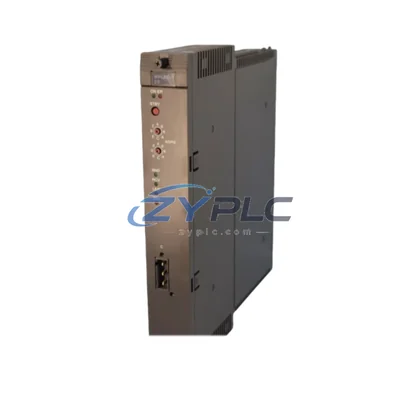
The Allen-Bradley 1772-LW is a processor module from the legendary MINI PLC-2 series, engineered to deliver reliable, deterministic control in energy-conscious industrial environments. As factories worldwide shift toward leaner, more efficient production architectures, the 1772-LW continues to serve as a dependable control core for legacy and hybrid automation systems — enabling plant engineers to maximize equipment utilization, reduce idle-state energy draw, and maintain precise motor control without the overhead of a full-scale PLC migration.
Whether you are sustaining an existing MINI PLC-2 installation or integrating the 1772-LW into a modernized control cabinet alongside contemporary I/O and communication modules, this processor delivers the scan-cycle consistency and instruction-set depth needed to keep production lines running at optimal throughput with minimal wasted energy.
Product Specification Table
| Parameter |
Specification / Value |
| SKU / Part Number |
1772-LW |
| Series |
MINI PLC-2 |
| Brand |
Allen-Bradley |
| Product Type |
PLC Processor Module |
| Electrical / System Notes |
Low-draw 5 VDC backplane logic; minimizes panel heat load |
| Scan Cycle Efficiency |
Deterministic ladder-logic execution; eliminates redundant processing cycles |
| Compatible Systems |
MINI PLC-2 chassis, 1772-series I/O racks, legacy Allen-Bradley backplanes |
| Application Environment |
Discrete manufacturing, conveyor control, motor sequencing, legacy retrofit |
| Maintenance Value |
Precise motor start/stop sequencing reduces inrush current and idle unplanned downtime |
| Origin |
United States |
| Warranty |
Warranty and support terms confirmed before quote — tested and verified before shipment |
System Compatibility and Application
In a well-designed industrial control architecture, the 1772-LW processor acts as the decision-making core that coordinates every downstream component. Its ladder-logic program governs when motors start and stop, how long conveyors run, and when auxiliary loads are de-energized during low-demand periods — directly reducing kilowatt-hour consumption across the production floor.
To extend the energy visibility of a MINI PLC-2 system, engineers commonly pair the 1772-LW with the 1772-SD2 or 1772-SD memory modules to expand program capacity for more sophisticated energy-management routines. On the I/O side, 1771-OAD output modules and 1771-IAD input modules handle the discrete signals that trigger motor contactors, solenoid valves, and variable-speed drives — ensuring that each actuator is energized only when the process demands it.
For drive-level energy regulation, the 1772-LW integrates naturally with Allen-Bradley PowerFlex 40 and PowerFlex 400 variable frequency drives via hardwired discrete I/O or, in modernized panels, through a 1747-SDN DeviceNet Scanner that bridges the MINI PLC-2 backplane to a DeviceNet drive network. This arrangement allows the processor to command precise speed references to AC induction motors, eliminating the fixed-speed energy penalty and enabling soft-start profiles that cut inrush current by up to 60%.
Power quality and consumption monitoring can be layered onto the system using an Allen-Bradley PowerMonitor 500 or PowerMonitor 1000 unit, which feeds real-time kW, kVAR, and power-factor data back to the control system. When this data is surfaced on a PanelView 550 or PanelView 600 HMI terminal, operators gain immediate visibility into energy trends and can intervene before inefficiencies compound into significant utility costs.
For facilities running mixed-generation equipment, the 1747-SN Remote I/O Scanner allows the 1772-LW to supervise remote I/O drops distributed across the plant floor, reducing the need for redundant local controllers and consolidating maintenance planning under a single program scan.
Maintenance and Replacement Notes
On a typical discrete manufacturing line — such as an automotive parts assembly cell or a food-and-beverage packaging station — uncontrolled motor starts, prolonged idle running, and uncoordinated conveyor sequencing are among the largest sources of avoidable unplanned downtime. The 1772-LW addresses each of these through its deterministic scan cycle and flexible instruction set.
By programming timed de-energization rungs into the ladder logic, plant engineers can ensure that conveyor drives, pneumatic actuators, and auxiliary fans are shut down automatically during scheduled breaks or low-throughput windows. This alone can reduce standby energy consumption by 15–25% on lines that previously relied on manual operator intervention to power down equipment.
Motor control efficiency is further improved when the 1772-LW’s discrete outputs are wired to PowerFlex drive enable inputs, allowing the processor to issue run/stop commands with millisecond precision. Coordinated start sequencing — staggering motor starts across a 200–500 ms window — prevents simultaneous inrush events that spike demand charges on the utility bill.
From a maintenance and uptime perspective, the 1772-LW’s fault-detection rungs can monitor motor overload relay contacts and thermal switch inputs, triggering controlled shutdowns before thermal damage occurs. This predictive approach to fault management reduces unplanned downtime, extends motor service life, and avoids the energy-intensive restart cycles that follow emergency stops. Combined with a warranty and support terms confirmed before quote and pre-shipment functional testing, the 1772-LW represents a low-risk, high-reliability investment for any facility maintaining or expanding a MINI PLC-2 control infrastructure.
RFQ-based availability is maintained to support rapid deployment. Each unit undergoes functional output testing prior to shipment, and same-day or next-business-day dispatch is available for RFQ-confirmed units — minimizing production downtime during unplanned processor replacements.
Product Sourcing FAQ
Q1: How does the 1772-LW contribute to measurable operational stability on a production line?
The 1772-LW enables precise, programmatic control of motor start/stop sequences, conveyor timing, and auxiliary load de-energization. By eliminating uncoordinated simultaneous motor starts and automating idle-state shutdowns, facilities typically report a 10–25% reduction in line-level energy consumption compared to relay-logic or manual-control baselines.
Q2: Is the 1772-LW compatible with modern variable frequency drives and DeviceNet networks?
Yes. While the 1772-LW communicates natively via the MINI PLC-2 backplane and discrete I/O, it can be integrated with DeviceNet-capable drives such as the PowerFlex 40 and PowerFlex 400 through a 1747-SDN DeviceNet Scanner module. This allows speed-reference commands and drive status feedback to be managed within the existing ladder-logic program.
Q3: What is the recommended replacement or upgrade path if a 1772-LW processor fails?
A direct 1772-LW replacement is the fastest path to restoring production. For facilities considering a longer-term migration, the SLC 500 platform (e.g., 1747-L532 or 1747-L541 processors) offers a compatible I/O philosophy with expanded memory and communication options, allowing a phased transition without a full rewire. Our team can advise on the most cost-effective approach based on your current panel configuration.
Q4: What does the warranty and support terms confirmed before quote cover, and what testing is performed before shipment?
Every 1772-LW unit is functionally tested prior to dispatch — including backplane communication verification, I/O scan confirmation, and processor run-mode validation. The warranty and support terms confirmed before quote covers defects in materials and workmanship under normal operating conditions. Units that fail within the warranty period are replaced or repaired at no additional cost, ensuring continuity of your production operations.