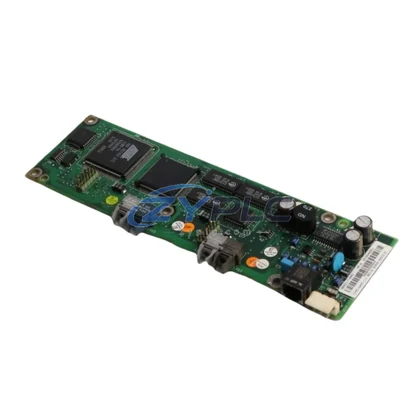
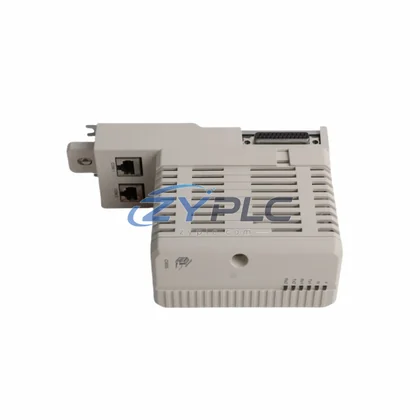
Allen-Bradley 1784-PCIS PCI Card for ControlLogix Automation
The Allen-Bradley 1784-PCIS is a high-performance PCI communication card engineered for seamless integration into Data Highway Plus (DH+) and DH-485 industrial networks. Designed to serve as the critical communication bridge between a host PC and Rockwell Automation control systems, the 1784-PCIS enables real-time data exchange that directly supports industrial automation systems. In modern manufacturing environments where uptime and replacement lead time matter, the ability to monitor, command, and optimize PLC-driven processes from a centralized workstation is no longer a luxury — it is a measurable competitive advantage.
By establishing a stable, low-latency communication link between engineering workstations and field-level controllers such as the SLC 5/04 and SLC 5/05 processors, the 1784-PCIS enables operators to fine-tune motor control parameters, adjust drive setpoints, and retrieve real-time operating load data without interrupting production. This continuous feedback loop is the foundation of any effective power optimization strategy on the plant floor.
Product Specification Table
| Parameter |
Specification / Value |
| SKU / Part Number |
1784-PCIS |
| Brand |
Allen-Bradley (Rockwell Automation) |
| Series |
1784 PCI Communication Interface |
| Interface Type |
PCI Bus (32-bit) |
| Supported Networks |
DH+ (Data Highway Plus), DH-485 |
| Communication Speed |
57.6 Kbps (DH+), 19.2 Kbps (DH-485) |
| Power Consumption |
≤ 1.5 W (typical PCI slot draw) |
| Operating Efficiency |
Continuous full-duplex, low CPU overhead |
| Compatible Systems |
SLC 500, PLC-5, MicroLogix, ControlLogix (via DH+ gateway) |
| Application Environment |
Industrial PC workstations, SCADA hosts, HMI servers |
| Maintenance Value |
Enables real-time parameter tuning to reduce idle energy draw and optimize drive cycles |
| Operating Temperature |
0°C to 60°C |
| Warranty |
warranty terms confirmed during quotation — Tested before shipment |
| Origin |
USA |
System Compatibility and Application
Effective industrial maintenance planning is not achieved through a single device — it is the result of a well-integrated system where every component communicates efficiently and acts on accurate data. The Allen-Bradley 1784-PCIS sits at the heart of this architecture by providing the PC-to-DH+ communication backbone that ties together the entire control and monitoring ecosystem.
At the drive level, the 1784-PCIS enables engineering workstations running RSLinx Classic to communicate directly with PowerFlex 40 and PowerFlex 70 variable frequency drives connected through DH+ gateway nodes. This allows operators to remotely adjust motor speed references, acceleration ramps, and deceleration profiles — all of which have a direct impact on operating load. A motor running at 80% speed consumes approximately 51% of the energy of a motor running at full speed, and the 1784-PCIS makes it possible to implement and monitor these adjustments from a centralized workstation in real time.
At the controller level, the card interfaces with SLC 5/04 processors and PLC-5/40 systems over DH+, enabling continuous upload and download of ladder logic programs that govern energy-intensive sequences such as conveyor start/stop cycles, pump staging, and compressor load management. When paired with 1756-EN2T EtherNet/IP bridge modules, the 1784-PCIS can serve as a legacy gateway, allowing modern ControlLogix systems to reach back into older DH+ networks without requiring a full system replacement — preserving capital investment while enabling maintenance planning at the edge.
For power monitoring, the 1784-PCIS supports integration with PowerMonitor 500 and PowerMonitor 1000 energy metering devices that report consumption data back to the SCADA host via DH+ polling. This data can be trended, alarmed, and acted upon — closing the loop between energy measurement and control action. When anomalies such as motor overcurrent or unexpected idle-state power draw are detected, the 1784-PCIS communication link ensures that corrective commands reach the field controller within milliseconds.
On the I/O side, the card supports communication with 1746 SLC I/O modules and 1771 PLC-5 I/O racks, enabling precise digital and analog control of actuators, solenoids, and variable-output devices. Accurate I/O control reduces the unplanned downtimed by over-actuated or improperly sequenced field devices — a common source of hidden energy loss in aging production lines. The 1784-PCIS ensures that every command issued from the workstation reaches the correct I/O point with minimal latency and zero packet loss under normal operating conditions.
Maintenance and Replacement Notes
In a typical discrete manufacturing environment, communication latency between the engineering workstation and the PLC network is one of the most underestimated contributors to energy inefficiency. When operators cannot retrieve accurate, real-time data from field controllers, they tend to set conservative — and energy-wasteful — operating parameters. Motors run faster than necessary, conveyors operate at fixed speeds regardless of load, and compressors cycle on and off without coordinated demand management.
The Allen-Bradley 1784-PCIS eliminates this communication gap. By providing a reliable, high-speed DH+ link directly from the PC to the plant floor, it enables the following measurable improvements in production line energy performance:
Reduced Motor Idle Energy: With real-time access to SLC 500 and PLC-5 controller data, operators can identify motors that remain energized during non-production periods and implement automatic de-energization routines through ladder logic modifications downloaded via the 1784-PCIS link. This alone can help restore stable operation when a compatible replacement is required.
Optimized Drive Cycle Timing: By monitoring actual production throughput data from the controller and comparing it against drive speed references, engineers can use the 1784-PCIS communication path to fine-tune PowerFlex drive parameters — reducing peak demand charges and smoothing operating load curves across production shifts.
Predictive Maintenance Support: The 1784-PCIS enables continuous polling of controller fault registers and I/O status bits, allowing maintenance teams to detect early signs of motor degradation, drive faults, or sensor failures before they cause unplanned downtime. Unplanned stops are among the most energy-intensive events in manufacturing — restarting a cold production line consumes significantly more energy than maintaining a warm, running system.
Reduced Downtime Through Fast Commissioning: Every unit of the 1784-PCIS supplied by ZYPLC undergoes full functional testing prior to shipment, including DH+ network communication verification. This ensures that replacement cards can be installed and commissioned rapidly, minimizing the energy and productivity losses associated with extended maintenance windows. All units are backed by a warranty terms confirmed during quotation, providing assurance of long-term reliability in demanding industrial environments.
Inventory Availability: ZYPLC maintains ready stock of the 1784-PCIS to support urgent maintenance and project requirements. Fast dispatch and reliable supply chain management mean that production lines are not left idle waiting for critical communication components.
Product Sourcing FAQ
Q1: How does the 1784-PCIS contribute to operational stability in a DH+ network environment?
The 1784-PCIS enables real-time, low-latency communication between engineering workstations and DH+ field controllers such as the SLC 5/04 and PLC-5 series. This allows operators to continuously monitor operating load data, adjust drive parameters, and implement operational-efficiency logic changes without production interruption — supporting earlier maintenance decisions and reducing unplanned downtime risk.
Q2: Is the 1784-PCIS compatible with modern Rockwell Automation software and control platforms?
Yes. The 1784-PCIS is fully compatible with RSLinx Classic and RSLogix 500 software environments. It can also function as a DH+ gateway when used alongside EtherNet/IP bridge modules, allowing integration with ControlLogix and CompactLogix platforms for hybrid legacy-modern automation architectures.
Q3: What is the recommended replacement or upgrade path if the 1784-PCIS is no longer suitable for a new system design?
For applications migrating from PCI-based workstations to modern PC architectures without PCI slots, the 1784-U2DHP USB-to-DH+ adapter is the recommended alternative, offering equivalent DH+ network access via USB interface. For full network modernization, EtherNet/IP-based communication modules provide higher bandwidth and integration with Studio 5000 environments.
Q4: What testing and warranty coverage does ZYPLC provide for the 1784-PCIS?
Every 1784-PCIS unit shipped by ZYPLC is tested for DH+ communication functionality, PCI bus integrity, and firmware compatibility prior to dispatch. All units are covered by a warranty terms confirmed during quotation from the date of shipment. In the event of a verified product defect within the warranty period, ZYPLC will provide a replacement unit or full refund in accordance with our standard warranty policy. Contact our team at plc.sales@zyplc.com or +86 19859288691 for warranty claims and technical support.