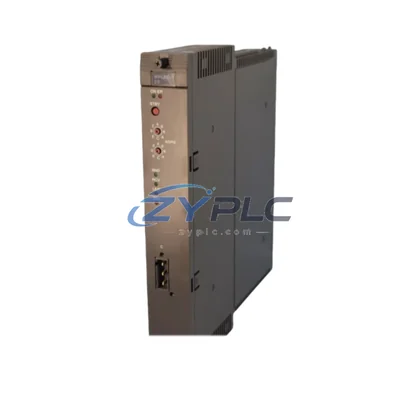
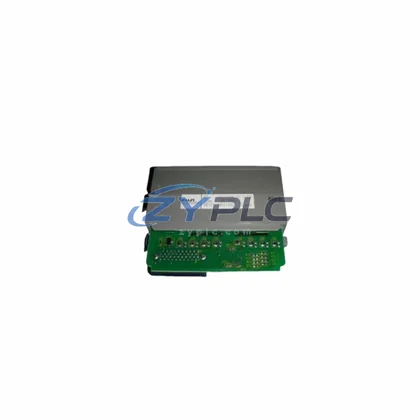
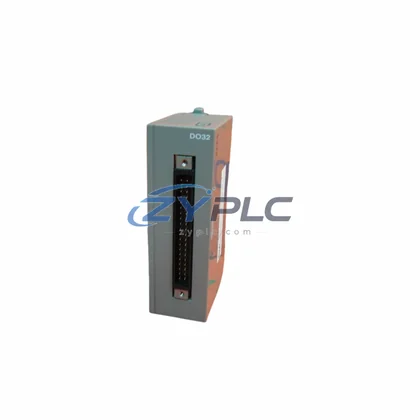
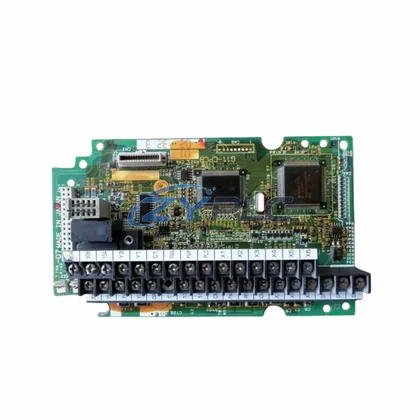
Allen-Bradley 5370-CVIM Vision Processor for 5370 Series Automation
The Allen-Bradley 5370-CVIM is a industrial-grade machine vision processor engineered for demanding industrial automation environments where operating load, throughput accuracy, and system uptime are mission-critical. As part of the Rockwell Automation 5370 Series, the 5370-CVIM integrates seamlessly into production lines that require real-time visual inspection, precision part identification, and closed-loop quality feedback — all while minimizing the power overhead typically associated with vision-based control systems.
In modern manufacturing, downtime and excessive energy draw from legacy inspection systems represent two of the most significant drains on operational efficiency. The 5370-CVIM addresses both by delivering deterministic image processing with a compact, low-heat-dissipation architecture. Its ability to interface directly with Allen-Bradley PLCs and drive systems means that inspection data can be acted upon immediately — reducing cycle time waste, eliminating redundant sensor polling, and enabling smarter energy allocation across the production cell.
Whether deployed in automotive assembly, electronics manufacturing, food and beverage packaging, or pharmaceutical inspection lines, the 5370-CVIM contributes to a leaner, more responsive automation architecture. Every unit shipped by ZYPLC undergoes pre-shipment functional verification and is Warranty terms are confirmed during quotation.
Product Specification Table
| Parameter |
Specification / Value |
| SKU |
5370-CVIM |
| Brand / Series |
Allen-Bradley / 5370 Series |
| Product Category |
Machine Vision Processor Module |
| Electrical / System Notes |
Low-draw embedded vision architecture (optimized for 24VDC backplane) |
| Processing Efficiency |
Real-time image acquisition and analysis with deterministic cycle response |
| Compatible Systems |
Allen-Bradley PLC-5, SLC 500, ControlLogix (via gateway), 1747 I/O chassis |
| Application Environment |
Industrial factory floor, cleanroom, packaging line, assembly inspection |
| Maintenance Value |
Eliminates redundant inspection passes; reduces rework energy and scrap rate |
| Origin |
USA |
| Warranty |
12 Months — All units tested prior to shipment |
| Availability |
Available — shipment timing confirmed after RFQ |
System Compatibility and Application
The 5370-CVIM does not operate in isolation — its true energy efficiency value emerges when it is integrated into a coordinated automation architecture. In a typical deployment, the vision processor works alongside an Allen-Bradley PLC-5 or SLC 5/05 controller, which manages the overall production sequence and communicates inspection results to upstream and downstream control nodes. The PLC receives pass/fail signals from the 5370-CVIM and adjusts conveyor speed, reject gate timing, or robot arm positioning accordingly — eliminating the unplanned downtimed on processing defective parts further down the line.
On the drive side, a PowerFlex 40 or PowerFlex 70 variable frequency drive (VFD) can be configured to modulate conveyor motor speed based on inspection throughput data. When the 5370-CVIM detects a high-confidence inspection queue, the VFD maintains optimal belt speed; when inspection backlogs occur, the drive reduces speed to prevent part accumulation — directly cutting motor load during low-demand periods. This closed-loop interaction between vision data and drive control is one of the most impactful maintenance planning strategies available in modern discrete manufacturing.
For I/O integration, the 1746 SLC I/O modules or 1756 ControlLogix I/O cards provide the digital and analog signal pathways that connect the 5370-CVIM’s inspection outputs to actuators, solenoids, and reject mechanisms on the line. Pairing the vision processor with a 1769 CompactLogix controller in smaller cells allows for a more maintenance-focused distributed architecture, where processing load is shared across nodes rather than concentrated in a single high-power controller.
Power quality and condition monitoring are handled upstream by devices such as the Allen-Bradley PowerMonitor 1000 or PowerMonitor 5000, which track real-time kWh consumption, power factor, and harmonic distortion across the production cell. When integrated with the same EtherNet/IP network as the 5370-CVIM system, these monitors provide the data foundation for energy audits and demand-response optimization. Communication across the cell is managed via EtherNet/IP or Data Highway Plus (DH+) protocols, ensuring that inspection results, drive commands, and energy data flow with minimal latency and without the overhead of protocol conversion.
For operator visibility, a PanelView Plus 6 or PanelView 800 HMI terminal displays live inspection statistics, operating load trends, and alarm states — giving line supervisors the real-time insight needed to make informed decisions about production pacing and energy allocation. The combination of the 5370-CVIM with these complementary Allen-Bradley components creates a fully instrumented, maintenance-focused automation cell that is greater than the sum of its parts.
Maintenance and Replacement Notes
In practice, the operational stability delivered by the 5370-CVIM manifest across several dimensions of production line operation. First, by catching defects at the earliest possible inspection point, the module prevents defective parts from consuming additional machining, assembly, or packaging energy downstream. A single defective component that passes through five additional process stations before rejection represents five times the wasted energy compared to rejection at the first inspection gate — the 5370-CVIM eliminates this waste systematically.
Second, the deterministic cycle time of the 5370-CVIM allows production planners to tighten line takt time without introducing inspection bottlenecks. When inspection is the rate-limiting step, lines are often run slower than necessary to accommodate vision system latency — wasting energy on extended machine idle states and prolonged conveyor run times. The 5370-CVIM’s fast image acquisition and processing eliminates this buffer, allowing the line to run at its true optimal speed.
Third, predictive maintenance benefits emerge from the 5370-CVIM’s ability to detect gradual degradation in part quality that often signals upstream equipment wear. When inspection failure rates begin trending upward for a specific defect type, this data — when fed back to the PLC and maintenance management system — can trigger proactive maintenance scheduling before a catastrophic failure occurs. downtime is one of the largest sources of downtime in manufacturing, as restart sequences, scrap purges, and recovery cycles all consume disproportionate energy relative to steady-state production.
ZYPLC maintains verified inventory of the 5370-CVIM and related 5370 Series components, with all units subjected to pre-shipment functional testing. The warranty and support terms confirmed before quote covers both hardware defects and operational failures under normal industrial use conditions, providing procurement teams with the confidence to specify the 5370-CVIM as a long-term component in their maintenance planning strategy.
Product Sourcing FAQ
Q1: How does the 5370-CVIM contribute to measurable operational stability on a production line?
The 5370-CVIM reduces unplanned downtime by enabling early-stage defect rejection, eliminating unnecessary downstream processing of non-conforming parts. When integrated with variable frequency drives such as the PowerFlex 40, it also enables dynamic conveyor speed adjustment based on inspection throughput — directly reducing motor load during low-demand periods.
Q2: Which Allen-Bradley PLC and I/O systems are compatible with the 5370-CVIM?
The 5370-CVIM is designed for use within the Allen-Bradley 5370 Series ecosystem and is compatible with PLC-5 and SLC 500 controller platforms. It interfaces with 1746 SLC I/O modules and can be integrated into broader ControlLogix architectures via appropriate gateway configurations. For specific compatibility questions, contact ZYPLC technical support.
Q3: What is the recommended replacement or upgrade path for aging 5370-CVIM installations?
For facilities looking to modernize legacy 5370 Series vision systems, the 5370-CVIM remains a cost-effective in-kind replacement that preserves existing wiring, chassis, and software investments. For full platform migration, Rockwell Automation’s In-Sight vision systems offer a modern alternative, though this requires more extensive integration work. ZYPLC can advise on the most maintenance-focused and cost-effective path based on your specific production environment.
Q4: What does the warranty and support terms confirmed before quote cover, and what is the pre-shipment testing process?
Every 5370-CVIM unit shipped by ZYPLC undergoes functional verification testing prior to dispatch, confirming that the module powers on correctly, communicates via its designated interface, and meets baseline performance parameters. The warranty and support terms confirmed before quote covers hardware defects and operational failures arising under normal industrial use conditions. Warranty claims are processed directly through ZYPLC, with replacement or repair turnaround designed to minimize production disruption.