Applied Materials 0100-20217 DR353BR9M System-Ready DI/O Distribution for Endura Control System Architecture
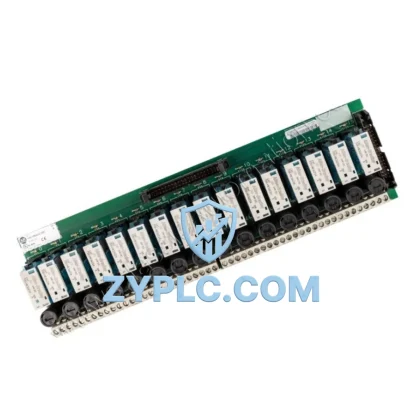
The Applied Materials 0100-20217 DR353BR9M DI/O Distribution Board is a precision-engineered digital input/output distribution component designed for seamless integration within the Applied Materials Endura physical vapor deposition (PVD) platform architecture. In modern semiconductor process equipment, the reliability of signal distribution between the system controller and field-level actuators, sensors, and process modules is paramount. This board occupies a critical position in the I/O layer of the Endura control hierarchy, ensuring deterministic signal routing, electrical isolation, and noise immunity across all connected subsystems.
Within the Endura platform’s layered automation architecture, the DI/O Distribution Board (P/N 0100-20217, assembly reference DR353BR9M, revision 2305233-D) serves as the structured interface between the central process controller and the distributed I/O field devices. It consolidates digital signal lines from multiple process modules—including chamber controllers, robot arm actuators, valve solenoids, and interlock circuits—into a managed, organized distribution topology. This design philosophy reduces point-to-point wiring complexity, minimizes signal degradation over long cable runs, and dramatically simplifies fault isolation during engineering commissioning and long-term preventive maintenance cycles.
The board’s architecture is optimized for the Endura’s multi-chamber cluster tool environment, where simultaneous process control across deposition, pre-clean, and cool-down chambers demands synchronized I/O response times and zero signal cross-talk. By centralizing DI/O distribution through a dedicated board rather than relying on distributed terminal blocks, the Endura system achieves a higher degree of signal integrity, grounding consistency, and EMI shielding—all critical factors in a high-vacuum, RF-rich semiconductor fabrication environment.
Architecture Specification Table
| Parameter |
Specification |
| Part Number |
0100-20217 |
| Assembly Reference |
DR353BR9M |
| Revision / BOM |
2305233-D |
| Secondary Reference |
080554 |
| Product Type |
DI/O Distribution Board |
| System Role |
Digital I/O Signal Distribution — I/O Layer |
| Compatible Platform |
Applied Materials Endura PVD Cluster Tool |
| Signal Type |
Digital Input / Digital Output (DI/DO) |
| Electrical Interface |
Multi-pin ribbon/connector interface to system backplane |
| Operating Voltage |
24 VDC nominal (field-side I/O logic level) |
| Isolation |
Optocoupler-based channel isolation (typical for Endura I/O boards) |
| Communication Compatibility |
Endura VME/proprietary backplane bus; SECS/GEM host interface upstream |
| Installation Environment |
Semiconductor fab cleanroom; controlled temperature and humidity |
| Form Factor |
PCB assembly, rack/chassis-mount within Endura electronics enclosure |
| Origin |
United States |
| Warranty |
12-Month Warranty — covers functional defects under normal operating conditions |
Coordinated Control System Design
The 0100-20217 DR353BR9M does not operate in isolation—it is an integral node within a tightly coordinated Endura system architecture. Understanding its upstream and downstream relationships is essential for engineers planning system upgrades, spare parts procurement, or architecture-level troubleshooting.
At the control layer, the Endura platform relies on a VME-based system controller board (such as the Applied Materials 0100-09808 or equivalent Endura CPU/controller card) to execute process recipes and manage chamber sequencing. This controller communicates chamber state, valve commands, and robot motion instructions downward through the system backplane to distribution boards like the 0100-20217. The DI/O Distribution Board translates these logical commands into physical electrical signals routed to field devices.
At the I/O layer, the board interfaces with the Endura’s chamber-level I/O assemblies, including digital input modules that read sensor states (pressure switches, door interlocks, flow confirmations) and digital output modules that drive solenoid valves, relay coils, and indicator circuits. Components such as the Applied Materials 0100-20216 (a companion I/O board in the same Endura electronics stack) and associated 0100-35258 or 0100-09060 cable harness assemblies work in concert with the distribution board to complete the signal chain from controller to actuator.
At the power layer, the Endura electronics enclosure is supplied by a dedicated DC power distribution assembly—typically an Applied Materials 0100-76038 or equivalent power supply board—that provides regulated 24 VDC and 5 VDC rails to the I/O boards, controller cards, and backplane. Stable power delivery is a prerequisite for consistent DI/O signal levels; any ripple or dropout at the power layer directly impacts the reliability of the distribution board’s output states.
At the network and communication layer, the Endura system communicates with the fab host via a SECS/GEM interface, typically implemented through a dedicated communication controller card within the VME chassis. The DI/O Distribution Board’s signal states are aggregated by the system controller and reported upstream to the Manufacturing Execution System (MES) or Equipment Engineering System (EES), enabling real-time process monitoring, alarm management, and statistical process control (SPC) data collection.
At the human-machine interface layer, the Endura operator workstation—running Applied Materials’ proprietary process control software on a dedicated Endura HMI PC—provides engineers with real-time visibility into I/O channel states, interlock status, and process module conditions. Diagnostic screens allow technicians to force individual DI/O channels for commissioning and troubleshooting, reducing mean time to repair (MTTR) when field devices or wiring faults are suspected.
At the execution layer, the distribution board’s outputs ultimately drive the Endura’s pneumatic valve manifolds, robot arm servo amplifiers, and chamber isolation gate valve actuators. The Applied Materials 0100-40045 gate valve controller and associated solenoid valve assemblies depend on clean, debounced digital output signals from the distribution board to execute precise, repeatable mechanical actions during wafer transfer and process sequences.
Application in Layered Automation Systems
The Applied Materials 0100-20217 DR353BR9M finds its primary application in semiconductor wafer fabrication facilities operating Endura PVD cluster tools for thin-film deposition processes including titanium nitride (TiN), aluminum (Al), copper (Cu), and cobalt (Co) barrier and seed layer deposition. In these environments, the DI/O Distribution Board supports continuous, high-throughput wafer processing by ensuring that all chamber interlocks, robot handoff confirmations, and process module state signals are reliably distributed and monitored.
In advanced logic and memory device manufacturing fabs, where Endura platforms are deployed in high-volume production lines, the reliability of every I/O distribution component directly impacts overall equipment effectiveness (OEE). A single failed DI/O channel can trigger a chamber fault, halt wafer transfers, and initiate a costly unscheduled maintenance event. Maintaining a qualified spare of the 0100-20217 board in the fab’s critical spare parts inventory is a standard practice recommended by process engineers and equipment reliability teams.
In compound semiconductor and MEMS fabrication environments, where Endura tools are adapted for III-V material deposition, the DI/O Distribution Board’s role in managing interlock chains between load lock, transfer chamber, and process module becomes even more critical due to the sensitivity of these materials to atmospheric contamination. The board’s signal distribution architecture supports the multi-step pump-down and vent sequences required for safe wafer handling in these specialized process flows.
For equipment refurbishment and requalification programs—where used Endura tools are restored to production-ready condition for secondary markets or internal redeployment—the 0100-20217 DR353BR9M is a frequently required replacement component. Its availability from qualified industrial component suppliers with a 12-Month Warranty and full functional testing documentation is a key enabler for cost-effective tool refurbishment without compromising system reliability or process qualification timelines.
Architecture Engineering FAQ
Q1: Is the 0100-20217 DR353BR9M compatible with all Endura platform generations, and can it be used as a direct replacement for earlier board revisions?
The 0100-20217 is designed for the Applied Materials Endura PVD platform electronics architecture. Compatibility across Endura generations (Endura HP, Endura XP, Endura Volta) depends on the specific system BOM and electronics enclosure configuration. The revision suffix 2305233-D indicates a specific engineering change level; engineers should verify compatibility against their system’s current BOM and consult the Endura system documentation or a qualified spare parts specialist before installation. In many cases, later revisions are backward-compatible, but electrical and connector interface verification is recommended prior to commissioning.
Q2: What is the recommended procedure for replacing the DI/O Distribution Board during a scheduled maintenance window, and how can downtime be minimized?
Replacement of the 0100-20217 board should be performed during a scheduled preventive maintenance (PM) window with the Endura system in a safe, vented, and powered-down state. Prior to removal, engineers should document all cable connector positions and label harness connections to ensure correct reinstallation. After board replacement, a full I/O checkout procedure—using the Endura diagnostic software to verify each digital input and output channel—should be completed before returning the tool to production. Having a pre-tested, warranted spare board available in the fab’s critical spare inventory eliminates the lead time risk associated with emergency procurement and minimizes unplanned downtime impact on wafer starts.
Q3: What does the 12-Month Warranty cover for the 0100-20217 DR353BR9M, and what support is available for integration and commissioning questions?
The 12-Month Warranty covers functional defects in materials and workmanship under normal operating conditions consistent with the Endura platform’s specified operating environment. Warranty claims are supported through ZYPLC’s technical team, who can assist with failure analysis documentation and replacement coordination. For Contextual Integration support—including questions about system architecture compatibility, cable harness requirements, backplane slot assignments, and I/O channel mapping—ZYPLC’s engineering support team is available via the contact information below. Pre-shipment functional testing is performed on all warranted units to ensure out-of-box reliability.
© 2026 ZYPLC. All rights reserved.
Original Source: https://zyplc.com
Contact: +86 19859288691 | plc.sales@zyplc.com