Applied Materials 0190-02363 Energy-Saving PCB Relay FC-8020: Precision Relay Control for Optimized Semiconductor Automation
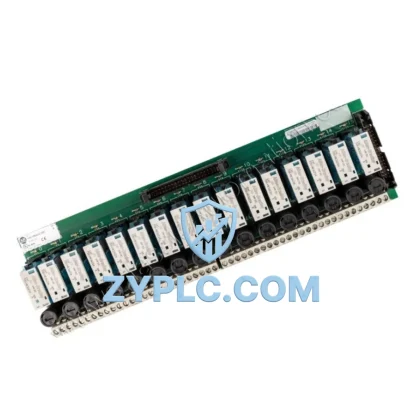
The Applied Materials 0190-02363 FC-8020 BRKT HOLDER MS5 PCB Relay Module is a high-reliability switching and relay control component engineered for semiconductor process mainframes and advanced industrial automation platforms. Designed to operate within the demanding electrical environments of wafer fabrication and precision manufacturing, this module delivers consistent switching performance while minimizing parasitic energy losses that accumulate across high-cycle production operations. In facilities where equipment uptime directly correlates with energy cost per wafer, the 0190-02363 FC-8020 plays a critical role in maintaining low-loss relay actuation, reducing heat generation, and supporting the overall energy efficiency architecture of the production line.
At ZYPLC, every unit of the 0190-02363 FC-8020 is sourced from verified supply channels, subjected to functional power-on testing, and backed by a 12-month warranty. Stock is available for immediate shipment, supporting urgent MRO (Maintenance, Repair & Operations) requirements without extended lead times.
Efficiency Performance Table
| Parameter |
Specification / Value |
| Part Number |
0190-02363 |
| Series / Assembly |
FC-8020 BRKT HOLDER MS5 |
| Product Category |
PCB Relay Module / Bracket Holder Assembly |
| Brand / OEM |
Applied Materials |
| Application Environment |
Semiconductor Process Mainframe, Wafer Fab Automation |
| Compatible Systems |
Applied Materials Centura, Endura, Producer Platform Series |
| Relay Switching Type |
Low-loss electromechanical relay actuation |
| Energy Optimization Value |
Reduces idle switching losses; supports high-cycle low-heat operation |
| Mounting Configuration |
PCB bracket holder (MS5 assembly format) |
| Origin |
United States |
| Warranty |
12-Month Warranty (ZYPLC Verified) |
| Availability |
In Stock — Ready to Ship |
| Testing Standard |
Functional power-on test prior to shipment |
Energy-Aware Automation Architecture
In a fully optimized semiconductor fab or industrial automation cell, the Applied Materials 0190-02363 FC-8020 does not operate in isolation — it functions as a precision switching node within a broader energy-aware control architecture. Understanding how this relay module integrates with surrounding systems helps engineers and procurement teams make informed decisions about system-level energy efficiency.
At the control layer, the 0190-02363 FC-8020 typically interfaces with Applied Materials mainframe I/O controller boards and process chamber interface PCBs that govern when and how relay switching events are triggered. These controllers rely on deterministic signal timing to ensure that relay actuation occurs only when required — eliminating unnecessary switching cycles that waste energy and accelerate contact wear. In many Centura and Endura platform configurations, the relay module works in coordination with Applied Materials 0190-series power distribution boards and chamber match network controllers to synchronize RF power delivery with process gas flow states, ensuring that energy is applied to the wafer only during productive plasma phases.
At the drive and power conditioning layer, the FC-8020 relay assembly supports integration with AC servo drive modules and variable frequency drive (VFD) units used to control vacuum pump motors, transfer robot actuators, and load lock door mechanisms. By ensuring clean, low-bounce relay switching, the 0190-02363 reduces inrush current events that can destabilize drive bus voltage and trigger nuisance faults in sensitive servo amplifiers. This is particularly important in multi-chamber cluster tools where a single relay fault can cascade into a full-tool idle state, wasting hours of productive capacity.
For energy monitoring and data feedback, the relay module’s switching state is typically logged by Applied Materials equipment data acquisition (EDA) systems and SECS/GEM-compliant host interface controllers. These systems track relay actuation frequency, dwell time, and cycle counts — data that feeds directly into predictive maintenance algorithms. When the 0190-02363 FC-8020 approaches end-of-life switching thresholds, the EDA system can flag a proactive replacement event before an in-process failure occurs, avoiding unplanned downtime and the associated energy waste of emergency recovery cycles.
At the communication and supervisory layer, the relay status signals are often aggregated by Profibus DP or DeviceNet I/O modules installed in the mainframe’s distributed I/O rack, feeding real-time switching data to the fab’s manufacturing execution system (MES) and advanced process control (APC) platform. This closed-loop feedback enables the APC system to correlate relay switching patterns with process yield data, identifying whether relay degradation is contributing to within-wafer uniformity drift — a subtle but measurable energy-efficiency loss that manifests as increased rework and scrap rates.
Finally, at the power supply layer, the 0190-02363 FC-8020 bracket holder assembly is designed to mount securely within the mainframe’s 24VDC control power distribution zone, where it receives clean, regulated control voltage from Applied Materials internal SMPS (switched-mode power supply) modules. Stable control voltage is essential for consistent relay pull-in and drop-out characteristics — voltage sag or ripple at the relay coil input can cause partial actuation events that increase coil dissipation and shorten contact life.
Power Optimization in Real Production Lines
In high-throughput semiconductor fabs operating 24/7, the cumulative energy impact of relay module performance is significant. A single Applied Materials cluster tool may contain dozens of relay switching points across its chamber controllers, transfer module, and loadlock systems. When relay modules such as the 0190-02363 FC-8020 are operating at peak specification — with clean contact closure, minimal bounce, and low coil resistance — the tool’s overall electrical load profile becomes more predictable and stable.
Predictable load profiles allow facility energy management systems to apply more aggressive demand response strategies, reducing peak power draw during high-tariff periods without impacting wafer throughput. In contrast, degraded relay modules introduce micro-interruptions in control signal paths that force the mainframe’s process controller to execute recovery sequences — each of which consumes additional time, gas, and RF power without producing a usable wafer. Over a 12-month operating period, the difference between a well-maintained relay population and a degraded one can represent thousands of kilowatt-hours of avoidable energy consumption.
Proactive replacement of the 0190-02363 FC-8020 before failure — guided by cycle count data from the EDA system — is one of the most cost-effective energy optimization strategies available to fab maintenance teams. ZYPLC maintains ready stock of this module specifically to support planned maintenance windows, ensuring that replacement units are available when the maintenance schedule calls for them rather than when an unplanned failure forces an emergency shutdown. Each unit shipped by ZYPLC has been functionally tested and is covered by a 12-month warranty, giving maintenance engineers confidence that the replacement module will perform to specification from the first actuation cycle.
Beyond individual relay replacement, the 0190-02363 FC-8020 also supports broader line efficiency initiatives. When combined with a systematic audit of all relay and switching components across the tool fleet, facilities can identify clusters of aging relay modules that are collectively degrading tool availability metrics. Replacing these modules as a coordinated batch — rather than reactively one at a time — reduces the total number of maintenance interventions required per quarter, freeing technician time for higher-value preventive maintenance tasks and reducing the cumulative downtime associated with repeated single-module replacements.
Energy Optimization FAQ
Q1: How does the Applied Materials 0190-02363 FC-8020 contribute to energy savings in semiconductor production?
The 0190-02363 FC-8020 PCB Relay Module ensures precise, low-loss switching within the mainframe’s control architecture. By maintaining clean relay actuation with minimal contact bounce and low coil dissipation, it reduces the frequency of process recovery sequences triggered by relay faults — each of which consumes additional RF power, process gases, and idle time. Proactive replacement before failure, guided by EDA cycle count data, prevents the energy waste associated with unplanned downtime and emergency recovery operations.
Q2: Is the 0190-02363 FC-8020 compatible with Applied Materials Centura and Endura platforms?
Yes. The 0190-02363 FC-8020 BRKT HOLDER MS5 is designed for use within Applied Materials mainframe platforms including the Centura and Endura series. It mounts in the PCB bracket holder format standard to the MS5 assembly configuration. For specific chamber or module compatibility questions, ZYPLC’s technical team can assist with cross-referencing against your tool’s bill of materials.
Q3: What is the recommended replacement interval, and how should I evaluate whether my current module needs replacement?
Replacement intervals depend on the tool’s process recipe cycle frequency and the relay’s actuation count per run. Applied Materials EDA systems and SECS/GEM host interfaces can provide relay actuation logs that allow maintenance teams to track cumulative switching cycles against the module’s rated lifecycle. As a general guideline, modules showing increased contact resistance, intermittent switching faults, or elevated coil temperature during operation should be scheduled for replacement at the next available maintenance window rather than run to failure.
Q4: What warranty and testing does ZYPLC provide for the 0190-02363 FC-8020?
Every 0190-02363 FC-8020 unit shipped by ZYPLC undergoes functional power-on testing prior to dispatch to verify switching performance and electrical integrity. All units are covered by a 12-month warranty from the date of shipment. In the event of a warranty claim, ZYPLC’s support team will work with the customer to arrange replacement or credit resolution with minimal disruption to the maintenance schedule.
© 2026 ZYPLC. All rights reserved.
Original Source: https://zyplc.com
Contact: +86 19859288691 | plc.sales@zyplc.com